
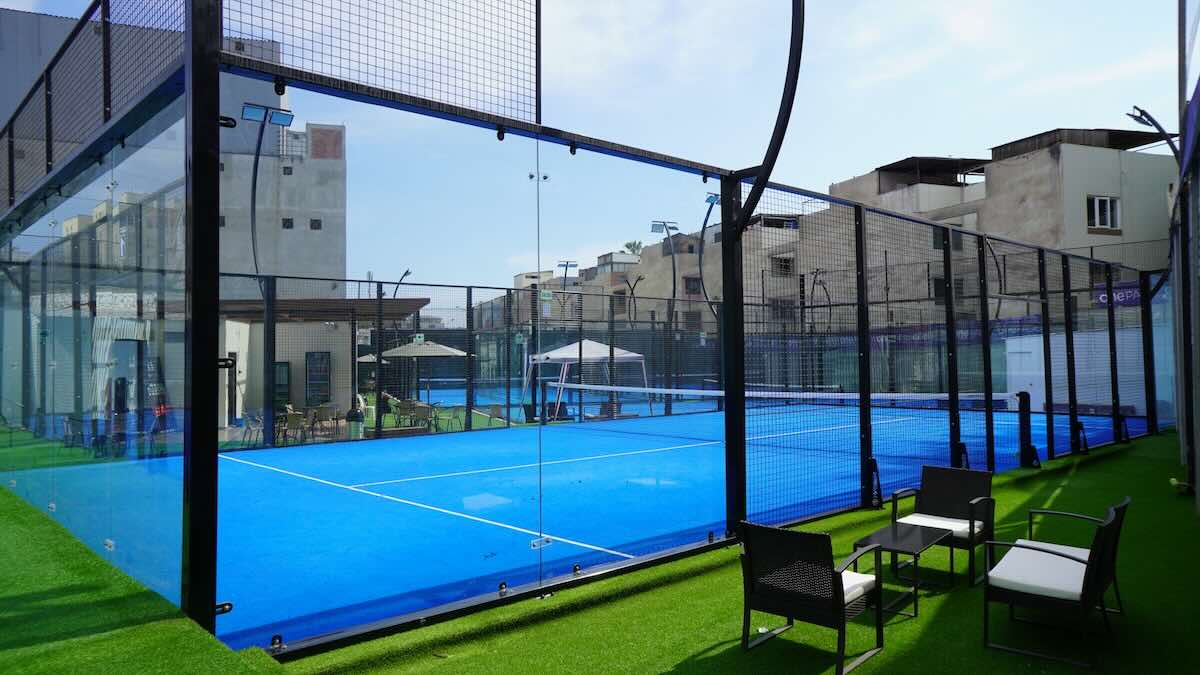
The first time I tried to explain padel to my dad, 67, hadn’t held a racket in 30 years — I made it sound complicated. Tennis-meets-squash, glass walls, underhand serve, doubles only, lower-pressure ball. He glazed over. Then I dragged him to a court in Austin. By the end of the second hour we were rallying ten shots in a row. The week before, I’d tried to teach him pickleball at the park; we’d managed four.
That gap is the whole story of padel. It’s the easiest racket sport in the world to play badly, and the most addictive racket sport in the world to play well. Invented in Mexico in 1969, padel is now the fastest-growing sport on the planet, over 25 million players across 90+ countries — and the United States is finally catching up. Roughly 500 courts now, up from fewer than 50 in 2020.
This guide is the long version of what I tell friends who keep asking what padel actually is. It covers the rules, the gear, the technique, the US scene, and the parts most “what is padel” articles get wrong. If you read it and don’t want to play, I’ll be genuinely surprised.
Want to try padel? You only need three things to start: a racket, balls, and court shoes. See our picks for the best beginner padel rackets, the best padel balls, and the best padel shoes — or grab an easy-to-play beginner racket like the Babolat Contact.
Padel at a Glance
- Sport type: Doubles racket sport — singles courts exist but you’ll almost never see one
- Court size: 10m × 20m (33ft × 66ft), about a third the size of a tennis court, fully enclosed
- Equipment: Solid stringless racket (foam/EVA core, perforated face) and a low-pressure tennis ball
- Scoring: Tennis scoring (15-30-40-game), six games per set, best of three
- Net height: 92cm at the posts, dipping to 88cm in the middle — slightly higher than tennis at the centre
- Origin: Acapulco, 1969 — Enrique Corcuera literally added walls to his too-small backyard tennis court
- Global players: 25+ million across 90+ countries; biggest scenes are Spain, Argentina, Sweden, Italy
- US scene: ~500 courts in 2026, up from fewer than 50 in 2020. Doubling roughly every 18 months
- Match length: 60–90 minutes, almost always
What Is Padel? The Honest One-Sentence Version
Padel is doubles tennis, played in a glass box, with a paddle that has no strings. That’s the version that lands at parties.
The longer version: padel is a racket sport played by two teams of two on a 10m × 20m court enclosed by 3-metre glass walls (at the back) and metal mesh (along the sides). The walls are part of the game — once the ball bounces in your half, you can hit it off them. The serve is underhand. The scoring is tennis. The racket is solid and stringless. The ball is a tennis ball with about 30% less pressure, so it sits up nicer.
Most articles will tell you padel is “tennis meets squash”. That’s wrong, and I’ll die on this hill. Squash is a sprint sport — you’re constantly accelerating into a hard wall and recovering. Padel is a positioning sport — you’re trying to stay calmly at the net, lob your way out of trouble, and let opponents make the mistake. The walls in padel slow the game down, not speed it up. Squash players who try padel are often the most surprised at how patient it is.
The Padel Sport Explained: What Is Padel Tennis?
Padel is a racket sport for four players on a small enclosed court, played with a solid racket and a low-pressure ball. You will also see it called padel tennis, and the two names describe the same game. The International Padel Federation (FIP) governs the sport worldwide, and its rulebook is the reference for everything from the size of the court to the height of the net.
Do not confuse padel with paddle tennis, also called pop tennis, which is an older and different American sport played on a smaller open court, or with platform tennis, a raised-deck winter game played inside wire screens. Our guide to padel, pickleball and paddle tennis sets out the differences.
How Do You Pronounce Padel?
In English, dictionaries give the pronunciation as PAD-uhl, the same sound as paddle. Many players in the US also say pa-DEL, and in Spanish, where the spelling pádel comes from, the stress falls on the first syllable (PA-del). Any of the three will be understood on court, and you will hear all of them at the same club.
A Brief, Slightly Opinionated History of Padel
Padel’s origin story is the kind of thing you couldn’t make up. In 1969, a Mexican businessman named Enrique Corcuera wanted to build a tennis court at his home in Acapulco. The plot was too small. Rather than scale his ambitions, he built walls around the smaller court so balls didn’t fly into his neighbour’s garden. The walls became the point.
His friend, Prince Alfonso of Hohenlohe, played at Corcuera’s house in 1974, loved it, and built two courts at his Marbella Club resort in Spain. That single import is the reason Spain became the global capital of padel. Within ten years, Spaniards were playing more padel than tennis. Argentina caught the bug shortly after — partly thanks to Julio Alegría, who built courts in Buenos Aires after seeing the sport in Marbella.
The pro game limped along regionally until 2005, when the World Padel Tour formalised an international circuit. WPT ran the show until 2022, when Qatar Sports Investments — the same group behind PSG — launched Premier Padel as the new official tour, backed by the International Padel Federation. By 2024, Premier Padel had absorbed most of WPT’s events, players, and prize money. The biggest stops on tour now are Doha, Madrid, Riyadh, Mexico, and increasingly Miami.
The United States arrived embarrassingly late. As recently as 2018, you could count the dedicated padel courts in America on two hands. The Pro Padel League — a US franchise league with city-based teams — launched in 2023 and gave the sport its first piece of native American infrastructure. The growth curve since has been vertical. There are now padel-specific clubs in Miami, NYC, LA, Houston, Austin, Boston, Chicago, Seattle, and Denver, with new ones opening monthly.
Is Padel an Olympic Sport?
Not yet. As of this writing padel is not an Olympic sport and is not on the program for the Los Angeles 2028 Games. It has been added to regional multi-sport events, including the Asian Games in 2026 and the European Games in 2027, and supporters of the sport are aiming at a later Olympics, with 2032 the date most often mentioned. Wider growth in countries such as the US is part of what the case for inclusion depends on.
Padel vs Tennis vs Pickleball vs Squash — How They Actually Compare
Comparison tables are a dime a dozen, so here’s mine plus what I actually think after playing all four.
| Feature | Padel | Tennis | Pickleball | Squash |
|---|---|---|---|---|
| Court size | 10×20m, enclosed | 23.77×10.97m, open | 13.4×6.1m, open | 9.75×6.4m, enclosed |
| Walls in play | Yes (glass + mesh) | No | No | Yes (all four) |
| Racket | Solid, stringless, ~360g | Strung, ~290–320g | Solid paddle, ~225g | Strung, ~140g |
| Ball | Low-pressure tennis ball | Tennis ball (~14 PSI) | Hollow plastic, holes | Tiny rubber, no bounce |
| Serve | Underhand, must bounce first | Overhand, in the air | Underhand, drop or paddle | One foot in service box |
| Doubles only | Yes (in practice) | No | No | Mostly singles |
| Time to first rally | 30 minutes | 3–5 sessions | 15 minutes | 2–3 sessions |
| Knees and joints | Easy on the body | Moderate impact | Easy on the body | Brutal long-term |
Padel vs Tennis: The Tennis Player Trap
Counterintuitively, tennis players take longer to get good at padel than non-tennis players. The transferable skills are real — footwork, scoring, basic stroke shape — but tennis muscle memory screams “hit through the ball” and padel punishes that instinct. Power from the back of the court just gets eaten by the wall and rebounded back at you. The good tennis players who pick up padel fast are the ones who can park their ego at the door of the court and learn to lob more than they smash. Most can’t, for the first month. We have a deeper breakdown in our padel vs tennis comparison.
Padel vs Pickleball: Yes, You Can Play Both
Pickleballers find padel pleasingly familiar — the tempo is similar, both are doubles-first, and the social vibe matches. The biggest hurdle is the underhand serve, which is mechanically different from pickleball’s drop or paddle serve, plus the genuine athletic step up: padel rallies are longer, the court is bigger, and the lateral movement is real. My read on the US market: pickleball is the gateway, padel is the destination. People who fall in love with pickleball don’t tend to leave it for padel; they add padel as the more athletic, more strategic option for evenings and weekends. Full breakdown in our padel vs pickleball comparison.
The Padel Court Explained
Every padel court in the world has the same dimensions: 10 metres wide by 20 metres long. The court is divided in half by a net (92cm at the posts, 88cm in the middle — yes, lower in the middle, the opposite of what most people guess). The whole thing is enclosed: tempered glass at the two back walls (3m tall, with another metre of mesh above), mesh fencing along the sides.
The Walls Are the Point
The reason padel exists is the walls, so it’s worth being precise about how they work. The ball must bounce on the floor first before it can hit any wall. If the ball hits the wall before bouncing, it’s out, full stop — even if it then bounces in the court. After it bounces, the ball can hit any wall (glass or mesh) and stay in play. You can also play your own shot off your own walls, which is the single most underused skill at the beginner level: when a deep ball gets past you, let it. Watch it bounce, watch it ricochet off the back glass, and play it on the rebound like a tennis ball coming back to you. Most beginners panic and reach for it; the better play is patience.
Surface and Lighting
The standard padel surface is artificial turf with sand infill. It plays like clay — slightly slower, more forgiving on the joints, encourages slides. Some indoor clubs use rubber-based hard courts, which play faster and reward power. If you have a choice, learn on turf; it teaches better technique because it punishes lazy footwork less. For more on what goes into building one, see our guide on how to build a padel court — including the typical $35,000–$75,000 build cost in the US.
Padel Equipment: What You Actually Need (and What You Don’t)
The minimum to play padel: a racket and shoes. That’s it. Most clubs will lend you a racket for your first session and let you wear regular athletic clothes. Don’t buy gear before your first match. I’ve seen too many friends drop $400 on a Nox AT10 because their tennis-playing buddy told them it was “the best” — and then never use it again because they couldn’t get to a court. Test the sport, then equip yourself.
The Padel Racket
The racket is the sport’s defining piece of equipment. A padel racket is solid (no strings), with an EVA or foam core wrapped in carbon fibre or fibreglass, and the face is perforated with holes that reduce air resistance and weight. Total weight is usually 360–385g. There are three head shapes:
- Round — control-oriented, sweet spot in the middle of the face, the right choice for almost every beginner
- Teardrop — balanced power and control, sweet spot slightly higher on the face, the all-rounder for intermediate players
- Diamond — power-oriented, sweet spot at the top of the face, only for advanced players who already have control to spare
My one strong piece of advice on rackets: start with a round head, even if you’re a former tennis or pickleball player. Most racket brands will try to sell beginners teardrops because they want you to “grow into” the racket, but a round head teaches you the geometry of the sweet spot faster, and it forgives the off-centre hits you’ll be making for your first three months. There’s no glory in struggling with a diamond Nox AT10 because Tapia uses one. See our guide to the best padel rackets for beginners for specific picks. Once you’ve played for six months, our breakdown of the sweet spot in padel rackets will help you understand why head shape matters, and when to replace your racket covers the (often overlooked) lifespan of a padel racket — most last 12–18 months of regular play.
The Ball
Padel balls look almost identical to tennis balls. They are slightly smaller and have lower internal pressure — about 10–11 PSI versus 14 PSI for tennis. The lower pressure means a slightly slower bounce and softer feel, which is what makes the long rallies and wall play possible. Brand matters more than people realise: Wilson supplies the official Premier Padel ball, the HEAD Padel Pro S+ is a top match ball, Bullpadel makes a great mid-range ball, and Wilson X3 is the best value in the US. Skip the cheap unbranded tubes you sometimes find at sporting goods stores — they go dead inside two matches. See our best padel balls guide for the full ranking.
For the rulebook numbers on size, pressure and bounce, see our guide to padel balls vs tennis balls.
Shoes
Court grip matters far more in padel than people expect. The standard turf-and-sand surface chews through tennis shoes (the herringbone tread on most tennis shoes is wrong for sand), and running shoes have zero lateral stability for the side-to-side movement padel demands. Real padel shoes have either a herringbone or omni-pattern sole with deeper grooves to grip the sand. Asics Gel-Padel Pro, Adidas Adipower CTRL, and Bullpadel Vertex are the three most common brands you’ll see at any US club. Our guide to choosing the best padel shoes covers the technical features to look for.
Grip and Overgrip
The cheapest performance upgrade in racket sports is a fresh overgrip. A new $5 overgrip changes how a racket feels in your hand more than spending $200 extra on a higher-tier racket. Most players underestimate how often they should be replacing it — every 6–10 sessions of regular play. Our breakdown of the padel overgrip and when to change it covers the timing and the technique.
Clothing and Bag
Tennis or general athletic wear is fine — see our guide on what to wear on the padel court. A racket bag is optional until you own multiple rackets; once you do, see our roundup of the best padel bags.
For cheap upgrades such as protector tape and wristbands, see our padel accessories guide.
The Rules of Padel — The Five You Actually Need
Padel rule books run to 50+ pages. You don’t need them. The five rules below cover 95% of what you’ll encounter in your first year.
1. The Serve Is Always Underhand
You stand behind the service line, drop the ball, let it bounce once, and strike it below waist height. The ball must clear the net and bounce in the diagonal service box. You get two serves; double fault loses the point, exactly as in tennis. The most common beginner mistake is hitting the serve too hard — at the pro level, even Galán and Tapia hit safe, well-placed serves more often than not, because the team that loses serve barely loses the point. Full rules in our guide to padel serving rules.
2. Scoring Is Tennis Scoring
15, 30, 40, game. Six games to win a set. Two-set lead to win the match (best of three at amateur level, best of three or five at pro level). Tiebreak at 6–6. The increasingly popular gold point rule replaces deuce/advantage with a single sudden-death point — the receiving team picks which side to receive on, and one rally decides the game. Almost every US amateur league now uses gold point. Get used to it. Tiebreak rules in our tiebreak guide.
3. The Ball Must Bounce on the Floor Before Any Wall
Already covered, but it bears repeating because new players forget it constantly. Wall first = out. Floor first = in play.
4. The Mesh Is in Play (After the Bounce)
Same rule as the glass walls. After the floor bounce, the ball can hit the mesh and stay in play. It deadens dramatically though, so any ball that hits the mesh is essentially a free shot for whoever gets to it. Mesh-rebound shots are also harder to control because the deflection is unpredictable.
5. You Can Hit the Ball Into Your Own Walls
This is the rule that confuses tennis players most: when you’re stuck deep, you can hit the ball into your own back wall on purpose to get height and time. It’s called a “por tres” or a defensive bounce-out, and at advanced level it’s a high-percentage way to reset a point. Don’t try this in your first ten sessions — but know it exists.
For the genuinely weird edge cases (lights, posts, balls landing on top of the wall) see the padel rules for disputed points.
How to Play Padel: The Two Things That Actually Matter
Strip away the tactical depth and beginner padel comes down to two principles. Get these right and you’ll beat any first-month player who hasn’t.
Principle 1: The Net Wins
The team at the net wins more points. It’s not close. At every level — from beginner to Premier Padel — the team that gets to the net and stays there controls the rally. If you’re at the back, you’re defending. If you’re at the net, you’re attacking. The single most important tactic in your first year is: get to the net together with your partner, and stay there together. Splitting up (one at the net, one at the back) is the most common beginner mistake and costs you the point about 80% of the time.
Principle 2: The Lob Is Your Escape Route
When you’re stuck at the back of the court (which you will be, often), your job isn’t to drive the ball — it’s to lob over the opponents who are at the net, force them to retreat, and run forward to take the net yourself. The lob is the single most underrated shot in padel. Most beginners try to drive their way out of the back; that just feeds the opponents at the net. Lob, run forward, take the net. That’s the entire game in one sentence.
For the full step-by-step on what to do when you’re at the net, where to stand, and how to handle the various ball types, see our how to play padel guide and the ultimate guide to positions in padel. How to win points in padel as a beginner covers the highest-percentage point patterns. And if you’re picking sides with a partner, our breakdown of which side to play in padel covers the trade-offs.
Padel Shots: The Vocabulary You Need
Some of these are familiar from tennis. Others are unique to a sport with walls and an underhand serve. The bandeja in particular is the shot that defines padel — there’s nothing quite like it in any other racket sport.
- Drive (forehand/backhand) — your basic groundstroke from the back of the court
- Volley — the foundation of net play; punch volleys, not full swings
- Lob — the most important shot in the sport; if you only learn one new technique, learn this
- Smash — flat overhead put-away when the lob is too short
- Bandeja — defensive sliced overhead used to maintain net position rather than win the point. Beginners always overhit it
- Vibora — aggressive sliced overhead, the bandeja’s offensive cousin
- Kick smash (“por tres”) — overhead designed to bounce the ball over the back wall and out of the court. The most spectacular shot in padel and the only one that can definitively end a point even at pro level
- Off-the-wall return — letting a deep ball pass you, then playing it after it rebounds off the back glass. Use this more than you think
Our deep-dive on the different shots of padel explained covers each in detail. To master the most spectacular put-away, our tutorial on how to kick smash in padel walks through the technique. Padel is a footwork-first sport, so our guide to moving your feet on the padel court is essential reading. Once you have the basics, learn how to add spin and shot effects and discover how to hit an ace (yes, you can ace someone in padel — but it requires a very specific serve into the side glass).
Why Padel Is Eating Tennis (and Why It Will Pass Pickleball Eventually)
Padel went from regional curiosity to global sport in roughly fifty years. The reasons are simple — and they explain why the same growth curve is now playing out in the United States.
- It clicks fast. Almost everyone can sustain a 10-shot rally within their first 30 minutes. Tennis takes weeks to reach that point. The ratio of fun to suffering on day one is unmatched in racket sports
- It’s social by design. Doubles only at competitive level means you always have three other people around. Long rallies, short matches, and a small enclosed court make for natural conversation
- It’s easy on the body. No long sprints, no overhead serves, no diving for balls (the walls catch them). Your back, knees, and shoulders will thank you. This is also why padel works so well as a sport for players in their 50s, 60s, and 70s
- The skill ceiling is real. Pickleball is great, but most adult players hit a plateau within 12–18 months. Padel rewards lifetime improvement: wall play, position, shot variation, and partnership chemistry compound over years
- It scales with your fitness. Casual recreational play is gentle. Competitive amateur padel is a workout. Pro-level padel is brutal. The sport meets you wherever you are
The flip side: padel still carries injury risk. The most common ones are tennis elbow, calf strains, and rotator cuff issues from over-aggressive overheads. Our guide to the most common padel injuries covers what to watch for, and how to warm up is essential reading before your first match — especially if you’re over 35 or coming from a non-racket-sport background.
Padel in the United States: The State of the Game in 2026
Five years ago you couldn’t find a court. Today, the US has roughly 500 padel courts and is opening new ones at a rate of about one every other day. Florida leads — Reserve Padel and Padel Haus have multiple locations in Miami, and the state has more than 100 courts in total. Texas (Austin and Houston) and California (Bay Area, LA) follow. The Northeast is catching up fast, with NYC, Boston, and Philadelphia adding clubs through 2025–2026.
Where to Play Padel by State
We have detailed guides for the major US padel scenes. Each covers the courts, clubs, leagues, and what the local scene actually feels like:
- Where to play padel in Florida — the deepest scene in the country
- Where to play padel in Miami — the de facto US capital of padel
- Where to play padel in Texas — Austin and Houston are growing fastest
- Where to play padel in California — strong Bay Area presence, LA catching up
- Where to play padel in North Carolina — small but engaged scene
- Where to play padel in Pennsylvania — Philadelphia leading
The Pro Scene in the US
The American pro landscape is built on two pillars. Premier Padel runs Major events on US soil — typically the Miami Major in March/April — where the world’s top pros (Galán, Lebrón, Tapia, Coello, Chingotto) compete. Tickets to a Premier Padel Major are still relatively affordable in the US, which they are not in Spain. The home-grown Pro Padel League is a US franchise format with city-based teams that launched in 2023; think MLS, but for padel. For amateurs, leagues and tournaments are spreading fast — see our overview of padel tournaments in the US.
Should You Play Padel? It Depends Who You Are
If You’re a Tennis Player
Yes — but check your ego. Your transferable skills are real (footwork, scoring, basic strokes), but your tennis instincts will fight you for the first month. The first thing to internalise: power without placement gets eaten alive. The second: the underhand serve isn’t a “lesser” serve, it’s a different one. Most tennis players are comfortably competitive within 5–6 sessions if they can let go of trying to crush every ball.
If You’re a Pickleball Player
Yes, definitely. The tempo is similar but the depth is greater. Expect a noticeable step-up in athleticism — bigger court, longer rallies, more lateral movement. The wall play is genuinely new and takes 5–10 sessions to start using effectively. The biggest hurdle is the underhand serve technique, which is mechanically different from the pickleball drop or paddle serve.
If You’re Bringing Kids
Padel is an excellent first racket sport for children. The court is enclosed (no chasing balls into bushes), the underhand serve is far easier to teach than a tennis overhand, and the social doubles format keeps kids engaged. For age-appropriate guidance see at what age should kids start padel.
If You’re Over 50 (or 60, or 70)
Padel is the racket sport you should be playing. Low-impact, social, doubles-only, smaller court, no overhead serve. The Spanish demographic that took to padel earliest in the 1980s is now playing into their 70s and 80s — which tells you everything about the long-term sustainability of the sport. Don’t let “I’m too old to start” stop you. The walls do half the running for you.
Getting Started: My Actual First-Week Plan
The plan I give every friend who asks me how to start. It’s worked for the dozen-plus people I’ve personally introduced to the sport. For the step-by-step version, with booking apps and what to bring, see our guide on how to get started playing padel.
- Day 1: Find a court within 30 minutes of your home or office. Use Playtomic (the dominant booking app), Padel United, or just search Google Maps for “padel near me”. Bookmark it
- Day 2: Book a one-hour beginner clinic, not a free play session. One hour with a coach saves you a month of bad habits. Most clubs run beginner clinics for $20–40
- Rent a racket for your first session. Don’t buy gear before your first hit. Almost every club rents rackets for $5–10
- Wear running or court shoes (not running shoes if you have any sideways stability). Shorts, t-shirt, no special clothing required
- Read the basics the night before. Skim our how to play padel guide and the warm-up guide so you arrive looking less lost
- Day 4: Bring three friends to a social game. The clinic teaches you the strokes; live games teach you positioning. You need both
- Day 7: If you’re hooked, buy a beginner round-headed racket in the $80–180 range. See our beginner racket guide. Don’t spend more than $200 on your first racket — almost no one needs a $400 weapon to start
Five Beginner Mistakes I See Every Single Week
I run into these constantly at every club I’ve played at — Reserve Padel in Brooklyn, Padel Haus in Miami, the public courts in Austin. Avoid these in your first month and you’ll be ahead of 80% of beginners.
- Hitting too hard. Power kills you in padel. The wall sends your hardest shot back at you. Pace yourself — placement always wins over power below the pro level
- Standing too far back. If your default position is the back of the court, you’re losing. Get to the net
- Ignoring the back wall. Letting a deep ball pass you, watching it bounce, then playing it off the rebound is the highest-percentage defensive move in the sport. Most beginners reach for everything instead
- Lobbing too rarely. When stuck at the back, lob. Always. A bad lob is better than a great drive. Pros lob more than amateurs do, not less
- Splitting from your partner. Both at the net, or both at the back. Never one-up, one-back. Tennis muscle memory wants this; it’s wrong in padel
Bottom Line
Padel is a doubles racket sport played on an enclosed glass court with a solid stringless racket and a low-pressure tennis ball. It scores like tennis, plays a bit like squash, and is more fun than either on day one. It clicks fast, ages well, and rewards lifelong improvement.
If you take one thing from this guide: the team at the net wins, and the lob is your way of getting there. Master those two ideas and you’ve already understood more about padel strategy than 90% of new players. The shot vocabulary, the rules, the wall play — all of that comes naturally as you play.
Find a court, book a beginner clinic, and bring three friends. You’ll be hooked by the third rally — and if my dad can be doing it at 67, you can too.
FAQ: Everything Else You Wanted to Know
Padel is a doubles racket sport played on a 10×20 metre enclosed court with glass walls. Players use solid stringless rackets and a low-pressure tennis ball. The walls are part of play, the serve is underhand, and the scoring is the same as tennis.
No. Padel and paddle tennis are different sports despite the similar name. Padel is played on an enclosed glass court with walls in play, doubles only, with a solid racket. Paddle tennis (called pop tennis in the US) is played on a smaller open court without walls, can be played as singles, and uses a different ball. Most US searches for paddle tennis are actually looking for padel.
Padel uses an enclosed court with walls in play, a solid stringless racket, an underhand serve, and a low-pressure ball. Tennis uses an open court, a strung racket, an overhand serve, and a higher-pressure ball. Scoring is the same in both. Padel is played as doubles at competitive level; tennis can be singles or doubles. The biggest tactical difference: power wins in tennis, placement wins in padel.
No, padel is one of the easiest racket sports to pick up. Most beginners can sustain a 10-shot rally within their first 30 minutes on court, and play a recognisable match within their first session. The depth comes later, as you learn wall play, lob strategy, and shot variations like the bandeja and vibora.
Yes. Padel rackets are different from tennis rackets — they are solid (no strings), made from foam or EVA core wrapped in carbon or fibreglass, and have a perforated face. You can rent rackets at most clubs for $5-10 your first session. Once you are committed, expect to spend $80-200 on a beginner racket. Don’t go higher than that on your first one.
Singles padel exists but is rare. The standard padel court is built for doubles, and almost all leagues, tournaments, and social play are doubles. Some clubs have dedicated singles courts (narrower, 6m wide instead of 10m) but they are uncommon. If you only have one friend, find two more — do not try to play singles on a doubles court, the geometry doesn’t work.
There are roughly 500 padel courts in the US as of 2026. Florida (especially Miami), Texas (Austin and Houston), California (Bay Area, LA), and the Northeast corridor (NYC, Boston, Philadelphia) have the most developed scenes. Use Playtomic, Padel United, or search ‘[your city] padel’ on Google Maps to find a court. The major US chains are Reserve Padel and Padel Haus.
A typical padel match lasts 60 to 90 minutes. Best-of-three sets is the standard format, with each set going to six games. Tiebreaks at 6-6 can extend a set, but most amateur matches finish well inside 90 minutes — making padel ideal for a lunch break or a weeknight evening.
Court rental in the US typically costs $40-80 per hour, split among four players — so $10-20 per person per match. Beginner clinics run $20-50, private lessons $60-100. Equipment is a one-off cost: $80-200 for a beginner racket, $80-150 for shoes, and a tube of balls is around $5. All-in, you can be playing weekly for under $100/month once you have your own gear.
Eventually, in my view, but not soon. Pickleball wins on accessibility — you can set up a temporary court anywhere, the equipment is cheaper, and the learning curve is shallower. Padel needs a dedicated $50,000+ court structure to play. But padel has more depth, and players who get bored of pickleball after 12-18 months tend to find a permanent home in padel. The two will likely co-exist as gateway and destination, not direct competitors.
Yes. Padel tennis is a longer name for the same game, and padel is the standard name in Spain, the US and on the professional tour. Neither is the same as paddle tennis, which is a separate sport. See our guide to padel, pickleball and paddle tennis.
Dictionaries give PAD-uhl in English, the same sound as paddle. Many US players say pa-DEL, and in Spanish the stress is on the first syllable, PA-del. All three are understood on court.
Not yet. Padel is not in the Olympic Games and is not on the Los Angeles 2028 program, although it has been added to regional events such as the 2026 Asian Games and the 2027 European Games.
Lucas Sánchez is the founder of SimplePadel. Born and raised in Spain, Lucas has been living in the US and UK for the last 20 years and currently calls Miami his home. While he’s never played professionally, the dream is still alive.
Lucas loves nothing more than playing (and talking) about padel, and he considers himself lucky to have a wife and family that share his love for the game.