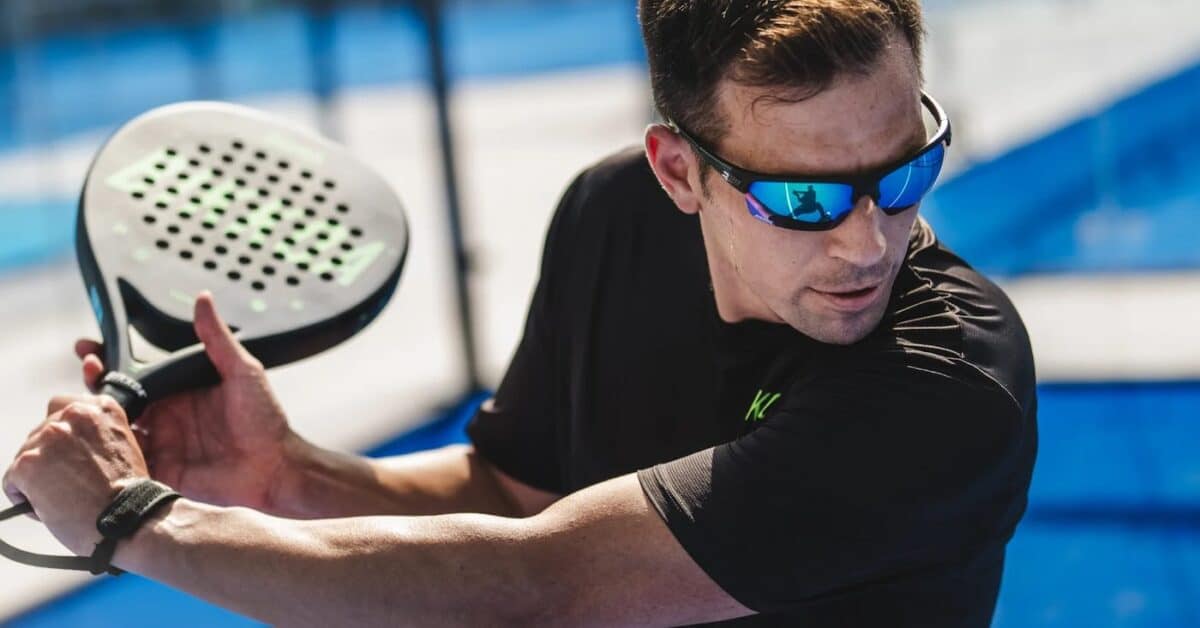
Padel eyewear splits into two genuinely different products: impact-rated protective glasses for the ball, and tinted sunglasses for glare on outdoor courts. They solve different problems, they are built differently, and the pair that suits a sunny outdoor session is usually the wrong choice for an indoor club.
Eye protection is also the piece of padel kit almost nobody buys until something happens. That is worth reconsidering, because the injury data is more pointed than most players expect.
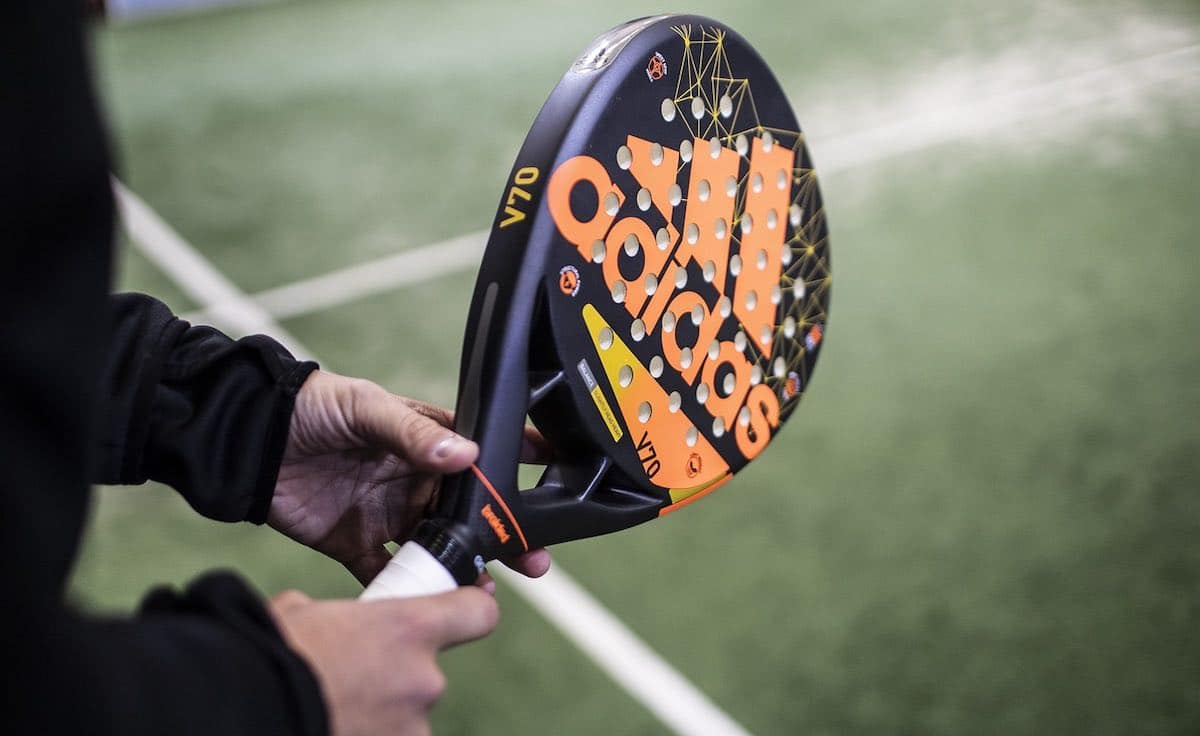
Changing a padel overgrip takes about two minutes and needs nothing but the new grip and your hands. Start at the butt of the handle, wrap upward with a small overlap, and finish with the adhesive tape that comes in the packet. That is the whole job.
Most players never learn it, which is why so many are playing with a grip that went slick months ago. This guide covers the steps, the details that actually decide whether it feels right, and the handful of mistakes that make a first attempt come out lumpy.
Florida has a fast-growing padel scene. As of Q2 2026, there are 89 padel clubs and 475 courts across the area. The biggest scenes are in Miami, Orlando, Doral, and Miami Beach. Below you’ll find every club mapped, rated, and profiled — from premium venues to grassroots community spots.
If you’re new to the sport, start with our complete beginner’s guide to padel or browse the national US padel hub to find a court in another state. Whether you’re chasing your first rally or a premium glass court for league play, this guide covers it.
Florida at a Glance
89
Clubs
475
Total Courts
201
Indoor
216
Outdoor
5★
Top Rated
Jump to a City
Click any city to jump straight to its clubs. Cities marked deep-dive have a full standalone guide.
Ratings sourced from Google Reviews as of Q2 2026. Cities with a dedicated deep-dive page (marked above) aren’t listed here — see the city guide for full details.
Club Profiles
Grouped by city, ordered by club count. Cities marked deep-dive have a full standalone guide — click through for the complete club list.
Padel Broward is a planned large-scale multi-racquet venue coming to Federal Highway in Fort Lauderdale — a proposal that went through Fort Lauderdale's Development Review Committee in July 2024.
Quick Facts
8courts8 indoor
4000 N Federal Hwy, Fort Lauderdale
Amenities
Pro ShopFood And BeveragePickleball CourtsParkingPickleball
Pro ShopEquipment RentalFood And BeveragePrivate EventsLockersPickleball
Visit Website
The Bath & Racquet House
The Bath Racquet House (BRH) is a private membership club opening in Tampa — a members-only destination combining padel and pickleball, wellness, and a chef-driven restaurant under one roof.
Ranked #4 among the top 150 Platinum Country Clubs in the nation, Addison Reserve brings world-class padel to one of South Florida's most distinguished private communities.
This innovative model allows members to experience diverse playing environments while enjoying professionally managed events with consistent quality and community spirit.
Quick Facts
3courts3 indoor
1835 E Hallandale Beach Blvd, Hallandale Beach 33009
One Padel Indoor Club in Miami Gardens offers climate-controlled padel year-round, making it an option for players seeking indoor courts in North Miami-Dade.
Incredibly fun, easy to learn, and difficult to master—that's how Anytime Padel describes the sport they're bringing to Sarasota's Palm Aire Country Club.
The club combines world-class tennis facilities with newly added padel courts and a full-service gourmet restaurant, creating a complete experience for players and their families.
Dixson Padel and Pickleball Club is an indoor facility in Deerfield Beach, combining padel and pickleball under one roof with climate-controlled comfort.
Arena Sports is a US-based padel court supplier and installer headquartered in Hialeah, Florida — one of the go-to contractors for padel court construction across the United States.
Conquer Padel is bringing padel to Jacksonville, Florida with a new world-class facility merging 5 premier padel courts with social connection under one roof.
The club boasts a team of 4 specialized instructors, including Antonio and Nico, who offer lessons for all levels—Beginner, Intermediate, and Advanced.
Coral Oaks is a private tennis and wellness club in Pinecrest, Florida that has been a South Miami institution for nearly 75 years (founded in the 1950s).
Construction broke ground in June 2025, with the facility expected to open in early 2026 as the brand's second South Florida location after their popular Fort Lauderdale club.
There are currently 89 padel clubs in Florida, with 475 total courts. The clubs section above lists every facility with its address, court count, contact details, and amenities.
How many padel courts are there in Florida?
As of Q2 2026, Florida has 475 padel courts across 89 clubs.
Is padel growing in Florida?
Yes. Padel has been one of the fastest-growing sports in the United States since 2022, and Florida is part of that boom.
Do I need a membership to play padel in Florida?
Most clubs offer pay-per-play options. Some private country clubs require membership — check each club's profile above for booking details.
Which is the best padel club in Florida?
It depends what you're looking for. The summary table above sorts by Google rating — the highest-rated clubs are flagged 'Highly Rated'. Click any rating to see live reviews.
Explore More US Padel Guides
Padel is exploding across the United States. See where else you can play, find the best clubs in each state, or browse our city deep-dives.
Miami has a fast-growing padel scene. As of Q2 2026, there are 39 padel clubs and 243 courts across the area. The biggest scenes are in Miami, Doral, Miami Beach, and Aventura. Below you’ll find every club mapped, rated, and profiled — from premium venues to grassroots community spots.
If you’re new to the sport, start with our complete beginner’s guide to padel or browse the national US padel hub to find a court in another state. Whether you’re chasing your first rally or a premium glass court for league play, this guide covers it.
Miami at a Glance
39
Clubs
243
Total Courts
68
Indoor
128
Outdoor
5★
Top Rated
Jump to a City
Click any city to jump straight to its clubs. Cities marked deep-dive have a full standalone guide.
Ratings sourced from Google Reviews as of Q2 2026. Cities with a dedicated deep-dive page (marked above) aren’t listed here — see the city guide for full details.
Club Profiles
Grouped by city, ordered by club count. Cities marked deep-dive have a full standalone guide — click through for the complete club list.
Miami · 16 clubs
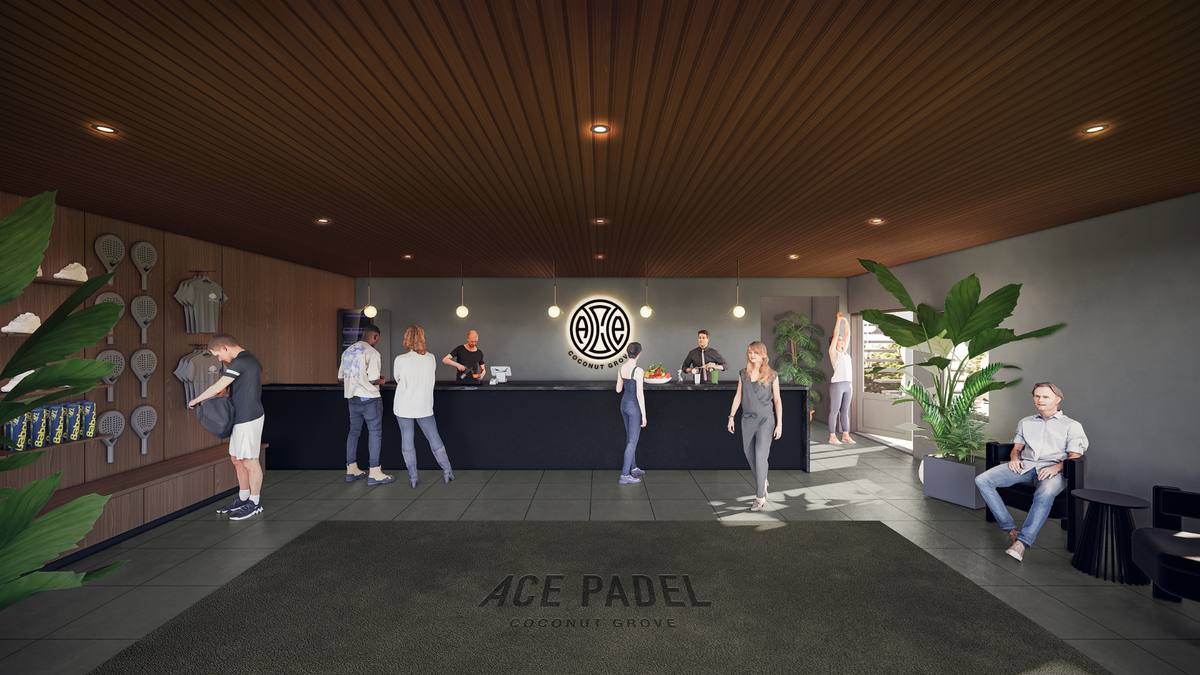
Ace Padel Coconut Grove
Miami's Coconut Grove, with construction underway and opening targeted for spring 2026.
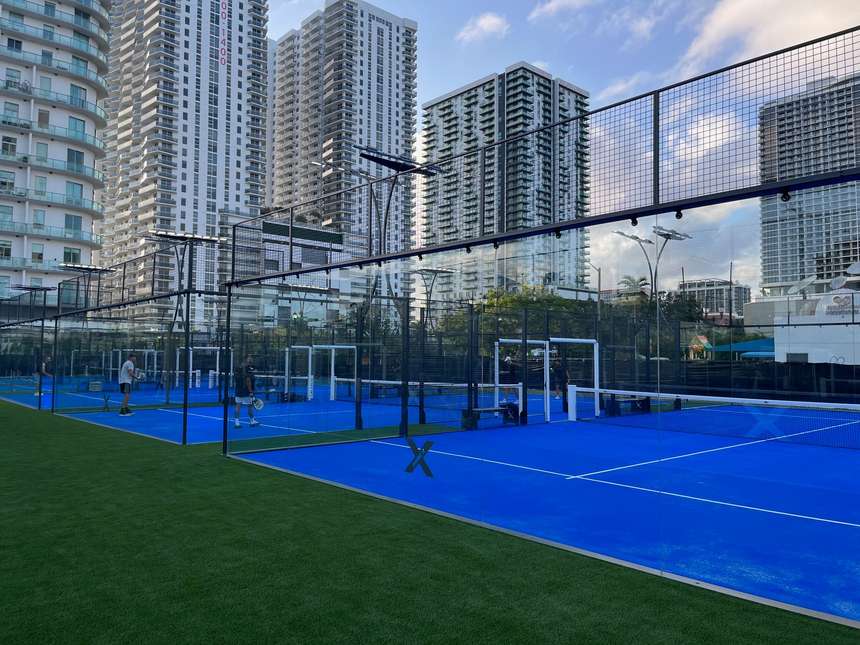
Located in the heart of Brickell, Miami's vibrant urban core, Brickell Soccer Padel brings padel and soccer together under the lights of the city skyline.
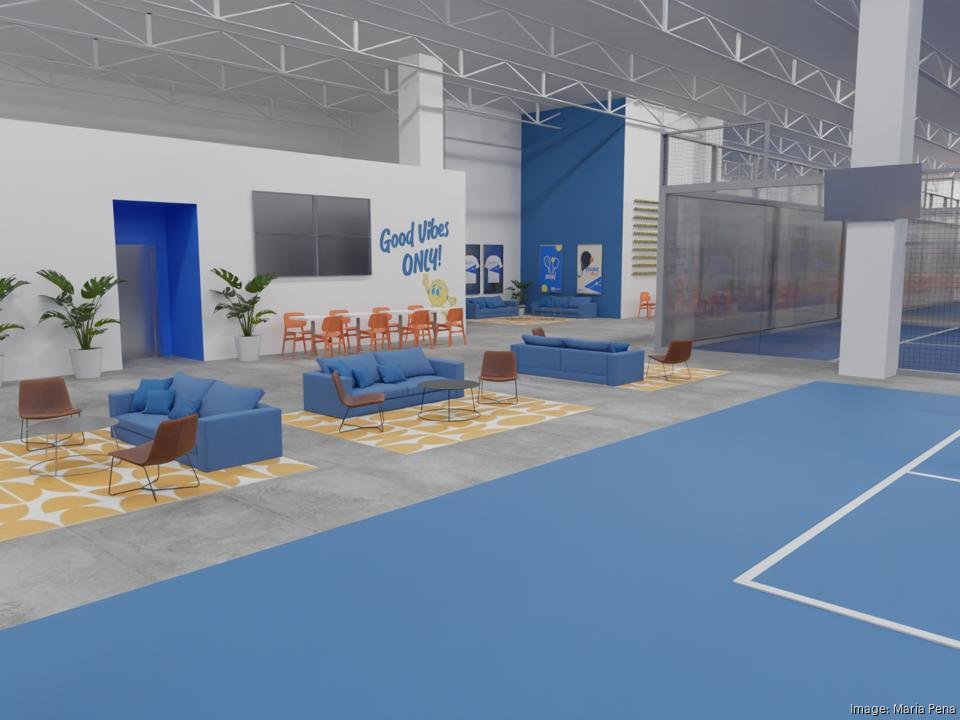
Maria Pena spent more than two years searching for the right space — a venue with ceilings high enough for lobs, foot traffic to introduce newcomers, and room for a real community hangout.
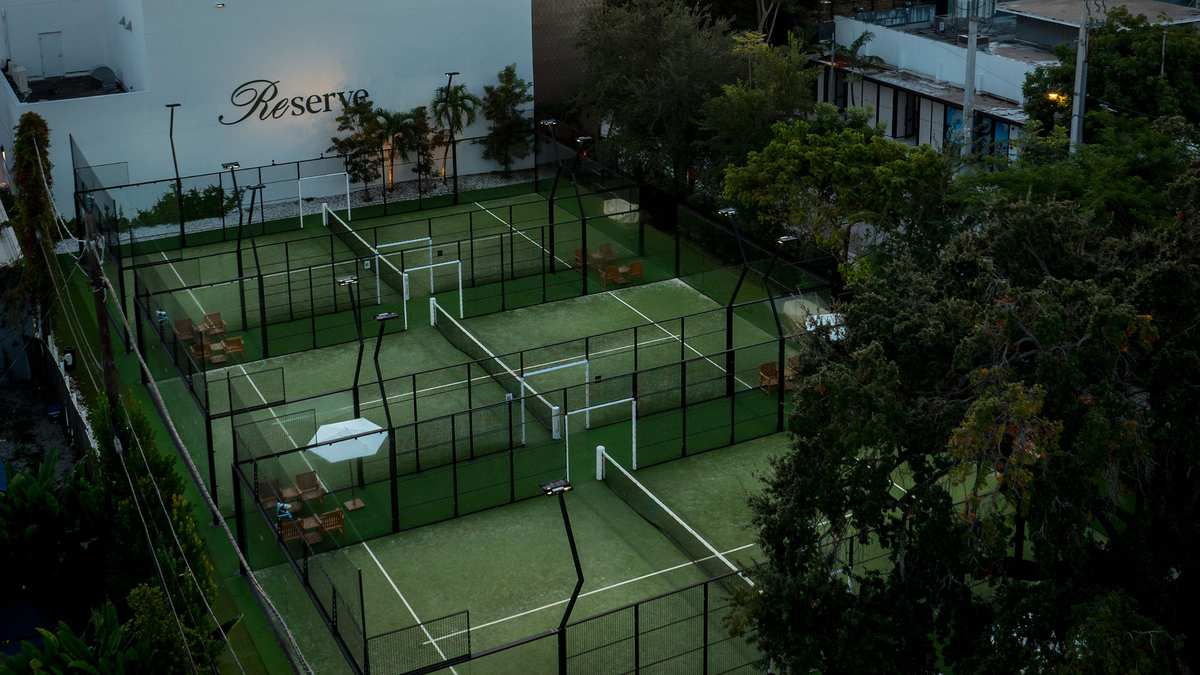
Facilities Reserve Design District goes far beyond courts: – Pro Shop stocked with the latest padel gear and Reserve-branded apparel – Coffee Lounge area for members – *.
Located within the sprawling 247-acre Tamiami Park south of Florida International University, Tamiami Tennis is part of the Cañas Racket network—Miami's premier tennis, padel, and pickleball academy.
Located within Miami's iconic 275-acre Tropical Park, this multi-sport facility operated by Cañas Racket offers one of the most accessible padel experiences in South Florida.
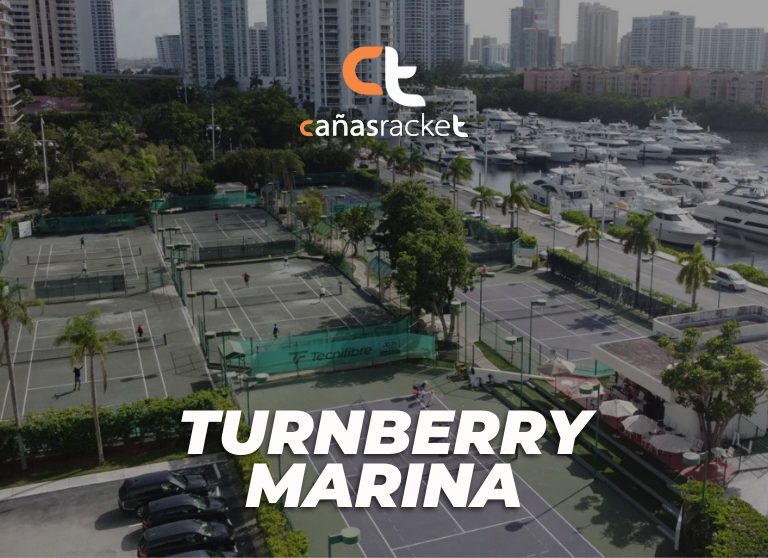
Located at the scenic Turnberry Marina in Aventura, Cañas Racket offers a comprehensive racket sports experience with tennis, padel, and pickleball programs.
Tucked behind the art-decorated wall at Pepper Park Tennis Center, Pepper Padel Miami has built one of the most welcoming padel communities in North Miami.
If you want to play padel on good courts, Pulse Padel Hub delivers—with a perfect 5.0-star rating and over 40 reviews praising its exceptional customer service and first-class facilities.
Arena Sports is a US-based padel court supplier and installer headquartered in Hialeah, Florida — one of the go-to contractors for padel court construction across the United States.
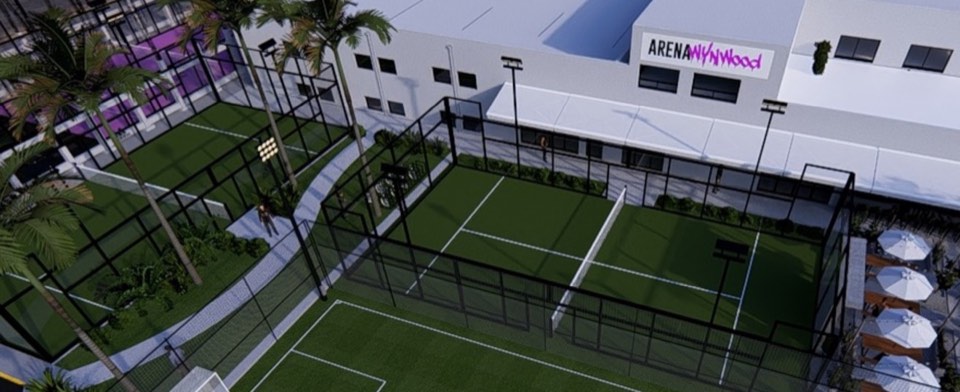
Sports and entertainment complex in Miami’s Wynwood district with 5 professional padel courts alongside FIFA-quality soccer fields, laser tag, an arcade, and a full sports bar.
There are currently 39 padel clubs in Miami, with 243 total courts. The clubs section above lists every facility with its address, court count, contact details, and amenities.
How many padel courts are there in Miami?
As of Q2 2026, Miami has 243 padel courts across 39 clubs.
Is padel growing in Miami?
Yes. Padel has been one of the fastest-growing sports in the United States since 2022, and Miami is part of that boom.
Do I need a membership to play padel in Miami?
Most clubs offer pay-per-play options. Some private country clubs require membership — check each club's profile above for booking details.
Which is the best padel club in Miami?
It depends what you're looking for. The summary table above sorts by Google rating — the highest-rated clubs are flagged 'Highly Rated'. Click any rating to see live reviews.
Explore More US Padel Guides
Padel is exploding across the United States. See where else you can play, find the best clubs in each state, or browse our city deep-dives.
No, padel and paddleball are not the same sport. Padel is played on an enclosed glass court where the walls are part of every rally, with a stringless perforated racket and a tennis-like ball. Paddleball is an American racket sport played against a single handball-style wall (or inside a four-wall court), using a small solid paddle and a hollow rubber ball, where only the server can score. They share the word “paddle,” but that is close to where the resemblance ends.
Paddleball is also easy to confuse with paddle tennis (pop tennis), a completely different sport that borrows tennis scoring and is played on an open mini-tennis court. This guide is specifically about paddleball, the wall-based, handball-style game — not paddle tennis. If it is padel vs. other racket sports you are after, see our padel vs pickleball, padel vs squash and padel vs tennis comparisons.
Under Armour does not make a padel shoe. It does not currently sell a dedicated tennis or pickleball shoe either — UA’s own “Pickleball & Tennis” category lists apparel and accessories, but no footwear. If you have seen an article claiming Under Armour sells padel shoes like the “Curry Splash” or “Stellar G2,” that is inaccurate: the Curry Splash is a Stephen Curry basketball shoe and the Stellar G2 is a military and tactical boot — neither has anything to do with racket sports.
This is the most straightforward brand guide in our series: there is no genuine Under Armour padel product to review. Instead, this page is here to save you the search, explain what UA actually sells that could reasonably double as a padel shoe in a pinch, and point you to brands that do make dedicated padel footwear.
Puma actually sells a real padel-tennis crossover shoe on Amazon US — the NOVA Elite, listed with “Padel-Tennis Shoe” as its official style name — but that is currently the only genuinely padel-marketed Puma model available here. Puma’s fuller padel range (including the Solarcourt RCT Padel and player-signature colorways) is sold through European padel retailers and Puma’s own UK site, not Amazon.com.
This guide covers the one Puma shoe Amazon US actually sells for padel, how it compares to a shoe built exclusively around the sport, and when you are better off buying from a brand with a fuller US padel lineup.
New Balance sells a genuine clay/padel-oriented shoe in Europe — the FuelCell 796 line in a colorway literally named “Padel” — but it is not sold on Amazon.com. Search Amazon US for “New Balance padel shoes” and what comes back is New Balance’s hard-court and clay-court tennis shoes, not a shoe marketed for padel.
This guide is honest about what that means in practice: the New Balance tennis shoes that cross over reasonably well to a padel court, how they compare to a purpose-built padel shoe, and when you are better off buying from a brand that actually sells dedicated padel footwear in the US.
Babolat brings its tennis-racket engineering pedigree to padel footwear through the Premura and Movea lines, built around Michelin rubber outsoles (yes, the tire company) and Babolat’s own Matryx fabric technology. The range covers a tour-level flagship, a newer all-court option, and a women’s-specific comfort model, all sold on Amazon US.
The three picks below are genuine Babolat padel shoes, not tennis crossovers. For the picture across every brand — NOX, adidas, ASICS and more — see our full best padel shoes guide, or compare against our NOX padel shoes and adidas padel shoes guides.
NOX is one of the few brands that treats padel shoes as a medical-grade engineering problem rather than a colorway exercise. Its AT10 and ML10 lines are developed with a podiatrist and lab-certified for injury reduction, built around NOX’s own AGG (Advanced Gravity Geometry) drop technology, and carry Agustin Tapia’s signature on the flagship model.
All three picks below are explicitly padel shoes with padel-specific outsoles, sold on Amazon US. For the picture across every brand — adidas, ASICS and more — see our full best padel shoes guide, or compare against our adidas padel shoes and ASICS padel shoes guides if you are deciding between brands.