
Padel is one of the fastest-growing sports in the United States right now — and for good reason. It’s social, strategic, and wildly fun. But if you want to hold your own on court, you need to understand the different padel shots and what each one actually does. Whether you’re picking up a racket for the first time at a new club in Miami or Austin, or you’ve been playing tennis for years and want to make the switch, this guide breaks down every padel shot you’ll need — from the basic serve to the tricky vibora.
Padel is different from tennis in one crucial way: the walls are in play. That means shots that would be out in tennis — balls bouncing off the back glass, off the side panels — are completely legal here. That single rule transforms every shot into a multi-dimensional decision. You’re not just hitting a ball over a net; you’re thinking about where it bounces, how it comes off the glass, and what angle it creates for your opponent.
Let’s go through every padel shot you need to know, how to execute it, and when to pull it out of your bag.
Basic Shots in Padel
Everything will always start with the basics. You can’t go pro if you don’t master the minimum in playing padel.
You must go over the basics first before going advanced to ensure a smooth transition. Basic shots will always come in handy in all your games.
The Padel Serve
The serve is one of the most underrated but most important padel shots. It’s not as important as the serve in tennis, but it can help you gain the net position instantly.
However, it is still essential for padel players to practice their padel serve.
It aids the player in taking good advantage of the net position.
A padel serve can direct the ball’s speed, spin, and direction. It also gives the server power to dictate the shot their opponent will use.
A good service can even force poor and difficult returns. This establishes an easy volley during the early game.
Acing a service also helps set a player’s point and forces them to heed on their backfoot at the start of the game.
Recommended reading:
Best Way to Serve in Padel
When you serve the ball in padel, you have to note three main things:
1. Time
Take an ample amount of time as you serve the ball. Don’t rush and serve too fast. If you give yourself the right time to serve, you’ll also have enough stretch to move forward towards the net.
You can take advantage of the net position when you aced the right timing.
2. Intention
Your intention in doing padel serve also matters as you hit the ball. You shouldn’t only intend to pass the ball to the other side. You can control the play with your service shot.
It is possible to force your opponent to throw poor returns. You can also direct them on which shots they would use to yield the ball back.
A good service can help you establish an easy rally and set your point during the early game!
3. Position
How you position your body as you aim to serve the ball and after service is also essential. You can put one foot forward and drop the ball in front of you as you hit the ball towards the net.
The way you swing your racket and the ball’s level as you swing would also affect its trajectory. Ideally, you only want the ball to bounce slightly over the net.
You should also remember to put your body’s momentum forward before the ball gets to the other side. This is essential in keeping the correct position in the padel court.
Common Mistakes of the Padel Serve
A padel serve can be a simple shot to throw. However, there are also instances where you make common technical and tactical errors.
Mistakes during service can also impact your gameplay. Hence, you must know the common errors committed by many padel players.
There are three mistakes that players tend to make when they serve:
Mistake #1: Trick-serving
Sometimes, you think that doing complicated spins and tricks as you serve keeps the opponent guessing. You’re also hoping that it will result in poor returns.
However, you’re also at risk of committing service errors. Possibly, the ball won’t stay in its accurate placement. Keeping the serve simple will help you gain enough control of the ball’s trajectory. By doing so, you can force a difficult return from your rival.
Mistake #2: Hitting too fast
You should NEVER rush yourself in serving the ball. You must ace the timing as you padel serve. Others think that serving the ball fast would cause their opponent to fret as the ball approaches.
However, this sacrifices the ball’s accuracy.
Mistake #3: Not moving forward
Some players tend to wait for the ball to reach the other side of the court. This delays them from getting a good position on the net.
Moving a few steps forward is important to secure a favourable attack stance as you serve. It will prepare you to hit the ball as you proceed to rally.
The Padel Forehand
The forehand is another basic padel shot. But it’s also one of the most critical shots when playing padel.
It’s commonly used to return and defend the ball. A player also uses a forehand as a transition or placement shot.
There are three major steps that padel players do when they’re doing a forehand:
- Preparation – As you prepare to impact the ball, you should take your paddle fully back. Your upper body, specifically your shoulders, should also rotate as you create a swing.
- Foot stance – Your stance should be sideways to the court with one shoulder pointing to the net. This allows you to transfer your weight from back to front quickly.
- Horizontal swing – Swing your padel racket horizontally and blow the ball at waist level, followed by a follow-through.
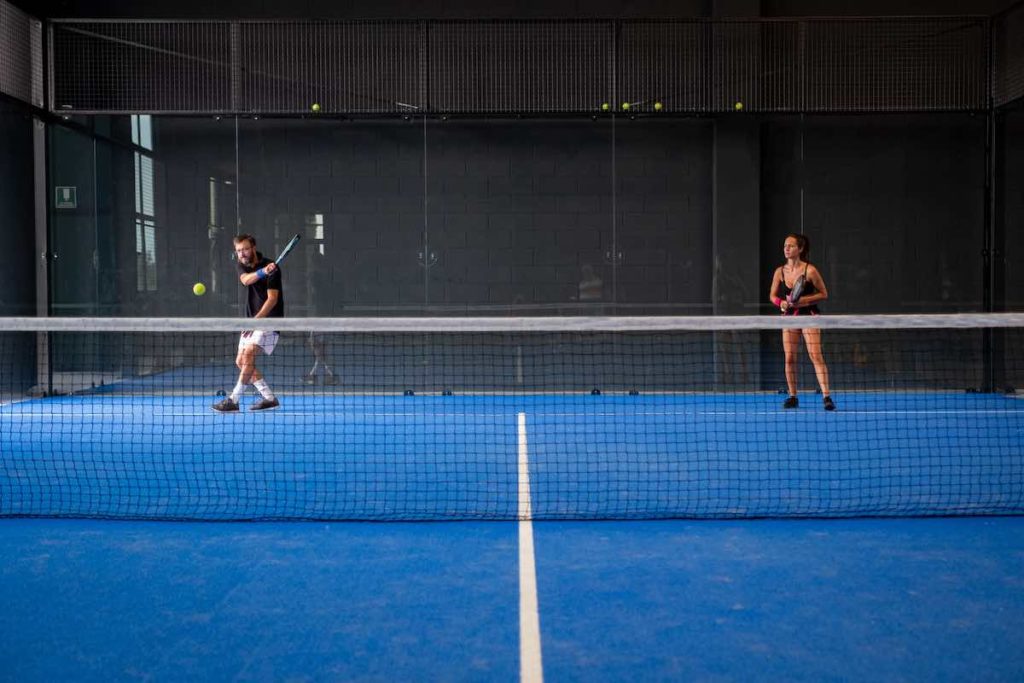
How to Hit a Great Forehand
Blowing a great forehand is essential for a padel player to know. It’s a basic return and defensive shot that doesn’t require the player to exert too much power.
- Prepare early, even before the ball crosses the net towards you. As your target approaches your forehand, you’ll have enough time to drop your shoulders immediately.
- Ensure an early and compact return by taking the racket fully back.
- Adjust your feet and keep yourself balanced as you impact the ball. This helps in making a full swing and regaining stance after blowing the ball.
The Different Types of Padel Forehand
- Topspin – A topspin can attack easy balls that float in front of you. Don’t use this shot for a high ball or when you’re pressed at the back wall.
- Flat – You can use a flat to disguise a shot. You can either make a lob or a soft shot with a flat. You can also increase your racket speed to release fast balls.
- Slice – Use this shot if the ball is approaching at a higher level, ideally near the chest.
Recommended reading:
The Padel Backhand
Another important element among other padel shots is the backhand.
Usually, when your opponent throws off low balls, you can counter it with a flat backhand. With this, you can direct the balls towards their feet, body, or to open space.
How to Hit a Great Backhand
- Take the racket back as you prepare to swing your racket. Hand placement is also essential in guiding the racket. Maintain your right hand on the grip with your left hand on the throat.
- Move your feet to keep a balanced stance. Your hips and waist should face sideways before you take a swing.
- Swing and follow through with the ball horizontally. It’s also important to remember that your left hand should let go of the racket’s throat. Ideally, you should finish in an open stance.
The Different Types of Padel Backhand
- Slice – You do this shot by moving your backhand from high to low. This helps generate more speed for your racket.
- Topspin – Same as topspin on the forehand.
- Double-handed – Mainly used by people used to playing tennis, or for balls that have extreme power.
- Flat – Prepare your racket at a lower height to contact the ball straight. Hit the ball low to high and finish in an open stance.
The Padel Volley
A volley is the strike or shot you make before the ball impacts the ground. This shot plays a vital role when playing padel.
When you establish a good volley throughout your game, you’re most likely in for a non-stop rally and set up a point against your opponents.
You must prepare yourself by pulling the racket back along with your shoulders. If you’re going for a forehand, put your left foot forward (and vice versa for the backhand shot).
Afterwhich, swing your racket and twist your shoulders to approach the ball. Always ensure to blow it in front of your body for a strong block.
Types of Padel Volleys
There are several kinds of volley in padel. These four types of volley would require you to master the basic shots first:
Reactive Block Volley
A player usually plays this if the opponent quickly attacks the ball and when they’re near the net. The goal of this shot is to return the ball quickly to the other side.
Neutral Volley
The shot is quite similar to the block. However, you are given the time to readjust your stance. You’ll be able to direct the next ball away from your opponents.
Standard Volley
The traditional way of doing a block is called a standard volley. It forces your opponent to return weak shots to set up your point.
Aggressive Volley
The best way to counter a soft shot is to aim for a powerful backswing. This allows for favourable racket speed and enforces a fast volley. An aggressive volley can help you win a point right away.
The Padel Lob
A lob is another important shot in padel. You can use this to change a match’s dynamics and throw off your opponents’ position.
Unlike other padel shots, blowing a lob means contacting the ball at a lower level. You’ll then finish by swinging the racket high up.
You should also remember to bend with your knees as you prepare to make a lob.
Why is the lob important in Padel?
Doing a lob shot is advantageous in taking the net position and changing the game dynamics.
You can force your rival to press themselves at the back of the court to give you time to take a few steps forward.
If you encounter aggressive hitters who throw fastballs, you can slow them down with a lob. They have to wait for the ball to go down. This gives you time to recover.
Where to aim with a lob in Padel?
- Cross Court – This gives you more space to work with your lob. It’s also difficult for your opponent to do Bajada while easier for you to execute a Bandeja.
- Tight Down the Line – Unlike cross court, you’ll have little space to do your lob in this direction. But, this makes it difficult for your rivals to make technical balls and smashes.
- Down the Middle – This direction could make it easy for your opponents to do a bajada. In cases like this, you must do more fast lobs than high lobs.
The Padel Smash
A smash is one of the most aggressive shots you can make in padel. This is used to close a play while the player returns attack shots to their opponents.
You’d tend to smash the ball hard when you came from a tennis background. However, this is not the right way to do it, specifically in padel.
The different types of padel smashes
Topspin Smash
You can do this shot when you’re at the further backside wall. You must blow the ball lightly if you’re near the net. You should also hit the ball by the top end of your racket.
Gancho
This is often played when the player is on the right side of the court. It’s also possible to do a Gancho when the opponent lobbed crosscourt or down the line.
Flat smash
A flat smash is done when the player aims to finish points. Ideally, you should hit the ball as high as possible to hit the glass at a high angle.
Kick-smash
Top- and side spins are important to be integrated into your kick-smash. You have to spin your ball towards the back wall slightly higher point. Players use this shot if they want to throw the ball out of the court.
Attacking Shots in Padel
Attacking shots are the ones that put pressure on your opponents and create opportunities to win the point outright. In padel, attacking usually happens from the net position — when you’re close to the net and your opponents are pinned at the back wall. Here are the key attacking shots you need in your arsenal.
The Smash — and its Variations
The smash is padel’s most satisfying shot — but it works differently than in tennis. You’re rarely trying to hit the ball as hard as possible. Instead, the goal is to aim the ball at the back glass at an angle that makes it die, bounce out of the court (via a kick smash), or leave your opponents scrambling.
The three main smash variations — bajada, rulo, and vibora — are each suited to different ball heights and court positions:
- Bajada smash — used after the ball bounces off the back wall. A controlled, downward swing that redirects the ball low and fast.
- Rulo (round-the-head smash) — an advanced backhand overhead where the ball is hit around the head with side spin. Creates a sharp, unpredictable angle.
- Vibora — a fast, side-spin smash from mid-court that creates a sharp, low bounce off the glass. More on this below.
The Volley
The volley is your bread-and-butter attacking shot when you’re at the net. Unlike tennis, the volley in padel is more about placement and angle than raw power. You want to keep the ball low, direct it toward the glass at a tough angle, or drop it at your opponent’s feet — not smash it into the back fence.
Good volleyers in padel are constantly moving forward, cutting off the angles and making it harder for opponents to lob effectively. If you want to improve your overall game, work on your footwork — it directly impacts how well you volley.
The Bandeja (Tray Shot)
The bandeja — Spanish for “tray” — is one of the signature shots of padel and has no real equivalent in tennis. It’s a controlled overhead hit from the back of the court, used when your opponent has lobbed the ball too high or too deep for you to smash aggressively.
Think of it as a defensive smash that keeps you in control of the point. Instead of going for broke, you hit the ball with a flat, slightly brushed motion to keep it low and push your opponents back without giving up your net position.
When to use it: When the lob is too good to attack hard, but you don’t want to just float a defensive lob back. The bandeja lets you maintain court control.
Key technique points: Turn sideways, position the racket behind your head (elbows slightly bent), hit the ball at eye level or slightly above, and immediately step back towards the net after contact.
The Vibora
The vibora (Spanish for “viper”) is the attacking version of the bandeja. Where the bandeja is controlled and defensive, the vibora is aggressive and fast. It uses heavy side spin to create a sharp, awkward bounce off the glass — often leaving opponents completely wrong-footed.
You play the vibora from mid-court or the net position when your opponent throws a poor lob that sits up nicely. The technique involves a chopping motion, brushing the outside of the ball, and snapping through with your wrist.
The result? A fast ball that hits the glass at a low, sharp angle — almost impossible to dig out. This is one of the most effective point-winning shots in padel at intermediate and advanced level.
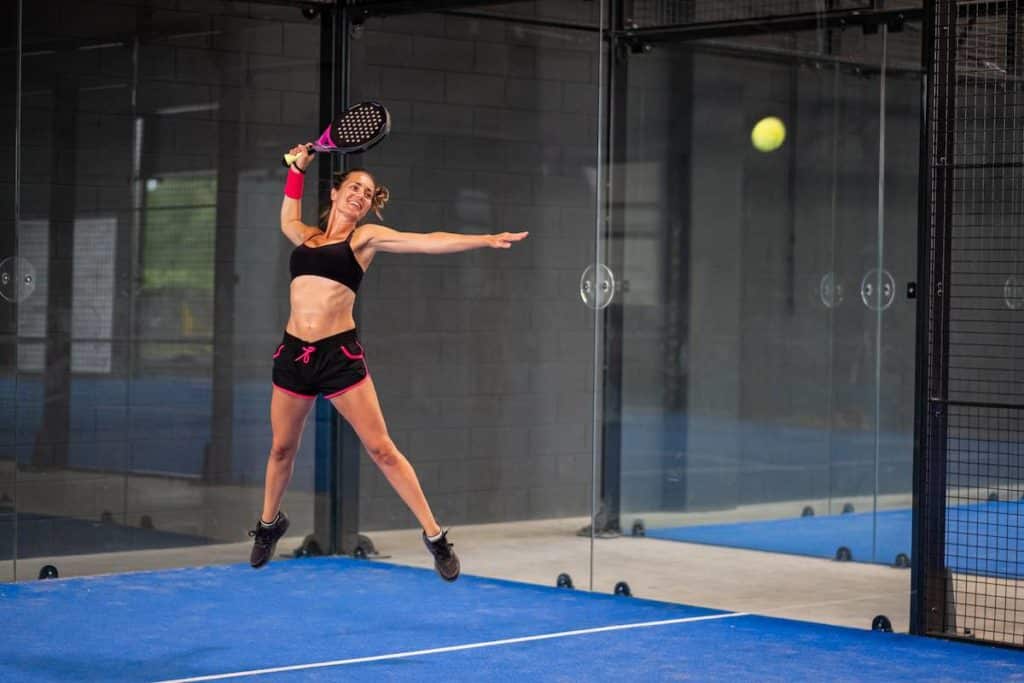
Defensive Shots in Padel
Defense in padel isn’t about survival — it’s about resetting the point and getting back into a winning position. The best defensive players use the walls to their advantage, buying time and neutralizing their opponents’ attacks. Here are the two most important defensive shots.
The Lob — the Most Important Defensive Shot
Ask any experienced padel player what the single most important shot is, and most will say the lob. It’s the cornerstone of padel defense. When you’re pinned at the back wall and your opponents are dominating the net, a well-placed lob is your reset button.
A great defensive lob does three things:
- It forces your opponents off the net position, giving you time to recover
- It buys you and your partner time to reorganize and move forward
- It turns a losing position into a neutral one — resetting the point
The technique is simple in theory but requires real feel: contact the underside of the ball with a low-to-high swing, aiming for a trajectory that peaks around 3–4 meters and lands deep in your opponent’s court. The goal isn’t power — it’s height and depth. If you can land the lob within 1 meter of the back glass, it’s almost impossible to smash aggressively.
Adding slice to your lob makes it even more effective. A sliced lob sits lower after the bounce off the glass, skidding through fast and keeping the ball difficult to time. If you want to improve your overall padel preparation, spend time drilling lobs — it pays dividends at every level.
The Wall Shot (Using the Back Glass)
One of the most distinctive things about padel — and the thing that most surprises new players coming from tennis — is that letting the ball hit the back glass before you play it is completely normal and often smart.
When your opponent smashes or plays a hard shot towards the back, your instinct might be to try to intercept it. Don’t. Step back, let the ball bounce off the glass, and then play it as it comes off. You’ll have far more time and a much better contact point.
The key rules for playing off the back glass:
- Move behind the ball before it hits the glass — don’t chase it
- Keep your racket low and ready as the ball comes off the wall
- Play your shot in front of your body — never behind you
- Transfer your weight forward as you hit, and move back toward the net
The most common mistake? Not moving back quickly enough. If you stay too close to the glass, the ball is in your body and you have no room to swing. This is why footwork in padel is so critical — good movement makes the glass your ally, not your enemy.
Baseline and Groundstroke Shots
Groundstrokes in padel serve a different purpose than in tennis. You’re rarely trying to hit winners from the baseline. Instead, groundstrokes are about building the point — keeping the ball low, creating pressure, and setting up a lob or a more aggressive shot from a better position.
The Forehand Drive
The forehand drive is your primary groundstroke weapon. When you receive a ball at a comfortable height — between knee and chest level — the forehand drive lets you direct it with pace and purpose.
In padel, you generally play the forehand drive with either a flat or sliced contact. Flat gives you more pace and penetration; slice keeps the ball low and makes it skid awkwardly off the glass. Avoid heavy topspin on the forehand drive — unlike tennis, high-bouncing balls in padel are actually easier for your opponent to deal with, since they come off the back glass at a predictable height.
Aim to direct your forehand drives: crosscourt to create the widest angle, down the line to wrong-foot your opponent, or low and hard to the middle to exploit a gap between the two opponents.
The Backhand Drive
The backhand drive is particularly important in padel because the backhand side is where most serves are aimed and where many opponents will attack. A solid backhand keeps you in the point and gives you options.
Most padel players play the backhand drive with slice, which is ideal for keeping the ball low and creating a difficult angle off the glass. The technique is a high-to-low brushing motion — racket face slightly open, swinging down and through the ball.
If you’re coming from a tennis background, resist the urge to hit a heavy topspin backhand. It will pop the ball up and give your opponents an easy opportunity. Keep it low and controlled instead.
Want to understand which side of the court suits your groundstroke better? Check out our guide on which side to play in padel.
Advanced Shots in Padel
Now that you know the basic shots in padel, it’s time to UPGRADE your game!
These advanced padel shots can help you throw difficult balls at your opponents. You can use these to your advantage to win more games if executed correctly.
The Bajada (After Wall Bounce)
The bajada is one of the most technically demanding shots in padel and one of the most satisfying to pull off. It’s played when the ball has bounced off the back glass and come back up high — giving you the opportunity to attack it aggressively as it drops.
Rather than waiting for the ball to come all the way down, you attack it while it’s still above head height, using a sharp downward swing to punch it low and fast across the net. The timing is everything. Too early and the ball is too high; too late and you’ve lost the attacking opportunity.
When to use it: Your opponent has lobbed short or the smash has bounced back off the glass at a favorable height. You need space from the back wall and confident footwork.
Where to aim: Crosscourt, down the line, or at the feet of the net player. The bajada is a genuine point-winner when executed with pace and placement.
The Chiquita
One great shot that you can use to step up your game is the Chiquita. It’s a shot that will oblige your opponent to go lower than the net.
Chiquita is a soft shot played by padel players to get the ball at a low height. This directs the ball to land on your opponent’s feet.
A key to playing this shot is maintaining the right speed. Don’t hit the ball too fast or slow!
Playing this type of shot is helpful in:
- Changing the pace and dynamics of the match
- Hitting the ball into the open space
- Pushing opponents to move forward to gain a chance for an easy lob at the back
- Forcing a short or high ball from opponents
The Bandeja in Padel
Padel players who aim to hit a shot between attack and defence use the Bandeja.
The Bandeja shot is one of the most difficult shots to master among other padel shots. However, when executed right, the player can force their opponent to step back and throw defensive shots. From there, they’ll be able to continue their attack blows at the net.
It takes PRACTICE for a player to ace a Bandeja. A key to successfully playing this is quick footwork and a good stance.
Attacking vs. Defensive Shots — Quick Reference Table
Not sure which shot to reach for in a given situation? This quick comparison table breaks down the main padel shots by type, when to use them, and how difficult they are to master.
| Shot Name | Type | When to Use | Difficulty |
|---|---|---|---|
| Lob | Defensive | Pinned at the back wall; opponents at net | Beginner–Intermediate |
| Forehand Drive | Groundstroke | Mid-court, comfortable ball height | Beginner |
| Backhand Drive | Groundstroke | Mid-court, low ball on backhand side | Beginner–Intermediate |
| Volley | Attacking | At the net, ball in the air | Intermediate |
| Bandeja | Attacking/Defensive | High lob when you can’t attack hard | Intermediate |
| Smash (flat) | Attacking | Easy lob, close to net | Intermediate |
| Kick Smash | Attacking | Mid-court lob, aim to put ball out of court | Advanced |
| Vibora | Attacking | Poor lob, mid-court — side spin winner | Advanced |
| Bajada | Attacking | Ball rebounding high off back glass | Advanced |
| Chiquita | Special/Tactical | Opponents at net, place ball at their feet | Intermediate |
| Wall Shot | Defensive | Hard shot heading to back glass — let it bounce | Beginner |
Which Padel Shots Should Beginners Learn First?
If you’re new to padel — maybe you’ve just found a court near you in New York, Chicago, Houston, or one of the other US cities where the sport is taking off — here’s the order we recommend learning shots. Don’t try to learn everything at once. Build your game layer by layer.
Check out our full how to play padel guide for a complete beginner walkthrough, and read up on the padel serve rules before your first game.
- The serve — You need this to start every point. Keep it simple: flat, low, and aimed at the T or glass. Don’t try fancy spins until you’re comfortable.
- The lob — The most important shot in padel, full stop. Learn to lob consistently before anything else. A reliable lob keeps you in rallies and gives you time to reset.
- The forehand and backhand drive — Your bread-and-butter groundstrokes. Focus on controlled, flat/sliced contact. You don’t need power — you need direction.
- The volley — Once you’re comfortable at the net, work on your volley. Aim for placement, not pace. Block it soft and low.
- Playing off the back glass — This is padel-specific and feels weird at first. Practice letting the ball come off the glass and playing it in front of your body. It’s one of the most important skills to develop early.
- The bandeja — Once you’re past beginner level, the bandeja is the next shot to add. It unlocks your ability to stay in attacking rallies even when your opponent lobs well.
- The vibora and bajada — These are intermediate-to-advanced. Add them when your footwork and timing are solid. They’ll transform your attacking game.
If you’re figuring out where to start on the court, our positions guide explains left vs. right side roles — which directly affects which shots you’ll use most. And if padel is new to you entirely, see how it compares to what you already play in our padel vs tennis breakdown.
In Summary
You always want to step up your game every time you appear on the court. Hence, you strive to learn tricks and advanced shots to integrate with your play.
However, it’s also important to master the BASICS first.
By doing so, you’ll find it easy to transition to more complex padel shots. Knowing the fundamentals can help you do your blows right even at the advanced level.
Keep practising your padel, and you’re up for more interesting games in the future!
Frequently Asked Questions About Different Padel Shots
The lob is widely considered the most important shot in padel. It resets the point when you’re under pressure, forces opponents off the net position, and buys time to recover. You can have a brilliant smash and a fast volley, but without a reliable lob, you’ll struggle to win consistently.
The bandeja (Spanish for “tray”) is a controlled overhead shot hit from the back of the court in response to a deep or high lob. Rather than going for a full aggressive smash, the player uses a flat, slightly brushed swing to keep the ball low and maintain net position. It is considered one of the hardest shots to master in padel because of the footwork, timing, and body positioning required.
Not really. In tennis, the smash is a pure power shot aimed at ending the point. In padel, the smash is more nuanced — you often hit toward the back glass at a specific angle to make the ball die, rather than hammering it as hard as you can. Going too hard often means giving your opponent a predictable bounce off the glass that they can deal with. Padel smashes require angle and spin, not just pace.
The vibora (Spanish for “viper”) is an attacking overhead shot played with heavy side spin. It is hit from mid-court or the net position in response to a poor lob. The side spin creates a sharp, skidding bounce off the back glass that is very difficult for opponents to dig out. It is an intermediate-to-advanced shot and is one of the most feared attacking shots in padel when executed well.
You can use the lob when your opponent is throwing fast shots. This helps change the dynamics of the game. You can slow the ball down to gain the net position.

Isabella Torres is originally from Madrid, Spain, and has been playing Padel as a semi-professional for the past five years. After completing her education as a journalist, she discovered her true passion in life was writing about Padel.
She loves staying up late watching intense rallies on YouTube, and is excited to share her knowledge about the sport with SimplePadel’s readers.
23 replies on “The Different Shots of Padel Explained”
[…] balls that force your opponents to press their backs at the back wall. In this case, hitting a good high ball will give you the perfect opportunity to gain net […]
[…] With the right padel racket, you can hit with more power on the court! […]
[…] also appeal to you. The foundation of the game is based on good positioning and strategy, using speed and accuracy to place the ball where it will put your opponent under […]
[…] officials accept Padel’s many different shots, such as forehand and backhand serves. They will allow you to save the balls from bouncing or […]
[…] The Different Shots of Padel explained […]
[…] best padel rackets are the ones that provide you with a solid feel and give you the ability to control your shots, especially when you’re playing on hard courts or clay […]
[…] Again, it’s all about what can improve your shot. […]
[…] The Technical Viper padel racket is the perfect tool for any technical striker who is looking for a racket to help them to optimize power transmission when returning shots. […]
[…] are the warm-up exercises you should follow before you show off your forehand and backhand in padel. Let’s dive right […]
[…] Minor mistakes in changing the padel overgrip are usually okay. It won’t affect your playing performance much, but you’ll feel a difference while hitting a shot. […]
[…] racket won’t slip from your fingers. You’ll likely be able to make good shots on the padel court, whether a spin, forehand stroke, or backhand […]
[…] fantastic shots of padel players are all thanks to their rackets’ comfort and ease of use. And it’s mostly the grip that […]
[…] competing in the sport will learn how to perform the different shots of Padel. They will eat through Padel rackets as they become more powerful and obsessed with the […]
[…] control: If you want control over your shots, this padel will provide […]
[…] I’m left-handed, should I always play on the right side allowing my forehand and bandeja to be towards the […]
[…] The Different Shots of Padel Explained […]
[…] AVS lateral anti-vibration system helps facilitate shots and achieve a great spin because of its rough […]
[…] The Different Shots of Padel Explained […]
[…] This luxury padel racket is also made from only the highest-grade materials, such as carbon fiber and aluminum, making it one of the most durable rackets on the market. This racket will give you great power but also control over your chiquitas. […]
[…] The Ultimate Guide to the Different Shots of Padel […]
[…] should you play a Lob to stop your rival from smashing into the […]
[…] for your bandeja, or if you feel your execution is not up to par, it might be best to choose a different shot. Striking a balance between versatility and predictability can make you a formidable […]
[…] to practice and perfect to enhance your gameplay. Here are a few key ones:Volley: In Padel, the volley is a critical shot as the game is usually played near the net. Aiming for deep volleys can push […]