
Are you shopping for a new padel racket? Don’t pick up any old padel racket when you walk into the shop!
Check the shape of the head first. The shape of the head on a padel racket will determine where its sweet spot is and can give you more control over your shots.
In this article, we’ll break down everything you need to find the perfect padel racket.
What is the Sweet Spot?
The location of the sweet spot on a padel racket will differ between rackets, but generally, it’s the part of the racket’s head that will give you the cleanest impact.
A good grasp of the sweet spot will greatly improve your playing style. That’s why it’s important to find the right kind of shaped racket for you.
With the right padel racket, you can hit with more power on the court!
Where is the Sweet Spot on a Padel racket?
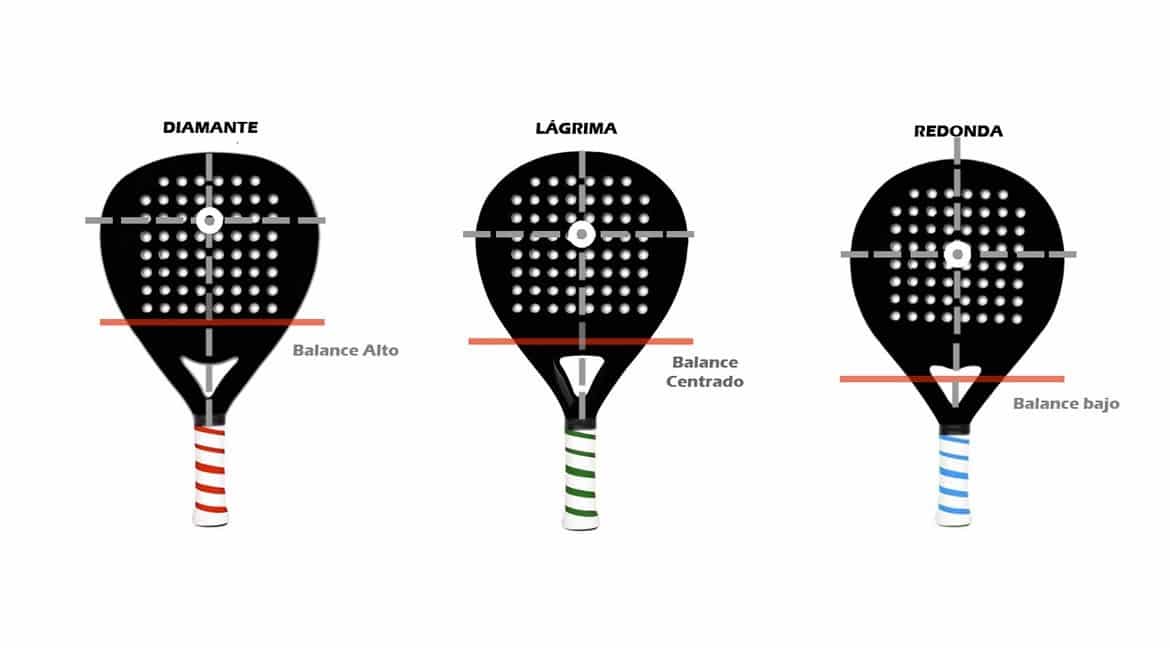
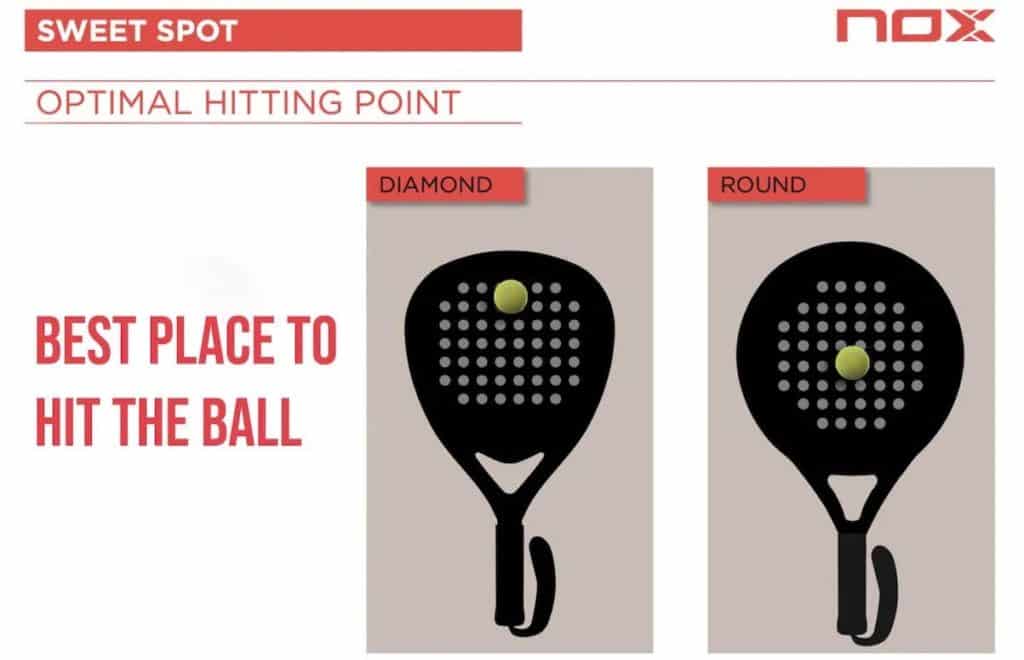
The sweet spot isn’t always in the same place. There’s a big difference between the sweet spot on a diamond-shaped racket and a round shape racket.
Knowing where the “sweet spot” is on a padel racket will determine whether you can hit with more power or not. Hitting with the sweet spot will give you more control over the ball during a game.
Conversely, forcing yourself to use diamond-shaped rackets when you’re unused to them will give you less control during play.
We’ll dive deeper into the different padel rackets and their main characteristics later.
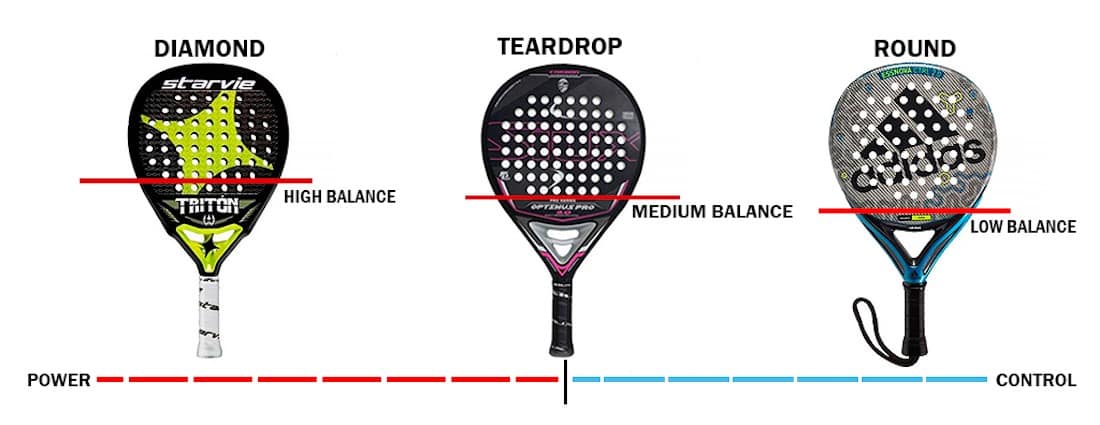
For now, you should know that there are 3 general kinds of padel rackets. Diamond-shaped, Teardrop-shape, and Round-shaped rackets, as seen in the diagram below.
| Shape | Sweet Spot Location | Balance | Best For | Skill Level |
|---|---|---|---|---|
| Diamond | Top of head | Head-heavy | Power & attack | Advanced/Pro |
| Teardrop | Centre (slightly high) | Medium | Power + control balance | Intermediate |
| Round | Centre | Low/even | Control & forgiveness | Beginner |
Sweet Spot on a diamond shaped Padel rackets
Diamond-shaped rackets are ideal for unleashing maximum power on the padel court.
A diamond-shaped padel racket will tend to be head-heavy, translating to more powerful shots on the court. But some diamond-shaped padel rackets don’t follow this rule.
Diamond-shaped padel rackets are ideal for more experienced players owing to their smaller sweet spots. The diamond shape also gives these rackets a high balance.
Since a diamond-shaped racket has a very small sweet spot, an attacking player can turn this to their advantage. These padel rackets will allow players to put a lot more power into their shots!
Pros favor diamond-shaped rackets on the world padel tour like Paquito Navarro since they offer more weight at the top of the head.
Sweet Spot on a teardrop-shaped Padel rackets
You can think of a teardrop shape as the “Goldilocks zone” for padel players. If your play style is a mix of power and control, you’ll do well with a teardrop-shaped padel racket.
The sweet spot on teardrop-shaped rackets offers a medium balance between the grip and the blade. Using a teardrop-shaped racket will let you switch between force and control!
You’ll have less control than a round-shaped racket, but it’ll be easier to swing than a diamond-shaped padel racket.
A teardrop-shaped padel racket is just right for both balance and strength. A padel player who wants to play both defensively and offensively should look into teardrop-shaped padel rackets.
Sweet Spot on a round-shaped Padel rackets
An inexperienced padel player can’t go wrong with a round-shaped padel racket. These rackets have a larger sweet spot compared to the other 2 shapes.
The benefit of a round padel racket is the large sweet spot in the center. Round padel rackets also tend to have a low balance.
This low balance makes round padel rackets easy to handle and kinder on the elbows than diamond-shaped rackets. Most beginners can develop a good technique by practicing with a round padel racket.
The round shape of these padel rackets gives them a more forgiving weight distribution. Due to this, round-shaped padel rackets are more favored by beginners.
Why are the Sweet Spots in different places?
The sweet spot of differently-shaped rackets is in different places because your racket’s shape directly affects the sweet spot’s location.
Let’s look at a diamond shape, for example. Diamond-shaped rackets have a large portion of their weight nearer to the top, where their sweet spot is.
The other 2 shapes follow this trend. Weight and shape directly affect the location of your racket’s sweet spot.
Why does the Sweet Spot in a Padel racket matter?
The importance of the sweet spot depends on how much control you want over the ball during the game.
Mastering your racket’s sweet spot will give you greater control over where the ball goes when you strike. You’ll be able to direct it more precisely and strike harder!
Sweet Spot and balance of a Padel racket
The balance will affect the sweet spot of your racket. As an example, think of the main characteristics of a diamond-shaped racket.
These rackets will have a high balance, so they can generate more strength when striking. However, high-balance rackets are also more likely to injure their users, so be careful!
Conversely, round-shaped padel rackets have a low balance. This low balance makes round-shaped padel rackets easier to swing and less injury-prone.
However, round-shaped rackets give your strikes less power than a teardrop or diamond-shaped racket. The force of your shots has to come from you.
While the shape of a padel racket is important, you also need to consider the racket’s weight distribution.
For instance, a teardrop-shaped padel racket will give medium balance, which means it’ll offer a good balance between power and control during play.
The matter of material
Apart from worrying about the different shaped rackets, there’s also durability and material to consider. You don’t want a racket that can’t last you past a single game!
Most manufacturers make rackets from EVA rubber, but you can also find foam padel rackets. A stronger material will increase the durability of the head and its effective lifespan.
Your racket will be either hard or soft. Beginners and more experienced players who favor control over strength will do better with a soft racket.
An attacking player will likely play better with a hard racket. The increased weight of these rackets will lend more power and control when you strike the ball.
If you’re serious about padel, find a racket made from carbon fiber. These are pricey but often worth it!
Recommended reading:
What is the best shape on a Padel racket?
There is no single best shape for a padel racket because it will depend on an individual player’s play style and skill level.
However, if you’re new to the game, you should pick up a round-shaped padel racket. These padel rackets have the most forgiving sweet spot and carry the lowest risk of injury.
Before finding the best-shaped padel racket, padel players should develop a good technique first.
Beginners who eventually become more skilled may wish to change the shape of their racket as they keep playing.
| Player Level | Recommended Shape | Reason | What to Expect |
|---|---|---|---|
| Complete beginner | Round | Large forgiving sweet spot, elbow-friendly | Build technique without frustration |
| Club/intermediate | Teardrop | Balance of control and power | Step up your game without losing consistency |
| Advanced/competitive | Diamond | High sweet spot, maximum power | Reward precision, aggressive play style |
What does finding the Sweet Spot in Padel mean?
Finding the sweet spot for your racket will depend on the shape of your padel racket.
No matter what the shape of your racket is, the sweet spot will most often be far away from the edges and closer to the center of the racket’s head.
Diamond-shaped padel rackets are an exception since their sweet spot is closer to the top.
Tips to Consistently Hit the Sweet Spot
Knowing where the sweet spot is on your racket is one thing. Actually hitting it on every shot is a different matter entirely. Here are five practical tips to help you make consistent contact with the sweet spot during play.
Grip pressure matters more than you think. A tight grip creates tension in your wrist and forearm, which reduces your ability to feel where the ball contacts the face. Relax your grip slightly and you’ll notice you can sense off-center hits much more clearly. That feedback is exactly what helps you self-correct during a rally. Your padel overgrip also plays a role here: a fresh, slightly tacky overgrip gives you just enough friction to hold the racket without gripping too hard.
Your stance and court positioning set up every swing. When you’re out of position, you end up reaching or stretching to make contact. That means your arm, not your body, is doing most of the work. Getting to the ball early and setting your feet before you swing means you’re using your full kinetic chain. Good padel positions on the court lead directly to better-quality strikes, which means more consistent sweet spot contact.
Watch the ball all the way to contact. It sounds obvious, but most players look up a fraction of a second too early, anticipating where the ball is going rather than watching it arrive. Keeping your eyes on the ball through the moment of impact dramatically increases how often you catch it in the centre of the face. This single habit adjustment makes an outsized difference for beginners and intermediate players alike.
Practice wall drills with deliberate aim. Hitting against the back wall is one of the best training tools in padel. Rather than just keeping the ball in play, pick a specific spot on the wall and aim for it on every strike. This focused repetition trains the muscle memory needed to consistently deliver the racket face to the same position on each swing. Over time, that precision translates directly to finding the sweet spot under match pressure.
Know when to switch racket shape. If you’re mishitting frequently with a diamond-shaped racket, the sweet spot may simply be too small for your current skill level. Dropping back to a teardrop, or even a round shape, isn’t a step backwards. It’s the smarter choice. A larger sweet spot means more energy transfer on off-center hits, which keeps the ball in play while you build the technique to graduate to a more demanding shape.
Conclusion
All the news and recent comments on social media have made padel more accessible to the global audience, so it’s no wonder that more people are getting into this fun game.
Now that you know about the different kinds of shaped rackets, you’ll be able to find the right racket for you.
Remember to consider your playing style, too, so you can hit the ball straight and true!
Frequently asked questions (FAQs) about the Sweet Spot on Padel rackets
The sweet spot on a padel racket is the point of the head that will give your strikes the most power. In other words, it’s the best point on the padel racket to hit the ball with.
Check the head on your padel racket! The shape will tell you the point where the sweet spot is.
Round-shaped padel rackets have their sweet spot in the center, teardrop-shaped padel rackets have theirs in the center, but smaller and diamond-shaped padel rackets have theirs towards the top.
You’ll need a round-shaped racket if you want a larger sweet spot. The sweet spot of round-shaped padel rackets is in the center of the racket head.

Isabella Torres is originally from Madrid, Spain, and has been playing Padel as a semi-professional for the past five years. After completing her education as a journalist, she discovered her true passion in life was writing about Padel.
She loves staying up late watching intense rallies on YouTube, and is excited to share her knowledge about the sport with SimplePadel’s readers.