
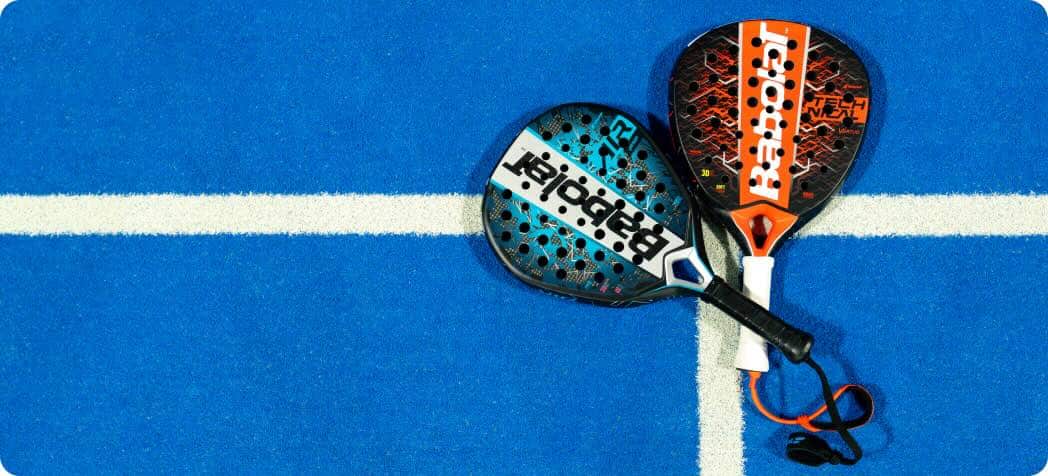
Intermediate padel players are in the trickiest gear-buying spot. Beginner rackets feel mushy and don’t reward the better technique you’ve developed. Advanced rackets punish every off-centre hit and limit the variety in your game. The right intermediate racket bridges that gap — enough power to play offensive shots, enough sweet spot to keep your defensive game solid.
We’ve researched the top intermediate padel rackets on the US market — comparing what’s available across major retailers — and picked the four that consistently deliver for players ready to step up from beginner gear. All are available on Amazon US. For the full picture across every level and brand, see our best padel rackets guide.
The 4 best padel rackets for intermediate players
Intermediate rackets typically have teardrop or hybrid shapes, balanced or slightly head-balanced weight distribution, 12-16K carbon faces, and softer EVA cores than advanced rackets. The picks below reflect what works at this level — without overpaying for diamond-shape pro gear you’re not yet ready for.
1. Babolat Air Veron — best overall for intermediates
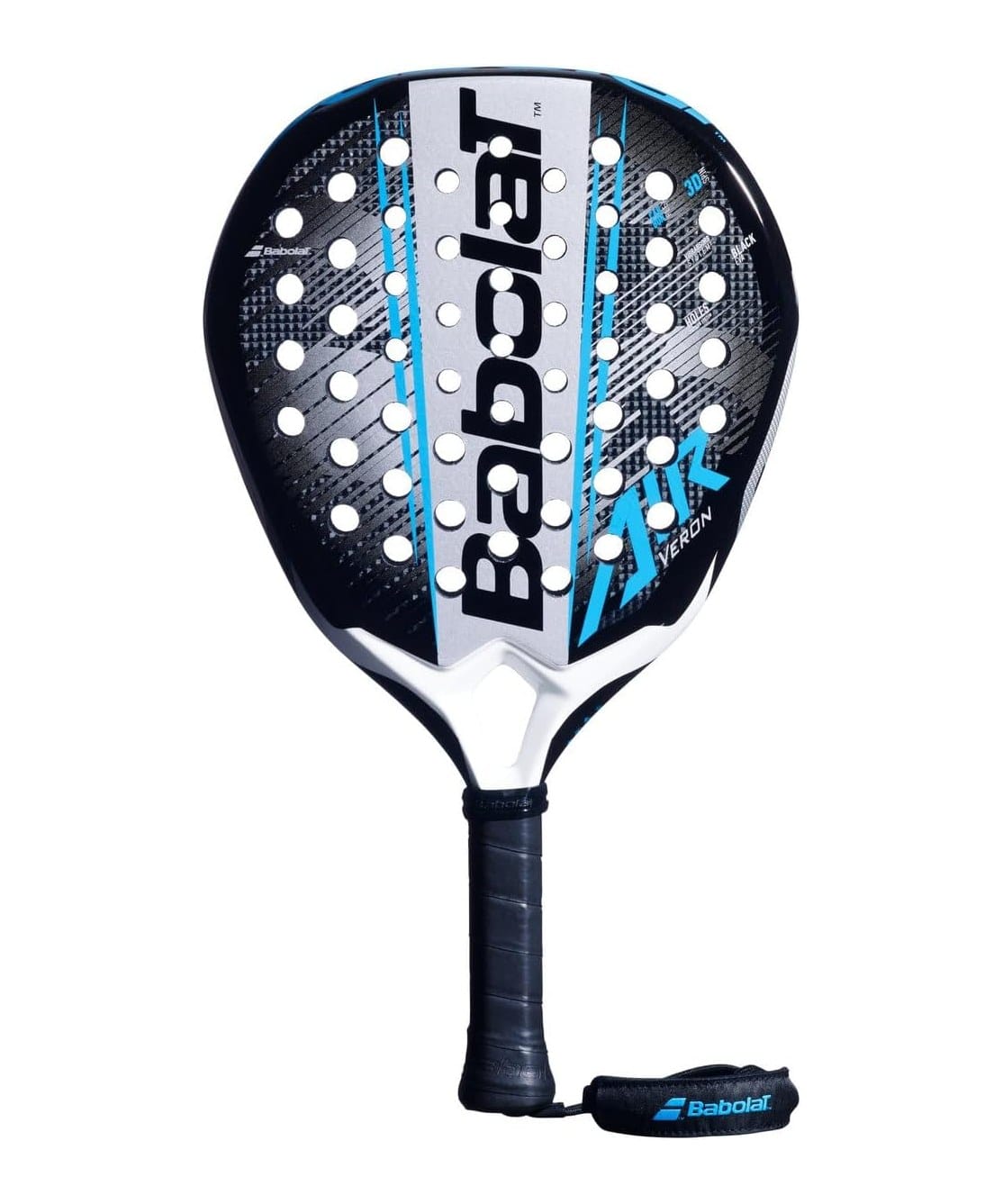
Why it wins: Babolat’s do-everything teardrop — a CarbonFlex face and even ~355g balance make it fast, versatile and comfortable, with attacking bite on tap. (~$220)
- Teardrop shape — power and control balanced
- CarbonFlex face (carbon + fibreglass)
- Even ~355g balance — quick through the air
- Versatile all-court racket
→ Read our full Babolat Air Veron review
2. Babolat Counter Viper 2.5 — best for control players
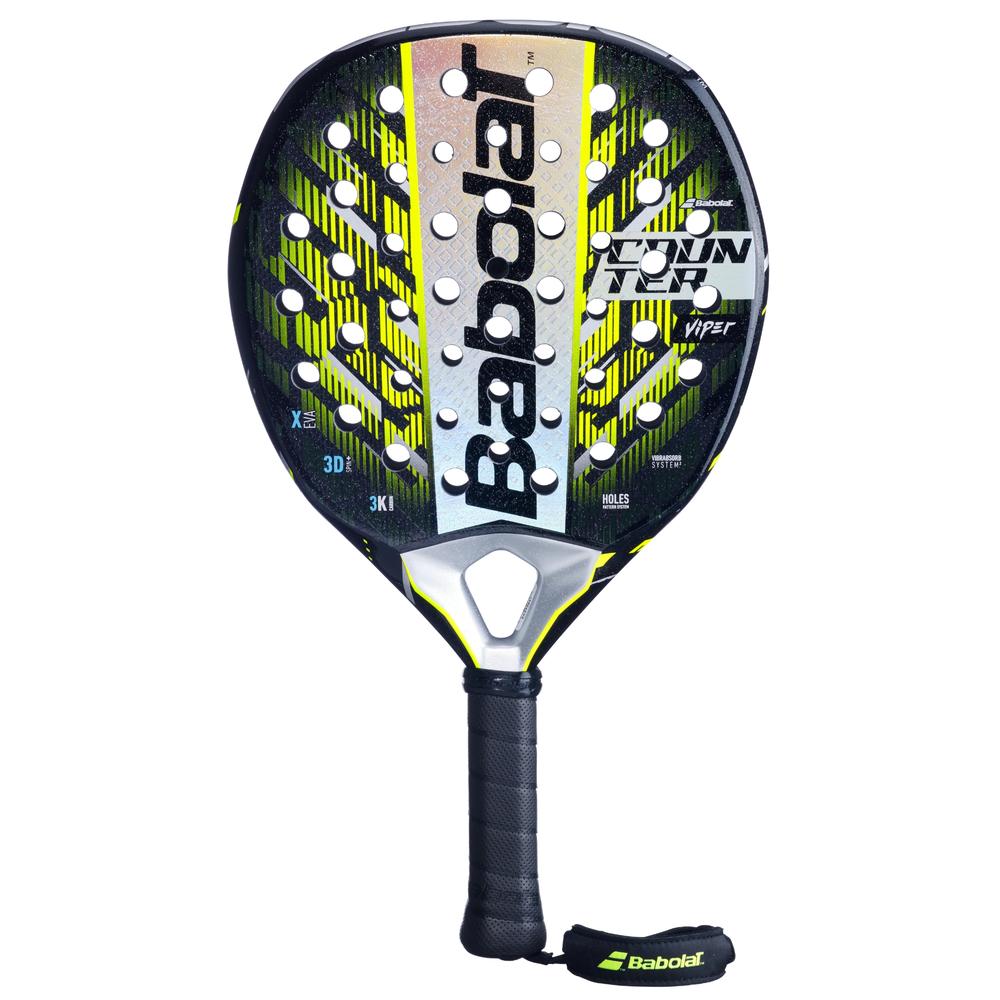
Why it wins: A control-focused viper with a soft, planted feel — predictable and forgiving for players who value placement. (~$230)
- Control-leaning hybrid
- Soft, comfortable response
- ~365g
- Babolat 2025 line
The Babolat Counter Viper 2.5 is the right pick for intermediate players whose game is built on placement and consistency rather than power. The round shape gives you the biggest sweet spot in this guide, which translates to defensive shots that land where you actually aimed them — even at the higher swing speeds intermediates develop.
The Counter Viper uses 3K Carbon (lower than the typical 12-18K) which produces a softer, slower ball response. That’s a feature, not a flaw — at the intermediate level, the players who hit “less hard” but place every ball precisely usually win. Babolat’s Vibrasorb System2 integrates an elastomer into the core for noticeably better vibration absorption, which makes the Counter Viper one of the more comfortable intermediate options.
If you find yourself losing rallies because your power shots fly long or sail wide, this is the racket that fixes the problem. It’s also the right buy for intermediates with any arm or elbow concerns — the round shape + Vibrasorb combo is genuinely arm-friendly.
→ Read our full Babolat Counter Viper review
3. Wilson Carbon Force Team — best value intermediate racket
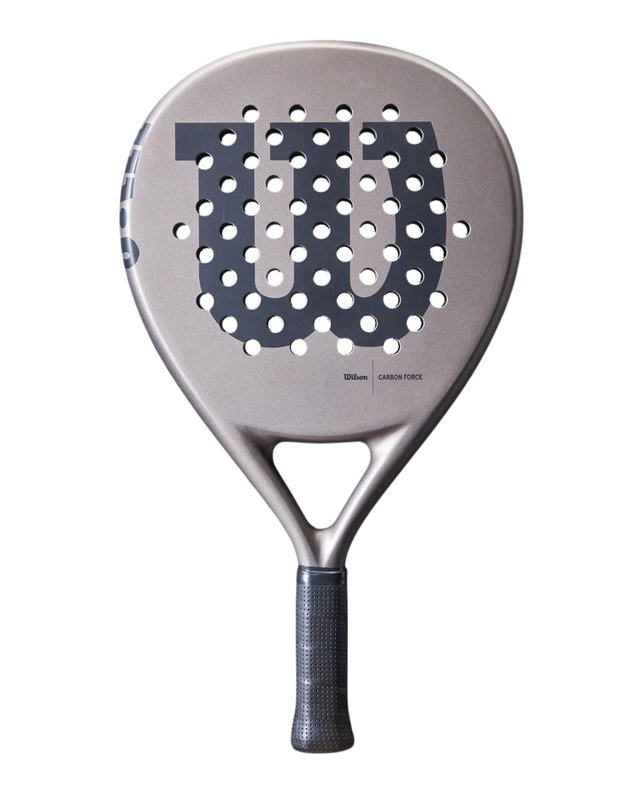
Why it wins: A durable, versatile all-rounder that punches above its price — a smart value pick as you level up. (~$90)
- Round/hybrid — forgiving
- Durable Wilson build
- Versatile all-court
- Best value here
The Wilson Carbon Force Team is the racket that consistently appears in best-of-intermediate lists for one simple reason — at around $150, it punches above its price class. The teardrop shape with carbon fibre face gives you proper intermediate performance without the $300+ price tag of the Vertex or Counter Viper.
What makes the Carbon Force Team the best value pick: Wilson’s “blend of power and control” philosophy is a perfect intermediate brief. You can attack with this — and the latest 2026 generation builds on that racket. You can play defensive lobs with it. You can serve and volley. It doesn’t excel at any one thing the way a more specialised intermediate racket might, but it doesn’t fail at anything either.
If this is your first intermediate-level racket and you’re not sure yet what kind of intermediate player you want to be (power, control, all-court), the Carbon Force Team lets you figure that out without committing to a $300 purchase. Many players keep this as their daily-driver even after getting more expensive secondary rackets.
→ Read our full Wilson Carbon Force review
4. Head Coello Team — best easy power for advancing intermediates
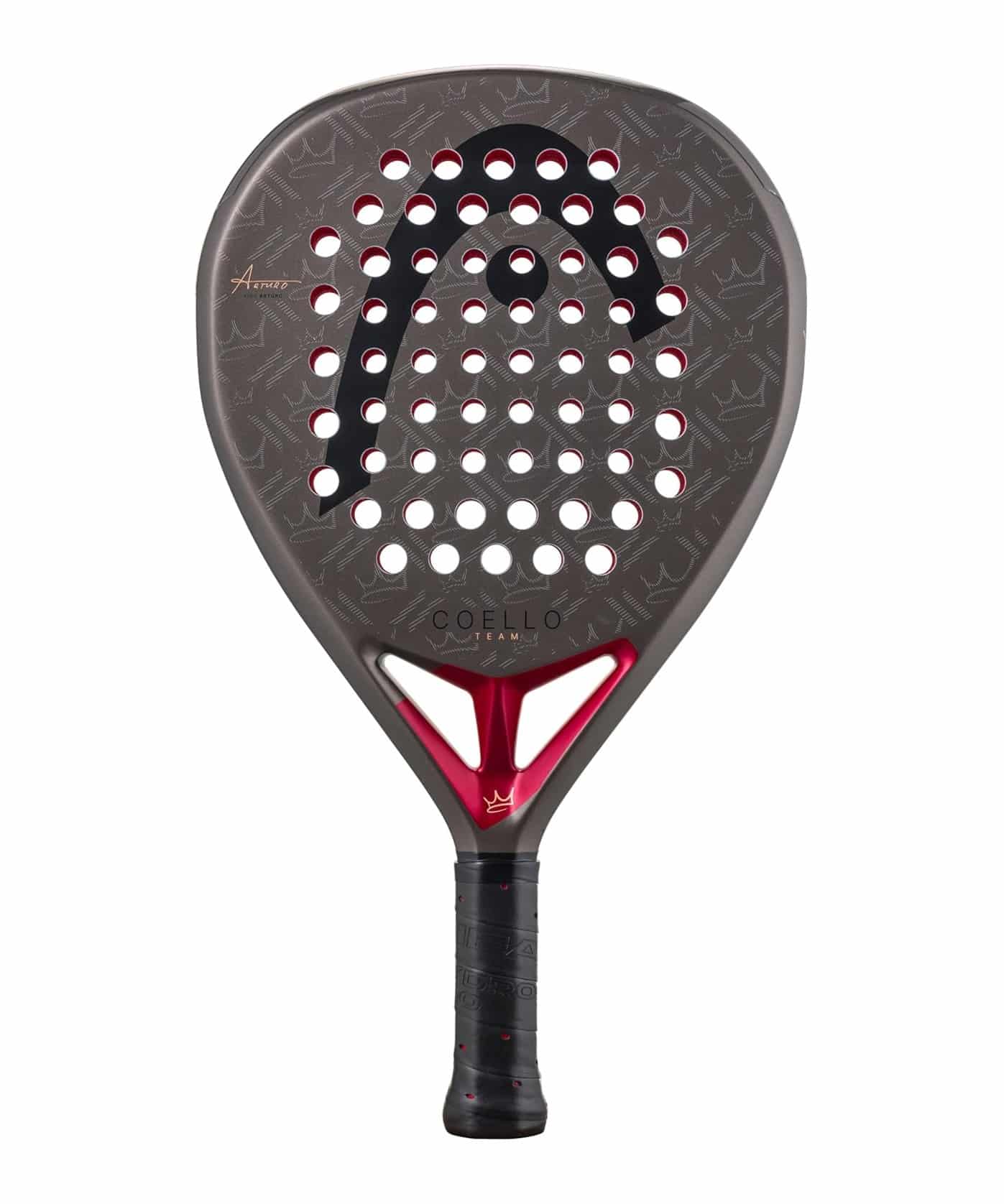
Why it wins: Coello’s power shape, made friendly — a diamond with a soft fibreglass face and Auxetic 2.0 that gives easy ball speed and a forgiving, comfortable feel. (~$150)
- Diamond shape — head-heavy power
- Soft fibreglass face for forgiveness
- Power Foam core + Auxetic 2.0
- ~365g — the accessible Coello
→ Read our full Head Coello Team review
Also worth a look: the Head Evo Extreme and Babolat Technical Vertuo — affordable teardrops with easy power for improving players.
What to look for in an intermediate padel racket
Shape: teardrop is the intermediate sweet spot
Teardrop is the shape that defines “intermediate.” Round rackets give you maximum forgiveness but limited offensive ceiling — fine for beginners, restrictive for intermediates. Diamond rackets reward great technique but punish anything less — premature for most intermediates. Teardrop is the bridge: enough power for attacking shots, enough sweet spot for the variety in your game.
Carbon weave: 12K or 16K
Most intermediate rackets use 12K carbon. Some advanced-leaning intermediates go to 16K for crisper response. Below 12K (e.g. 3K) means a softer ball feel that’s more forgiving but reduces power — fine for control players, limiting for attackers. Above 16K is starting to enter advanced-racket territory.
Weight and balance
Most intermediate rackets weigh 355–375g, with a balance that’s even-to-slightly-head-heavy. Heavier head balance = more attacking power but more arm fatigue. Even balance = better all-court versatility. For most intermediates, slightly head-heavy is the sweet spot.
Price: $200–$300 is the right range
Under $200 you’re usually buying beginner gear that won’t reward your improving technique. Over $300 you’re paying for advanced features (pure diamond shape, 18K carbon) that you may not be ready for. The four rackets above all land in the $150–$300 range, which is the right zone for serious intermediate play.
Intermediate padel racket comparison table
| Racket | Shape | Carbon | Best for | ~Price |
|---|---|---|---|---|
| Babolat Air Veron | Teardrop | CarbonFlex face | All-court power + control | $220 |
| Babolat Counter Viper 2.5 | Round | 3K | Control + comfort players | $220 |
| Wilson Carbon Force Team | Teardrop | Carbon fibre | Best value, all-rounder | $150 |
| Head Coello Team | Diamond | Soft fibreglass face | Easy, comfortable power | $150 |
For most intermediates the Bullpadel Vertex 04 2025 (Juan Tello) is the right pick — best balance of all-court performance and modern construction. The Babolat Counter Viper is the better choice for control-first players or anyone with arm concerns. The Wilson Carbon Force Team is the best value pick at around $150. The Babolat Technical Viper is the right “bridge to advanced” choice.
Where do you go from here?
If you’re just stepping up from beginner gear, give yourself a 2–3 week adjustment period — the stiffer carbon face will feel harsh at first compared to the soft fibreglass beginner rackets. The benefit (real power on attacking shots) shows up after the adjustment, not immediately.
Not sure you’re ready for intermediate gear yet? See our best padel rackets for beginners guide. Already feeling that you’ve outgrown intermediate? The advanced racket guide is your next stop. For arm-friendly options, see our tennis elbow racket guide.
Frequently Asked Questions — Best Padel Rackets for Intermediate Players
For most intermediates the Bullpadel Vertex 04 2025 (Juan Tello) is the right pick — teardrop shape with 12K Xtend Carbon, modern vibration absorption, and the right balance of power and forgiveness. For control players, the Babolat Counter Viper 2.5 (round shape, Vibrasorb). For best value, the Wilson Carbon Force Team at around $150. For advancing intermediates ready for more power, the Babolat Technical Viper.
Teardrop is the right shape for most intermediate players. Round is too forgiving — beginner territory. Diamond is too demanding — advanced territory. Teardrop sits between the two: enough power to play offensive shots, enough sweet spot to keep your defensive game working. Hybrid teardrops (slightly head-heavy) are the right choice for intermediates leaning toward attacking play.
A few signals: your beginner racket starts feeling ‘mushy’ on attacking shots; you’re consistent enough to play structured points (not just rallies); you can identify when you mishit vs when the racket failed you; and you’re playing 2-3 times per week. If three of those four apply, you’re at intermediate level and your beginner racket is now holding you back.
$200–$300 is the sweet spot. Under $200 you’re typically in beginner territory — fibreglass faces, softer EVA cores, less attacking ceiling. Over $300 you’re paying for advanced-racket features (diamond shape, 18K carbon) that most intermediates aren’t yet ready to use effectively. The Wilson Carbon Force Team at around $150 is the exception — it punches above its price class.
Standard teardrop for most intermediates. The hybrid teardrop (slightly more head-heavy, slightly more diamond-leaning) is the right choice for advancing intermediates whose technique is solidifying and whose game is starting to lean offensive. If you’re not sure, the standard teardrop is the safer pick — it’s more versatile.

Kevin Anderson is a Content Writer for SimplePadel. He joined the company during summer 2022. For SimplePadel, he spealizes in testing rackets and writes a lot of our padel racket reviews.
Kevin loves to own the net position and considers himself an attacking-minded player. He often claims that he has the reach of a monkey – thanks to his 6’5″ stature. In his spare time, he enjoys cooking and following the USPA closely.