Padel vs Platform Tennis: What’s the Difference?

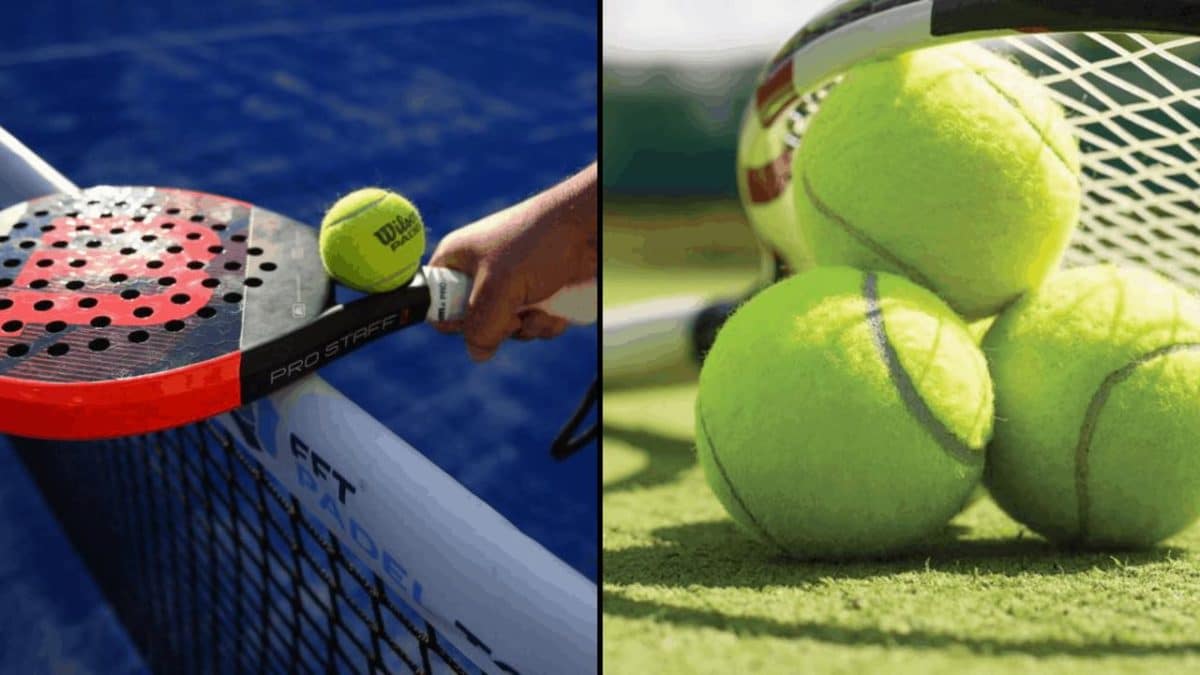
Padel vs platform tennis: they are different sports that look alike. Both are played by two pairs on a small, fully enclosed court where the walls stay in play, both use a solid perforated bat instead of a strung racket, and both score like tennis. The big differences are the court and enclosure, the ball, the serve and the season. Platform tennis was invented in Scarsdale, New York, in 1928 as an outdoor winter game, while padel came out of Mexico and Spain and is played year-round, indoors and out.

If you know one and are curious about the other, the rules below are the ones that matter. Platform tennis has long been most closely associated with the New York area and the wider Northeast, where padel is now arriving alongside it. If you are new to padel, start with our complete guide to what padel is.

Thinking of trying padel? All you need to start is a racket and a tube of balls. See our picks for the best padel rackets for beginners and the best padel balls, or start with a forgiving pick such as the Babolat Contact.
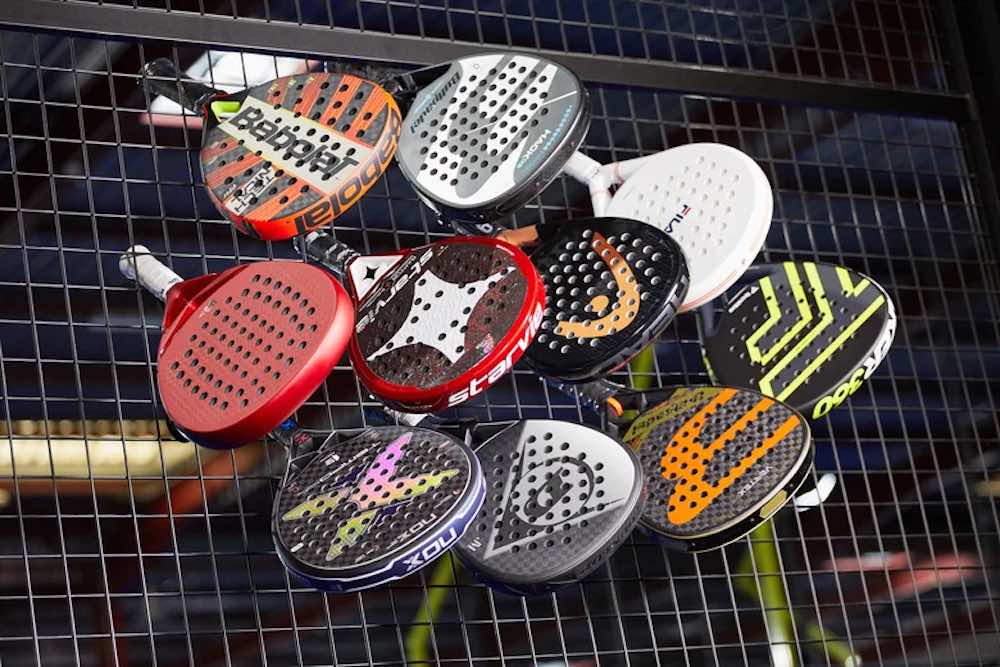
The 6 Best Padel Rackets

The best padel racket for most players is the Babolat Air Veron, a teardrop-shape racket that balances power and control and suits everyone from improving players to advanced ones. But the right racket depends on your level, your style, and whether your arm can handle a stiff, powerful frame, so we have picked a best-in-class option for every kind of player.

We chose these six rackets across the categories that actually matter, overall, beginner, control, power, comfort for sore arms, and budget, using current 2025 and 2026 models with their head shape, weight, and balance in mind. Below each pick you will find who it is for and why, followed by a full buying guide and a side-by-side comparison.

Best Siux Padel Rackets

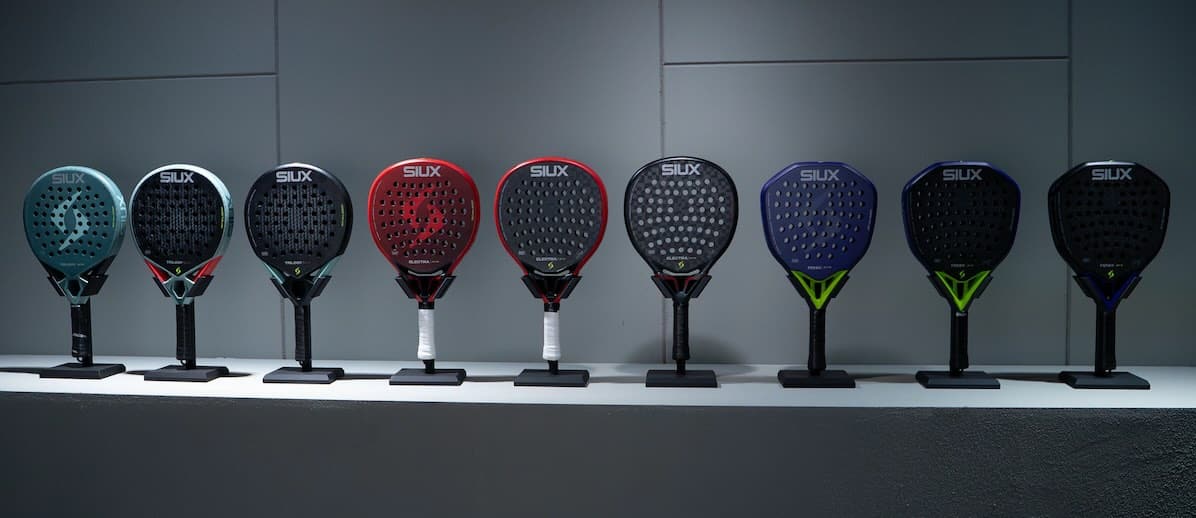
Siux has risen fast to become one of padel’s most talked-about brands, helped by its association with rising star Alejandro Galán-era talents and a sharp, modern range. The line spans the explosive Fenix diamond, the hard-hitting Pegasus teardrop and the control-leaning Electra, giving stronger players plenty to work with at competitive prices.

Siux frames lean toward performance players, so matching the shape to your game matters. The range splits cleanly between power, all-round and control. Below we break the current Siux line-up down by what each racket is genuinely best for, so you can pick the right paddle for your level and style.

The Siux Fenix Elite 5 is our top power pick, while the Siux Pegasus Pro 2026 is the hard-hitting all-court option. Not set on Siux? See our full best padel rackets roundup across every brand.

Best Padel Balls

Padel balls look like tennis balls, but they are not interchangeable — a true padel ball has slightly less internal pressure for the right bounce off the glass, and the felt and core are tuned for the padel game. Getting the right ball makes a real difference to how the game plays, and because balls are consumables, it pays to know which to buy for matches and which for practice.

Below are our top picks for match play, tournaments, practice and special conditions, followed by a quick guide to what makes a good padel ball and how to keep them fresh.

In a hurry? The Head Padel Pro S+ is our best all-round match ball, while the Head Padel Pro tri-pack is the best value for practice. Playing graded events? Train with the official Wilson Premier. Need gear too? See our best padel rackets roundup.

Best StarVie Padel Rackets

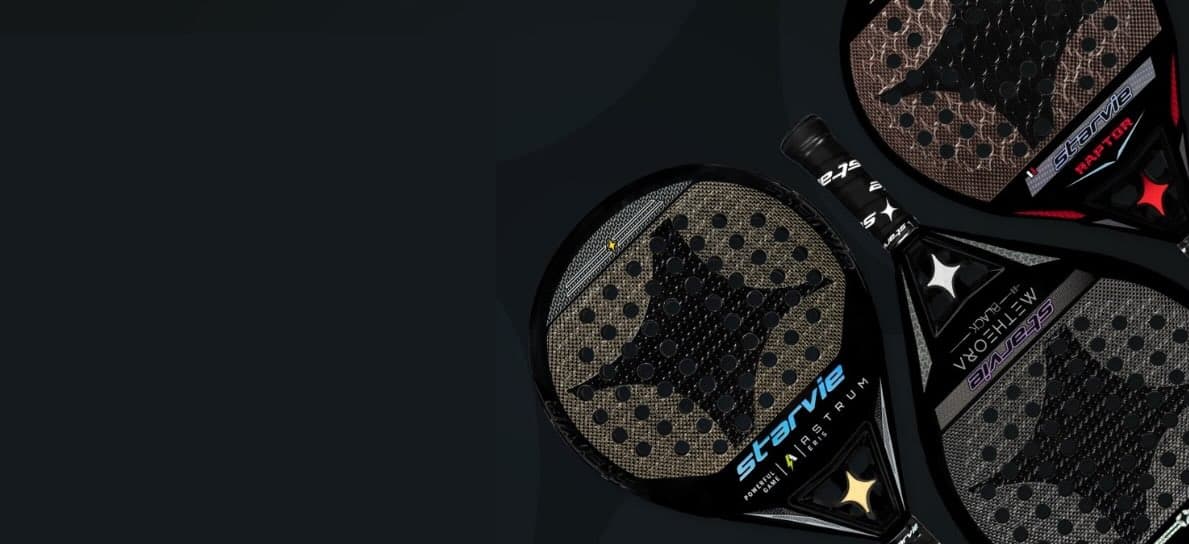
StarVie is one of padel’s great specialists — a Spanish brand that makes its rackets in-house near Madrid and has built a cult following for the Metheora, the control flagship behind world No. 1 Ariana Sánchez. From precise round paddles to the punchy Triton diamond, the range rewards players who care about feel.

That focus on feel is also why choosing takes a moment — a Sánchez-spec Metheora plays very differently from the attacking Triton. Below we break the current StarVie line-up down by what each racket is genuinely best for, so you can match a paddle to your level and style rather than the pro on the box.

The StarVie Metheora Warrior is our top control pick for advanced players, while the StarVie Titania Kepler is the best-value way in for improvers. Not set on StarVie? See our full best padel rackets roundup across every brand.

Siux Pegasus Pro 2026 Review

The Siux Pegasus Pro 2026 is Siux’s hard-hitting teardrop for advanced players: a 12K carbon face, a hard EVA core and a medium balance, pitched by the brand as “solid power with controlled output.” It is an attacking racket first, with enough shape and balance to stay playable when you defend.

It sits at the top of Siux’s Pegasus family and replaces the Pegasus Revolution 2 as the brand’s flagship all-court attacker. This review covers the build, the specs, how it plays, and who should buy it. For the brand’s other rackets, see our best Siux padel rackets guide.

Or browse all our padel gear reviews.

StarVie Triton+ Power 2026 Review

The StarVie Triton+ Power 2026 (StarVie’s own name is Triton Power +) is a power-first diamond: a high balance, an 18K carbon hybrid face and a dense, firm core, all pointed at one job, which is finishing points with smashes, bandejas and volleys. It is made for advanced players who have the timing for a hard, head-heavy racket.

It is the current power model in StarVie’s Triton line and the modern replacement for the Triton Special Edition we reviewed before. This page covers the build, the specs, how it plays, and who should buy it. For a more forgiving StarVie, see our Metheora Warrior review.

See also our best StarVie padel rackets guide, or browse all our padel gear reviews.

Bullpadel Indiga Control 2026 Review

The Bullpadel Indiga Control 2026 (Bullpadel also writes it as Indiga CTR 26) is a soft, round racket for players who are still building their game: fiberglass faces, a low-density SoftEva core, a low balance and a central sweet spot. It is aimed at beginners and lower-intermediate players who want a comfortable racket that forgives mishits and helps them keep the ball in play.

It replaces the Indiga CTR 25 (Control 2025). The published specs are unchanged, and the main difference is a new grey, black and green color scheme. This review covers the build, the specs, how it plays, and who should buy it.

See also our best Bullpadel rackets guide, or browse all our padel gear reviews.

Babolat Counter Viper 2.6 Review

The Babolat Counter Viper 2.6 is a round racket for patient, control-minded advanced players: a 365 g frame with a 3K carbon face, an X-EVA core and a 270 mm balance that gives it more smash weight than most rounds. It is the control line of Babolat’s Viper family, made for players who build points, block hard shots back deep and finish when the opening arrives.

It is the 2026 version of the Counter Viper 2.5, and on paper very little has changed: weight, balance, thickness, face and core all match the 2.5. This review covers the build, the specs, how it plays, and who should buy it.

See also our best Babolat padel rackets guide, or browse all our padel gear reviews.

Adidas Match Light 2026 Review

The Adidas Match Light 2026 (some shops call it the Match Light 3.5) is adidas’s entry-level padel racket for players who are just starting out: a soft fiberglass face, a soft EVA core and an all-round shape with a central sweet spot. It is meant to be forgiving, comfortable and easy to play from the first session.

It is the 2026 version of the Match Light line that began with the Match Light 3.3 and continued with the 3.4, and on paper the specs are unchanged. This review covers the build, the specs, how it plays, and who should buy it. For the standard edition of the line, see our Adidas Match 3.4 review.

See also our best Adidas padel rackets guide, or browse all our padel gear reviews.