
Padel vs platform tennis: they are different sports that look alike. Both are played by two pairs on a small, fully enclosed court where the walls stay in play, both use a solid perforated bat instead of a strung racket, and both score like tennis. The big differences are the court and enclosure, the ball, the serve and the season. Platform tennis was invented in Scarsdale, New York, in 1928 as an outdoor winter game, while padel came out of Mexico and Spain and is played year-round, indoors and out.
If you know one and are curious about the other, the rules below are the ones that matter. Platform tennis has long been most closely associated with the New York area and the wider Northeast, where padel is now arriving alongside it. If you are new to padel, start with our complete guide to what padel is.
Thinking of trying padel? All you need to start is a racket and a tube of balls. See our picks for the best padel rackets for beginners and the best padel balls, or start with a forgiving pick such as the Babolat Contact.
Padel vs Platform Tennis: At a Glance
| Feature | Padel | Platform tennis |
|---|---|---|
| Origin | Mexico and Spain, from the late 1960s | Scarsdale, New York, 1928 |
| Playing court | 20 x 10 m (about 66 x 33 ft) | 44 x 20 ft (about 13.4 x 6.1 m) on a 60 x 30 ft platform |
| Enclosure | Walls 3 m high plus mesh up to 4 m at the ends | Wire screens 12 ft (3.7 m) high all round |
| Net height at the center | 0.88 m (about 34.6 in) | 34 in (about 86 cm) |
| Bat | Stringless perforated racket, up to 45.5 cm long and 38 mm thick | Solid perforated paddle, up to 18 in long and 500 g |
| Ball | Pressurized felt-covered ball, 6.35 to 6.77 cm across | Sponge rubber ball, 2.4 to 2.5 in across, green or yellow |
| Serve | Underhand, after a bounce, at or below the waist, two attempts | Overhand, underhand or sidearm, hit before a bounce, one attempt in doubles |
| Scoring | Tennis points, often with the golden point | Tennis points, sets to six, tiebreak to 7 or 10 |
| Format | Almost always doubles | Doubles, with singles allowed |
The court and the walls
A padel court is bigger. Its 20 x 10 m playing area is more than twice the floor area of a platform tennis court, and its enclosure mixes tempered glass or solid walls with metal mesh. Platform tennis is played on a raised deck that is 60 x 30 ft overall, with a 44 x 20 ft court inside it, and the whole deck is surrounded by tightly strung wire screens 12 ft high.
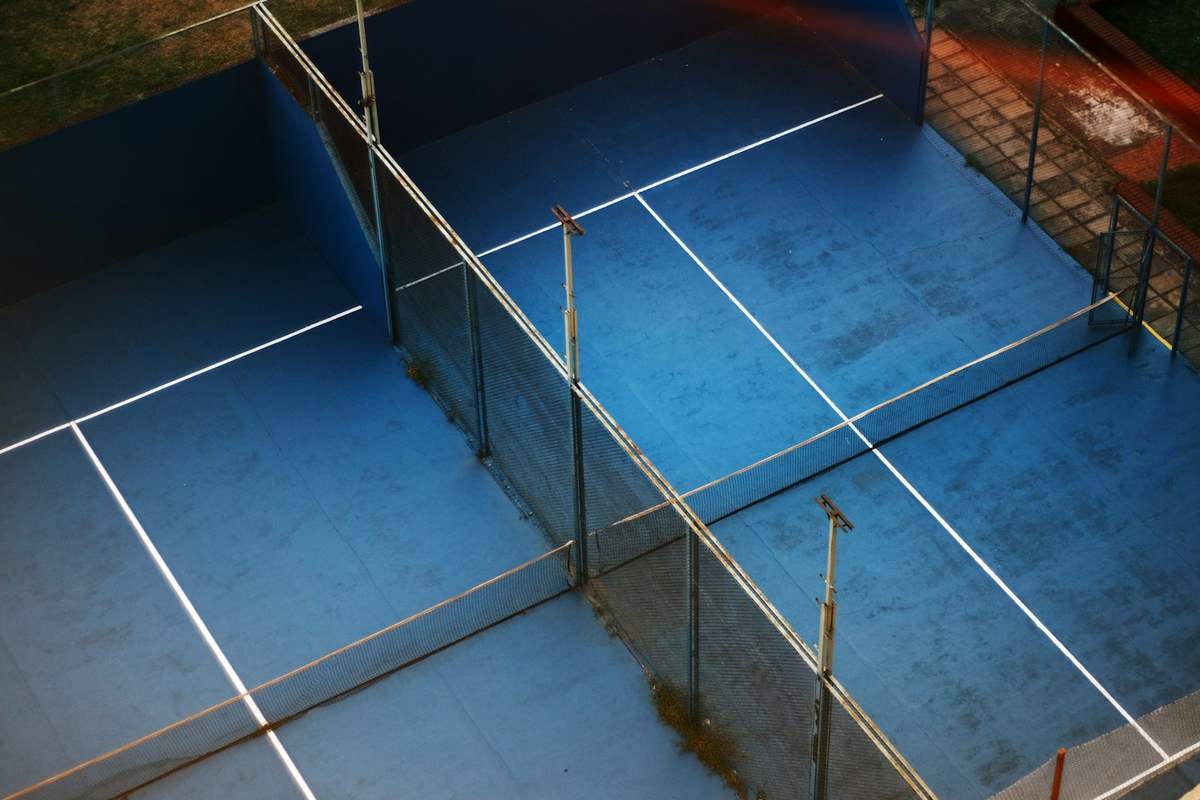
Walls matter in both games. In padel the ball can bounce on your side of the court and then off the glass, and our padel rules guide explains exactly when that is legal. In platform tennis the ball can also be played off the screens after it has bounced on the deck, which is why the two sports feel so similar to a new player.
Paddle and racket
Both sports use a solid, perforated bat with no strings, and they are similar in length. The padel rulebook caps the racket at 45.5 cm overall and 38 mm thick, and the platform tennis association caps the paddle at 18 in long, 12 in wide and 500 g. In practice the two bats are built differently and tuned for different balls, so buy for the sport you play. Our guide to padel racket types and shapes explains how padel rackets differ.
The ball
The ball is the least interchangeable piece of kit. A padel ball is a pressurized felt-covered ball a little smaller than a tennis ball. A platform tennis ball is a sponge rubber ball with a smaller diameter of 2.4 to 2.5 inches, and the association approves green and yellow balls for sanctioned play. See our guide to padel balls vs tennis balls for the padel side.
The serve
The serve is where the rules differ most. In padel you bounce the ball once, hit it at or below waist height and aim diagonally into the service box, and a missed first serve gets a second attempt. In platform tennis you can serve overhand, underhand or sidearm, you strike the ball before it bounces, and in doubles you get only one serve. Our guide to padel serve rules covers the padel version step by step.
Scoring and match format
Both sports call the score in tennis points, 15, 30 and 40. Platform tennis plays sets to six games with a tiebreak at six-all, at 7 or 10 points. Padel matches often use the golden point, a deciding point at deuce, which we explain in our golden point guide, and a tiebreak follows the same idea at six games all.
Winter or year-round?
Platform tennis was designed to be played outdoors in winter, and that is still a large part of its identity. Padel is played all year, indoors and outdoors. If you play at a club in the Northeast that has both, you can plan a season around them: platform tennis in the cold, padel the rest of the year.
Which should you play?
If you want the sport with the fastest-growing scene, an easy serve and a large number of courts, pick padel. If you already belong to a club with platform courts, you have a good reason to try both. Skills carry over, especially wall play and doubles positioning, and our state guides for New York, Connecticut, New Jersey, Massachusetts and Pennsylvania list where to play padel.
The bottom line
Padel and platform tennis share walls, a solid bat and tennis scoring, but they differ in court size, ball, serve and season. Try both if you can, and buy equipment for the sport you play. If you are comparing padel with other racket sports, see padel vs pickleball, padel vs tennis and padel vs paddle tennis.
Frequently asked questions about padel vs platform tennis
No. They share walls, a solid perforated bat and tennis scoring, but padel uses a bigger enclosed court with a pressurized ball and an underhand bounce serve, while platform tennis uses a raised deck with wire screens, a sponge rubber ball and a serve struck before the bounce.
Platform tennis. It was devised in 1928 in Scarsdale, New York. Padel dates from the late 1960s, when it began in Mexico before spreading through Spain.
You can, but you are not limited to it. The rules allow overhand, underhand or sidearm serves, and the ball must be struck before it bounces. In padel the serve is always underhand and follows a bounce.
One in doubles. A missed serve is a fault and the point goes to the other side, whereas padel gives the server two attempts.
It was created as one. Platform tennis was devised so people could play outdoors in winter, and it is still associated with cold-weather club play, particularly in the Northeast.
Yes. As in padel, the ball can be played off the wire screens after it has bounced on the deck, although the screens are wire rather than glass.
Not exactly. Both are solid and perforated and similar in length, but each sport has its own rulebook and its own limits on size and weight, and they are built for different balls.
No. Paddle tennis, also called pop tennis, is played on a smaller open court without screens. Our guide to padel, pickleball and paddle tennis explains that difference.

Lucas Sánchez is the founder of SimplePadel. Born and raised in Spain, Lucas has been living in the US and UK for the last 20 years and currently calls Miami his home. While he’s never played professionally, the dream is still alive.
Lucas loves nothing more than playing (and talking) about padel, and he considers himself lucky to have a wife and family that share his love for the game.