
Padel ball vs tennis ball: they look almost identical, but they are not the same ball. A padel ball is a felt-covered pressurized rubber ball that is slightly smaller and held at a noticeably lower pressure than a tennis ball. The two weigh the same and pass almost the same drop test on paper, yet in play a tennis ball feels livelier and comes off the glass faster.
Below you will find the rulebook numbers side by side, what the differences mean on a padel court, and whether tennis balls are a fair substitute. If you just need balls, the best padel balls guide covers every option.
Need padel balls now? The Wilson Premier Padel Speed ball and the Wilson Padel X3 are both widely available in three-ball tubes. Our full guide compares more options.
What is a padel ball?
A padel ball is a rubber ball with a felt cover, filled with pressurized air, and used on a 20 x 10 m court with glass walls and a fence. The international padel rulebook describes it as a rubber sphere with a uniform surface in white, yellow or another color that contrasts with the court. Most balls you will see are bright yellow.
Padel balls are sold in tubes of three. Official competitions must use balls approved by the international federation, which is why serious brands print an approval mark on the tube. If you are new to the sport, our complete guide to what padel is explains how the game works.
Padel ball vs tennis ball at a glance
| Feature | Padel ball | Tennis ball |
|---|---|---|
| Governing rulebook | International Padel Federation (FIP) | International Tennis Federation (ITF) |
| Diameter | 6.35 to 6.77 cm | 6.54 to 6.86 cm |
| Weight | 56.0 to 59.4 g | 56.0 to 59.4 g |
| Bounce test (drop from 2.54 m) | 135 to 145 cm | 135 to 147 cm |
| Internal pressure | 4.6 to 5.2 kg per square inch, about 10 to 11.5 psi | About 14 psi, pressurized balls |
| Colors | White, yellow or other contrasting color | White or yellow |
| Typical use | Enclosed padel court, walls in play | Open tennis court |
Pressure conversions are ours: the padel rulebook gives the range in kilograms per 2.54 square centimeters, which we have converted to psi so you can compare it with tennis.
Size and weight: closer than you think
The two balls weigh exactly the same on paper, with the same 56.0 to 59.4 g range. The padel ball is allowed a slightly smaller diameter, about 1.9 mm below the tennis minimum at the low end. You would not spot the difference by eye, and it does not change how the ball plays much on its own.
Pressure and bounce: the real difference
The clearest difference is pressure. A padel ball is held at roughly 10 to 11.5 psi, against about 14 psi for a tennis ball, which is why it feels softer coming off the racket and loses pace more quickly in a rally.
The rulebook drop test is nearly the same for both, 135 to 145 cm for padel and 135 to 147 cm for tennis, so the felt difference comes mainly from pressure. On a padel court, where the ball rebounds off glass and fence, a softer ball keeps rallies playable. A tennis ball hit at padel speed jumps off the back glass faster and higher, which makes it harder to read and to control. Our padel rules guide explains how the walls come into play.
Can you play padel with tennis balls?
Yes, for a casual hit. If you are trying padel with a borrowed racket and only have tennis balls, the game still works. Expect a livelier bounce, a ball that comes off the walls faster, and less control on soft shots such as lobs and drop shots.
For proper play, use padel balls. They are cheap, they behave consistently off the glass, and they are what every club and tournament uses. In official competitions the rules require balls approved by the federation.
Can you play tennis with padel balls?
You can hit them on a tennis court, but they are not designed for it. With lower pressure and a slightly smaller size they feel deader and lose pace quickly, which is fine for a casual warm-up and not what tennis players train with. Tennis events require ITF-approved balls.
Padel balls at high altitude
Thin air makes balls bounce higher, so the padel rulebook allows a different ball above 1,000 m: a lower-bounce ball with a drop-test result between 121.92 and 135 cm. Denver sits at about 1,600 m, so it is worth knowing if you play at altitude. Our Denver padel guide lists the clubs there.
How long do padel balls last?
A new tube is at its best for a few sessions. Once opened, a pressurized ball loses pressure steadily, and heavy use also wears down the felt. Serious players open fresh balls for matches and keep older ones for practice. In official play, balls are changed on a set schedule: the organizers announce the number of balls (two or three) and a change policy in advance. Our padel accessories guide covers pressurizers, which can slow the loss in opened balls.
Which padel balls to buy
The full comparison is in our best padel balls guide. These two were in stock at the time of writing and come in three-ball tubes.
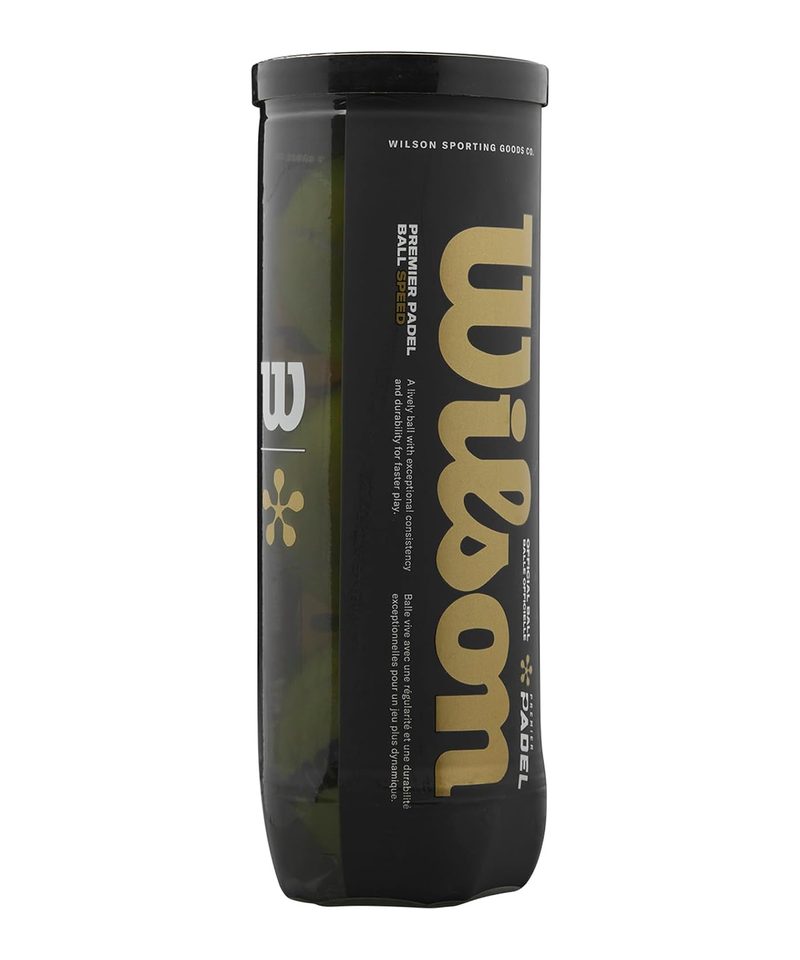
Why it wins: A well-reviewed competition-style ball at a low price, made by the brand behind the Premier Padel Tour ball. (~$10)
- Yellow, three balls per tube
- From Wilson’s Premier Padel range
- Made for match and club play
- Very affordable per tube
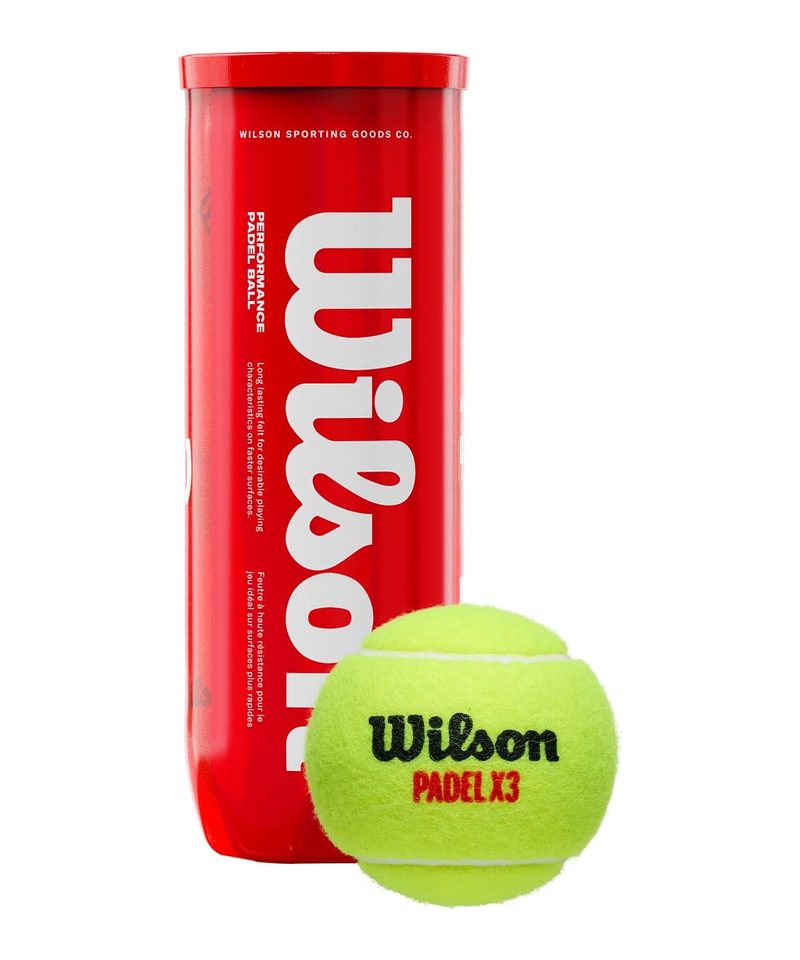
Why it wins: A durable, widely used padel ball for practice and club games, in a three-ball tube. (~$13)
- Yellow, three balls per tube
- Padel X3 performance ball
- Good for regular practice
- Widely stocked
The bottom line
A padel ball is a slightly smaller, lower-pressure cousin of the tennis ball. Tennis balls work for a casual hit but play livelier and less predictably off the glass, so use padel balls for anything serious. New to the game? Start with our padel equipment guide, and see how the sport differs from tennis in padel vs tennis.
Frequently asked questions about padel balls and tennis balls
A pressurized rubber core covered in felt. The rulebook describes a rubber sphere with a uniform exterior surface, and most balls are yellow.
Slightly. The padel rulebook allows a diameter of 6.35 to 6.77 cm, while a tennis ball is 6.54 to 6.86 cm. Both weigh 56.0 to 59.4 g.
They are held at a lower internal pressure, roughly 10 to 11.5 psi against about 14 psi for tennis. That makes them feel deader off the racket and slows the pace of a rally.
Yes for a casual hit, but expect a livelier bounce and a ball that leaves the walls faster. Padel balls are cheap and much easier to control, so they are worth buying as soon as you play regularly.
Most are yellow. The rulebook allows white, yellow or another color that contrasts clearly with the court surface.
They are lower-bounce balls that the rules allow above 1,000 m, where thin air makes standard balls bounce higher. Their drop-test bounce sits between 121.92 and 135 cm.
For a casual game one tube of three balls is plenty. The rulebook lets organizers of official matches choose two or three balls per match.
In official matches, on a policy announced in advance: after an established odd number of games, or at the start of a set. The warm-up counts as two games and a tie-break as one, and balls are not changed at the start of a tie-break.

Isabella Torres is originally from Madrid, Spain, and has been playing Padel as a semi-professional for the past five years. After completing her education as a journalist, she discovered her true passion in life was writing about Padel.
She loves staying up late watching intense rallies on YouTube, and is excited to share her knowledge about the sport with SimplePadel’s readers.