Bullpadel Flow Legend Review (Alejandra Salazar)

The Bullpadel Flow Legend is Bullpadel’s women’s power racket, made as a tribute to Alejandra Salazar: a diamond with a Fibrix face, a MultiEVA core and a weight of 350–360 g. Bullpadel says it adds a touch more power than the earlier Flow while keeping the lightness that makes the line popular with women.

The US listing is the 2026 Flow Legend, and Bullpadel’s 2025 Flow is sold separately. This review covers both: the build, the specs, how it should play, how the 2026 racket differs from the 2025 Flow and who should buy it, with alternatives for when the listing sells out.

See also our best Bullpadel padel rackets guide, or browse all our padel gear reviews.

Head Extreme Motion Review

The Head Extreme Motion 2026 is Head’s lighter attacking diamond: a 360 g racket with a high balance, a unidirectional carbon face and Power Foam. Head describes it as aggressive power in a lighter, faster frame than the Extreme Pro, and lists it as a finisher with dynamic power.

It costs $254.95 both at Head’s US store and on the US listing. This review covers the build, the specs, how it should play, how it differs from the Extreme Pro and who should buy it.

See also our best Head padel rackets guide, or browse all our padel gear reviews.

ACA Atrium Pro Review

The ACA Atrium Pro is the premium teardrop in ACA’s range: an 18K carbon face, a 100% carbon frame, a high-density EVA Fusion core and a medium balance at 360–375 g. The US listing aims it at competitive players and rates both power and control at 9.5 out of 10.

It sits above the ACA Wave 2 and the ACA Palladium in carbon content, and it costs about $280, well above the $140-$160 that the ACA Roqueta 2 and Wave 2 listings showed. This review covers the build, the specs, how it should play, how it differs from the Bahia 2 and who should buy it.

See also our best ACA padel rackets guide, or browse all our padel gear reviews.

Padel Shoes: Best Picks for Men and Women

The right shoes matter more in padel than most beginners expect. The game is all sharp lateral movement, sudden stops and quick pushes off the back glass — and running shoes or worn sneakers leave you sliding, unstable and at real risk of a rolled ankle. A proper padel (or court) shoe grips the turf, locks your foot in place and protects your joints.

Padel-specific shoes are still relatively limited on Amazon US, so several of our picks are clay-court or all-court tennis shoes that work brilliantly for padel — we flag which is which. Below are the best options for every kind of player, followed by a plain-English guide to choosing the right pair. Not sure whether your tennis shoes will do? See our full breakdown of padel shoes vs tennis shoes.

In a hurry? The Asics Gel-Resolution X Padel is our best all-round padel shoe, while the Asics Gel-Dedicate 8 is the best value for beginners. Want a women’s-specific fit? The Babolat Sensa is our pick. Need a racket too? See our best padel rackets roundup.

Bullpadel Xplo Review (Martín Di Nenno)

The Bullpadel Xplo is, in Bullpadel’s own words, the most powerful racket in its history: a geometric head, a 12K carbon face, a MultiEVA core and a balance of about 265 mm. It is built for Martín Di Nenno’s attacking game, and its ratings are the most extreme in the Bullpadel range: power 5 out of 5, and only 2.5 out of 5 for maneuverability, control and sweet spot.

The US listing is the 2025 Xplo, sold by Bullpadel itself, and Bullpadel’s spec sheet for the 2025 and 2026 versions is the same. This review covers the build, the specs, how it should play, who should buy it and who should look elsewhere.

See also our best Bullpadel padel rackets guide, or browse all our padel gear reviews.

Siux Astra Review: Hybrid, Hybrid Air and Ctrl

The Siux Astra is Siux’s 2026 racket line for intermediate players, and this review covers three versions: the Astra Hybrid, a teardrop with a 3K fiberglass face and an EVA Soft core at 355–375 g; the Siux Astra Hybrid Air, the same shape at 340–360 g; and the Siux Astra Ctrl, a round racket with a soft EVA core at 355–375 g. All three were listed at about $180.

They sit below the Electra Elite and the Pegasus Pro in Siux’s range. This review covers the build, the specs, how each should play, how they differ and who should buy which.

See also our best Siux padel rackets guide, or browse all our padel gear reviews.

What Equipment Do You Need for Padel? A Beginner’s Gear Guide

Padel has one of the lowest gear barriers of any racket sport — you don’t need expensive equipment to start, and most clubs will lend or rent you the basics for a first session. But knowing what you actually need (versus what you don’t) saves money and stops you turning up without something essential. This guide covers the full beginner kit, what each item does, and a specific pick for every category that’s available on Amazon US.

If you’d rather buy everything in one go, see the best padel starter sets — several bundle a racket, balls and a cover at a combined discount that usually beats buying separately.

Ace in Padel: How to Hit One (Pro Strategies & Setups)

An ace in padel is rare. Much rarer than tennis. The serve is underhand, the receiving team starts in a balanced position, and the court is enclosed — there’s nowhere to hide a serve from a competent returner. At the pro level, true aces are rare enough that commentators name them. Watching Paquito Navarro hit a clean ace at Premier Padel Madrid 2024 (down the T, off the side glass) was a highlight of the entire week.

But aces ARE possible at amateur level — and your serve doesn’t need to be a weapon to win you free points. A well-placed serve that ends the rally on the third or fourth ball is functionally an ace’s cousin. This guide covers both: the rare, clean ace that ends the point on the serve itself, and the more achievable goal of using your serve as a setup that wins the point quickly.

If you’re new to padel itself and unfamiliar with how the underhand serve works at all, start with our guide to what is padel for the foundations.

Padel Serve Rules: Complete Guide to Serving in Padel

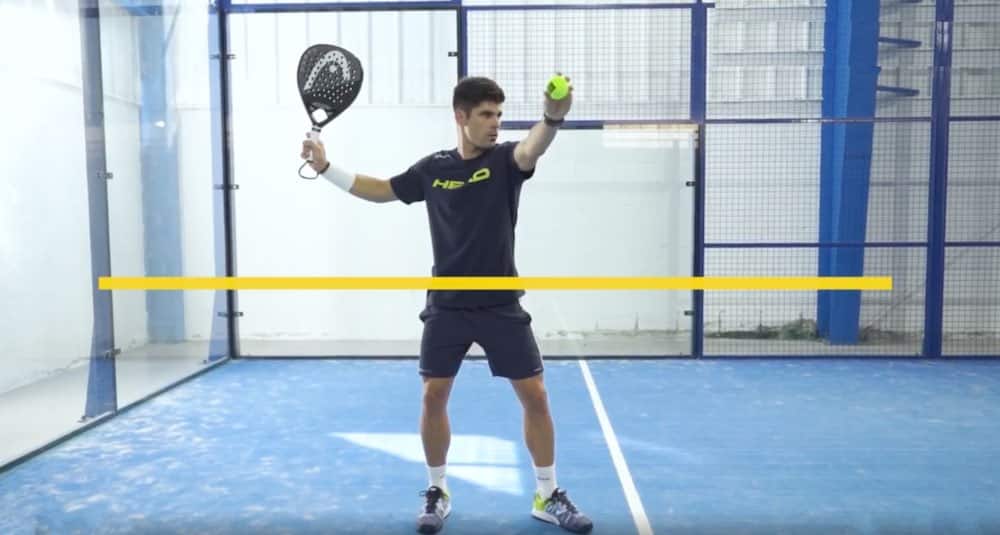
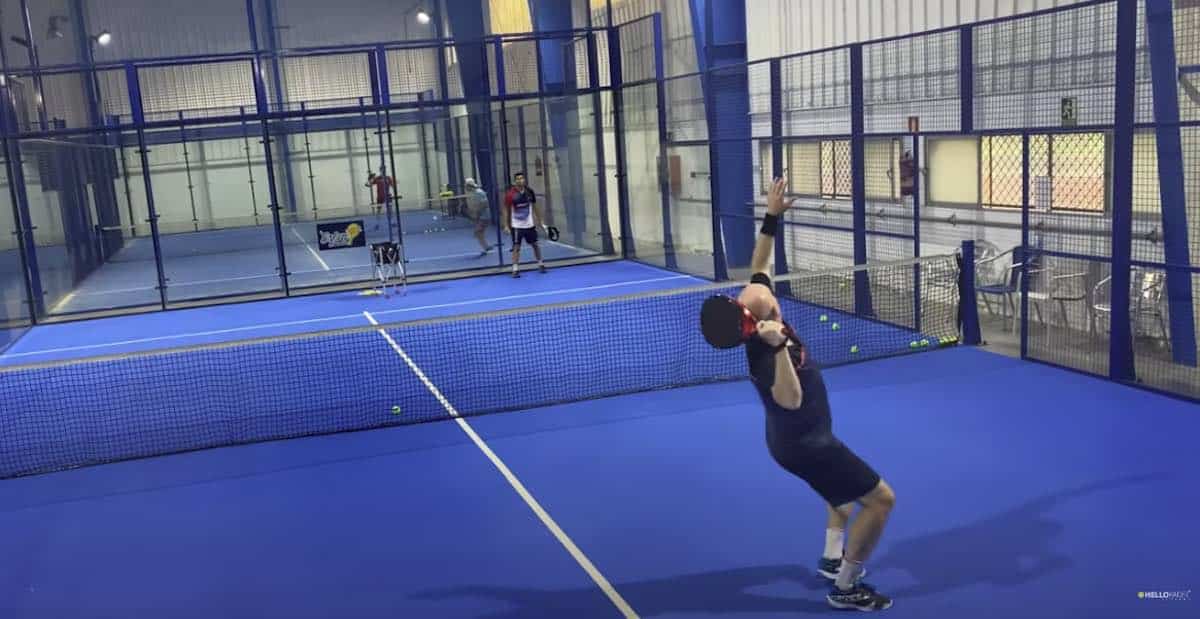
The serve is the one shot in padel you always start a point with, and the one beginners get wrong most often. Unlike tennis, a padel serve has to be underarm, below the waist, bouncing off the floor first, and landing diagonally in the opponent’s service box. If any of those conditions slip, the serve is a fault.

The serve is one part of the wider rulebook — for scoring, wall play, faults and disputed points, see our complete guide to the padel rules.

A legal padel serve is hit underarm, struck below the waist (at or below 1.06 m from the ground under current FIP rules), after letting the ball bounce once on the server’s side of the court, and landed diagonally in the opponent’s service box on the first bounce. The server stands behind the service line, with at least one foot on the ground, and must not step on or over the line before contact. Each server gets two attempts per point. A ball that touches the net and lands in the service box is a let and is replayed.

This guide covers every padel serve rule you need to know: how to stand, what counts as a fault, when a let is called, how the tie-break rotation works, and the 2024 FIP rule changes that clarified the serve height. It also explains the two most common serve variations (underarm and backhand) and the foot-fault situations that catch every new player out.

Practising your serve? It is far easier with a racket that suits you and fresh balls that bounce true. See our picks for the best padel rackets for beginners and the best padel balls, or start with a control-focused, round-shape racket like the Babolat Contact.

Padel Smash: How to Kick Smash Like a Pro

The kick smash is the most spectacular shot in padel — the only one that can definitively end a point even at the pro level. It’s also the most overhit shot at amateur level. Watch any club night anywhere and you’ll see beginners trying to murder lobs with flat smashes that bounce off the back glass straight back into their own chests. The kick smash is the answer to that. Done right, the ball clears the back glass entirely and rolls into the parking lot. Done wrong, you set yourself up for a counter that ends the point against you.

Most beginners get this shot wrong for one reason: they go for power instead of spin. They watch Galán launch a ball into row Z at Premier Padel Madrid and think the answer is a bigger swing. It isn’t. The kick smash is a topspin shot first and a power shot a distant second — the spin is what makes the ball bounce out of the cage, not the speed. If you’re new to padel itself and not just the kick smash, start with our guide to what is padel for the basics first.

This article is the un-watered-down version: how the shot actually works, when to use it, when not to, and the specific mistakes I see at every US club I’ve played at. No “comprehensive guide” filler.