
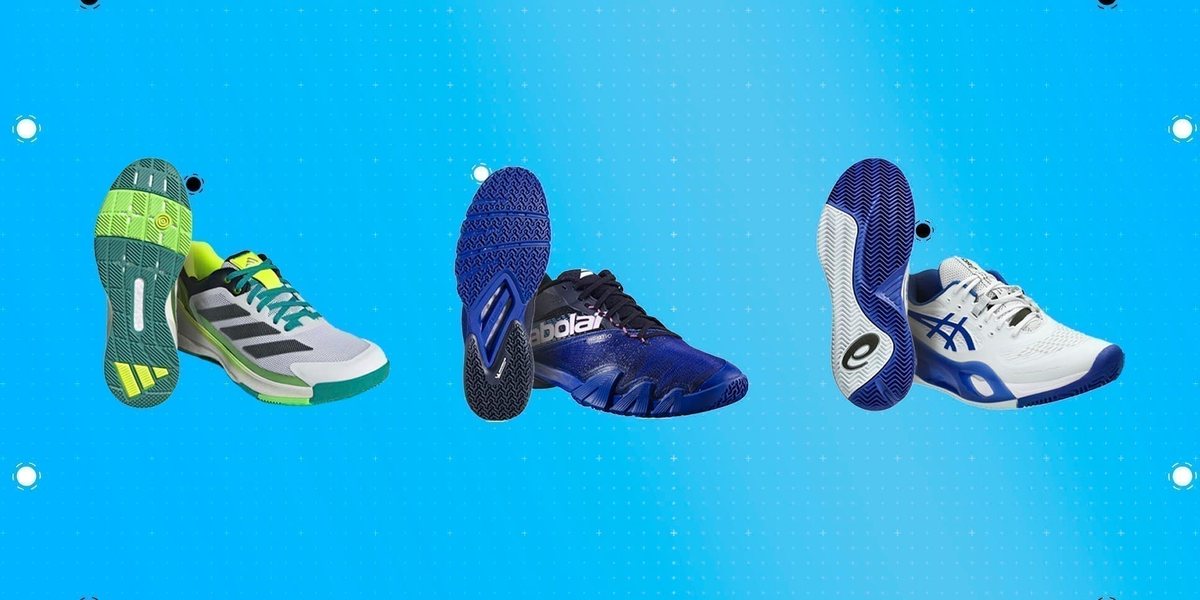
Can you play padel in tennis shoes? You can to start — but proper padel shoes are better. Padel is played on sand-dressed artificial turf, and padel shoes use an outsole designed for exactly that surface, plus the lateral support the sport’s quick side-to-side movement demands. Tennis shoes overlap a lot and work in a pinch, but they’re built for different courts.
Here’s the real difference, which tennis shoes are closest, which footwear to avoid entirely, what to look for in a dedicated pair, and how long they last.
Padel shoes vs tennis shoes: the difference at a glance
Both are court shoes built for stop-start movement and lateral support, so they have a lot in common. The decisive difference is the outsole, which is tuned to the surface each sport is played on:
| Feature | Padel shoes | Tennis shoes |
|---|---|---|
| Designed for | Sand-dressed artificial turf | Hard, clay or grass courts |
| Sole pattern | Herringbone or omni, tuned for turf | Varies by court (omni, full herringbone, nubbed) |
| Grip on padel turf | Optimised — grips without sticking | Can be too grippy (hard-court) or slip |
| Lateral support | High | High |
| Cushioning | Moderate, court-focused | Often higher (hard-court impact) |
| Durability on turf | Built for it | Wears differently; sole can clog with sand |
The key difference is the sole
Padel is played on artificial grass dressed with fine sand. Padel outsoles use a herringbone (zig-zag) or omni (small-stud) pattern that bites into that surface just enough to let you plant and push off, then release cleanly — so you don’t stick and roll an ankle, or slide out. Tennis soles are designed for a different job: hard-court soles are flatter and grippier (great on concrete, too sticky on turf), while clay-court soles use a full herringbone that actually behaves a lot like a padel sole.
Everything else — lateral support, a reinforced toe, the low-to-the-ground stance — the two share. It’s the sole-to-surface match that sets them apart.
Can you use tennis shoes for padel?
Yes, especially when you’re starting out or just trying the sport. The closest match is a clay-court or all-court tennis shoe, because its herringbone-style sole behaves much like a padel sole on turf. A hard-court tennis shoe will work but can feel overly grippy and may wear faster on the abrasive sand. If tennis shoes are what you have, they’ll get you on court safely — just keep an eye on grip.
Can you use running shoes or regular trainers?
No — this is the one to avoid. Running shoes are built for straight-line motion: they have raised, cushioned heels and almost no lateral support, so on padel’s constant side-to-side movement they’re unstable and a genuine ankle-injury risk. Smooth-soled fashion trainers are just as bad, with no grip on turf. If you don’t have padel shoes, reach for a court shoe (tennis), never a running shoe.
Why padel shoes are better
- Turf-specific sole: the herringbone/omni grip is tuned so you can plant and push off without sticking or sliding.
- Lateral stability: reinforced sidewalls hold your foot during the sport’s constant direction changes.
- Durability: the outsole and toe are built to survive sand-dressed turf, which chews through the wrong shoe.
- Injury prevention: the right grip-and-support balance protects ankles and knees on quick stops and turns.
What to look for in padel shoes
If you’re buying a dedicated pair, prioritise these — and see our guide to the best padel shoes for current picks across brands:
- A turf-appropriate sole — herringbone for grippy all-round play, omni (small studs) for faster release on slidey courts.
- Strong lateral support to hold your foot on side-to-side movement.
- A reinforced toe — dragging the toe on serves and lunges wears shoes out fast.
- A secure, comfortable fit for long sessions, with enough cushioning for repeated stops.
- Breathability, especially for warmer US climates and indoor clubs.
How long do padel shoes last?
With regular play, expect roughly three to nine months depending on how often you play and how abrasive your courts are. Replace them when the sole pattern is visibly worn smooth, the grip starts to feel unreliable, or the lateral support has packed out — worn grip is both a performance and an injury issue, so don’t push a dead pair.
When tennis shoes are fine
If you play occasionally, are brand new to padel, or already own clay-court tennis shoes, there’s no need to rush out and buy padel-specific footwear — just avoid running shoes and smooth soles. Once you’re playing regularly, a dedicated pair is well worth it for grip, support, durability and injury prevention.
Already own a pair? Brand-by-brand crossover guides
If the tennis shoes already in your bag are from one of the big athletic brands, the useful question is not whether tennis shoes work in general but whether your pair does. We have gone through what each brand actually sells on Amazon US, which models cross over well on turf, and where you are better off buying a dedicated pair instead.
- Nike padel shoes — no dedicated padel shoe on the US market, but two NikeCourt models cross over, and the cheaper one has the better outsole for padel.
- New Balance padel shoes — the clay-court FuelCell is the one to look for, because its herringbone tread suits artificial turf far better than the hard-court version.
- Puma padel shoes — the NOVA Elite is the only realistic option on Amazon US; the wider padel range is European-only.
- Under Armour padel shoes — the nearest thing is a cross-trainer rather than a court shoe, so this is the one case where we would not recommend the crossover.
If you would rather skip the crossover question altogether, ASICS, adidas, Babolat and NOX all sell purpose-built padel shoes on Amazon US, several of them under $100.
The bottom line
Padel shoes and tennis shoes are close cousins — both are supportive court shoes — but the sole is matched to a different surface. You can start in clay-court or all-court tennis shoes, you should never use running shoes, and once you play regularly a dedicated pair pays off. New to the game? Our how to play padel guide covers the basics, and the best padel shoes roundup has our current picks.
Frequently asked questions
Yes, especially to start — a clay-court or all-court tennis shoe is the closest match because its herringbone-style sole behaves like a padel sole on turf. Hard-court shoes work but can feel too grippy. Avoid running shoes and smooth-soled trainers, which lack lateral support and turf grip.
No. Running shoes have raised, cushioned heels and almost no lateral support, which makes padel’s quick side-to-side movement unstable and raises the risk of an ankle injury. Always use a court shoe instead.
Mainly the outsole. Padel shoes use a herringbone or omni sole tuned for sand-dressed artificial turf; tennis shoes are built for hard, clay or grass courts. Both offer strong lateral support, but the grip and durability on padel turf differ.
A turf-appropriate sole (herringbone or omni), strong lateral support, a reinforced toe, a secure and comfortable fit, and good breathability. See our best padel shoes guide for current picks.
Not to begin with — clay-court tennis shoes are fine early on. But if you play regularly, dedicated padel shoes give better grip, support and durability on turf, and reduce injury risk.
Roughly three to nine months with regular play, depending on frequency and how abrasive your courts are. Replace them once the sole is worn smooth, the grip feels unreliable, or the support has packed out.

Lucas Sánchez is the founder of SimplePadel. Born and raised in Spain, Lucas has been living in the US and UK for the last 20 years and currently calls Miami his home. While he’s never played professionally, the dream is still alive.
Lucas loves nothing more than playing (and talking) about padel, and he considers himself lucky to have a wife and family that share his love for the game.