
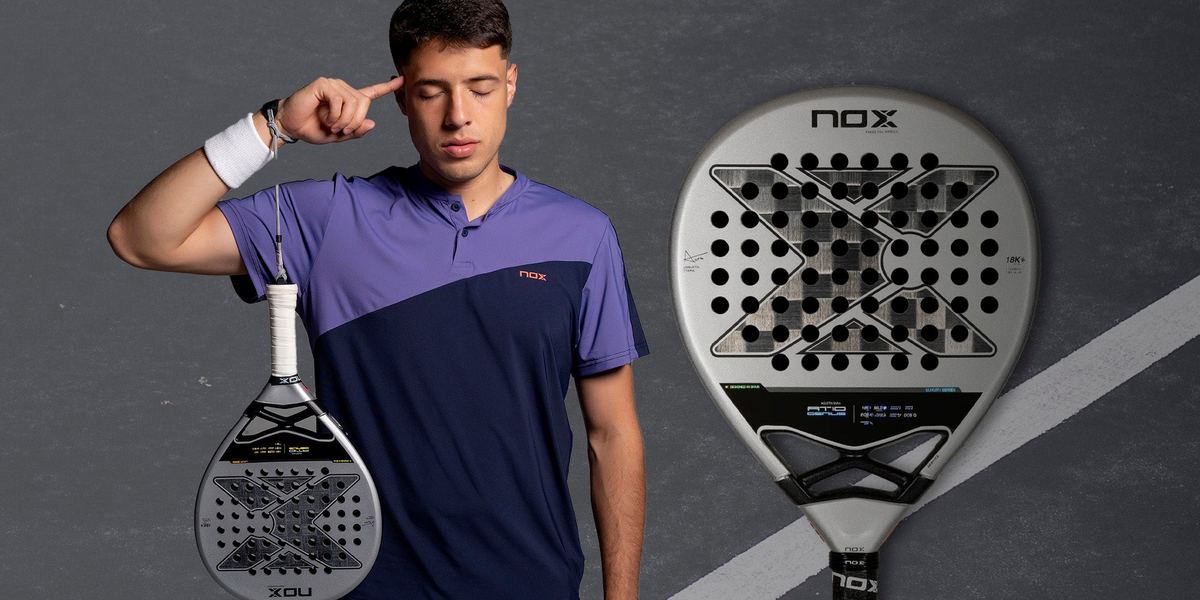
The Nox AT10 Genius 18K is Agustín Tapia’s signature racket and one of the most-played palas on the pro circuit. It’s a teardrop frame built to give advancing and advanced players a rare blend of power and control in the same paddle.
Agustín Tapia’s AT10 Genius is one of padel’s most sought-after rackets, and the 18K is the firmer, more demanding half of the line — a stiffer carbon layup than the 12K, with the same teardrop shape and Weight & Balance tuning. It’s aimed at advanced players who want maximum response and feedback.
In this review we break down its build, specs, and on-court feel, and explain who should (and shouldn’t) buy it. For the wider line-up see our best Nox padel rackets guide.
Nox AT10 Genius 18K at a glance
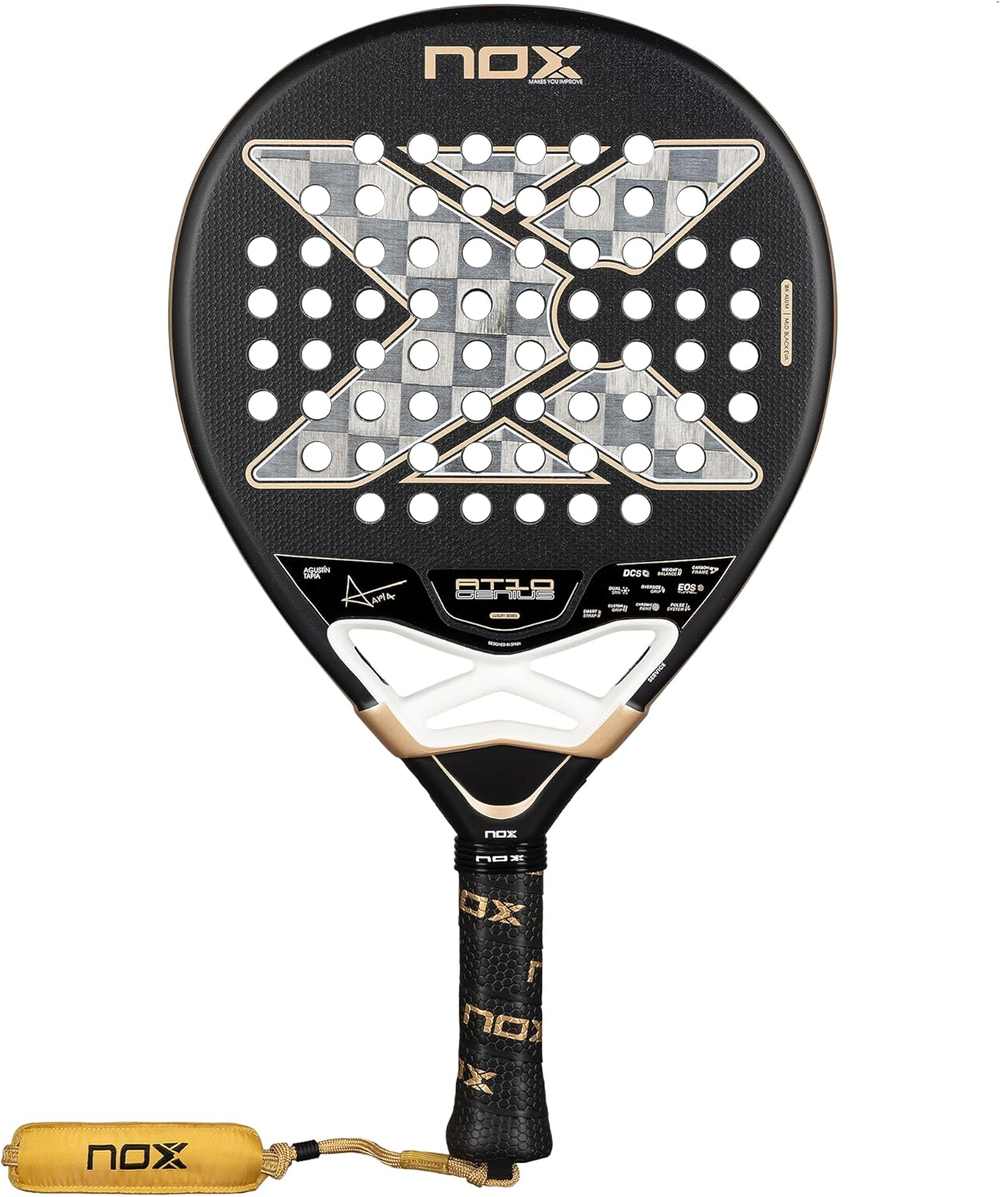
Why it wins: Agustín Tapia’s signature teardrop — a rare blend of power and control, with 18K carbon and EOS aerodynamics. (~$330)
- Teardrop shape — balanced power and control
- 18K aluminised carbon faces
- MLD Black EVA core + EOS aerodynamics
- Dual spin surface — Agustín Tapia’s racket
Main features of the Nox AT10 Genius 18K
The AT10 Genius 18K packs Nox’s flagship technology into Tapia’s tournament racket:
- 18K aluminised carbon faces for a stable, responsive hit
- MLD Black EVA core — a medium-hard rubber with high recovery
- EOS flap/tunnel for aerodynamics and faster swing speed
- Dual spin surface: 3D hexagonal centre + sand texture for grip on the ball
- Smartstrap system for easy cord replacement
Specification of the Nox AT10 Genius 18K
Here are the full specs of the Nox AT10 Genius 18K:
- Shape: Teardrop
- Weight: ~365–375 g
- Balance: Medium
- Core: MLD Black EVA (medium-hard)
- Faces: 18K aluminised carbon
- Player level: Advanced / pro
- Type of play: Power & control
- Pro: Agustín Tapia
Our review of the Nox AT10 Genius 18K
On court the AT10 Genius lives up to its billing as an all-rounder. The teardrop shape puts the balance point in a sweet middle ground, so you get genuine power on smashes and volleys without the punishing, head-heavy feel of a pure diamond. The 18K carbon face is stable and forgiving for a pro-level frame, and the MLD core gives a lively, medium-hard response that rewards a clean strike.
The dual-texture surface bites the ball well for slices and topspin, and the EOS aerodynamics make it noticeably easy to swing for a racket with this much pop. It’s demanding enough that beginners will struggle, but for a confident intermediate moving up or an advanced player, it’s one of the most versatile high-end palas you can buy.
Pros
- Excellent power-to-control balance for a teardrop
- Stable, forgiving 18K carbon face
- Great spin grip from the dual-texture surface
- Easy to swing thanks to EOS aerodynamics
Cons
- Premium price
- Too demanding for true beginners
Who is the Nox AT10 Genius 18K for?
The AT10 Genius 18K is built for confident intermediates moving up and for advanced players who want one racket that does everything. If you can already generate your own pace and want a frame that rewards clean contact rather than papering over mistakes, it’s ideal. Genuine beginners should look elsewhere — the response is too lively and the price too high to learn on.
How the Nox AT10 Genius 18K plays
On smashes and volleys the teardrop balance gives you real put-away power without the wrist-heavy feel of a pure diamond, so you can keep finishing late into a session. The 18K carbon face is stable enough that slightly off-centre hits still come back with pace.
From the back of the court it’s where the AT10 shines versus most power frames: the medium balance and dual-texture surface make it easy to control defensive lobs and work the ball with spin. It’s a noticeably more forgiving high-end pala than a diamond like the Metalbone.
Nox AT10 Genius 18K vs the alternatives
The single most-searched decision is 12K vs 18K: the AT10 Genius 12K uses a softer carbon weave for more comfort and control, while this 18K is stiffer for more power and a firmer response — pick by whether you prioritise comfort (12K) or pace (18K). NOX also splits the line into standard and more aggressive “Attack” and lighter “Ultralight” editions, so check which you’re buying.
If you want a stiffer 12K diamond for finishing, see the AT10 Genius Attack, and for a cheaper attacking diamond the EA10 Ventus Attack.
Cross-brand, it lines up against pro all-court/power frames like the Adidas Adipower, Bullpadel Vertex 04 and Babolat Technical Viper.
Is the Nox AT10 Genius 18K worth it?
For an advanced all-court player who wants Tapia’s blend of power and control, the 18K is worth the flagship price — it’s versatile, spin-friendly and built to attack and defend.
Just make the 12K-vs-18K call first: if you want a softer, more forgiving, arm-friendlier feel, the 12K may suit you better for the same money. Choose the 18K when power and a firmer hit are the priority.
Conclusion
The 18K is the AT10 for players who want every bit of Tapia’s pace and precision: the stiff 18K face gives sharp, direct power, but it’s less forgiving than the softer 12K and asks for clean contact. For an advanced all-court player chasing the most responsive version of the Genius, it’s the one; if you found it harsh, the 12K is the gentler sibling.
The Nox AT10 Genius 18K is a superb choice for advancing and advanced players who want power and control in one racket — no surprise it’s Tapia’s weapon of choice. If you’re still developing your technique, start with our best intermediate rackets; otherwise see how it stacks up in our best padel rackets roundup.

Lucas Sánchez is the founder of SimplePadel. Born and raised in Spain, Lucas has been living in the US and UK for the last 20 years and currently calls Miami his home. While he’s never played professionally, the dream is still alive.
Lucas loves nothing more than playing (and talking) about padel, and he considers himself lucky to have a wife and family that share his love for the game.