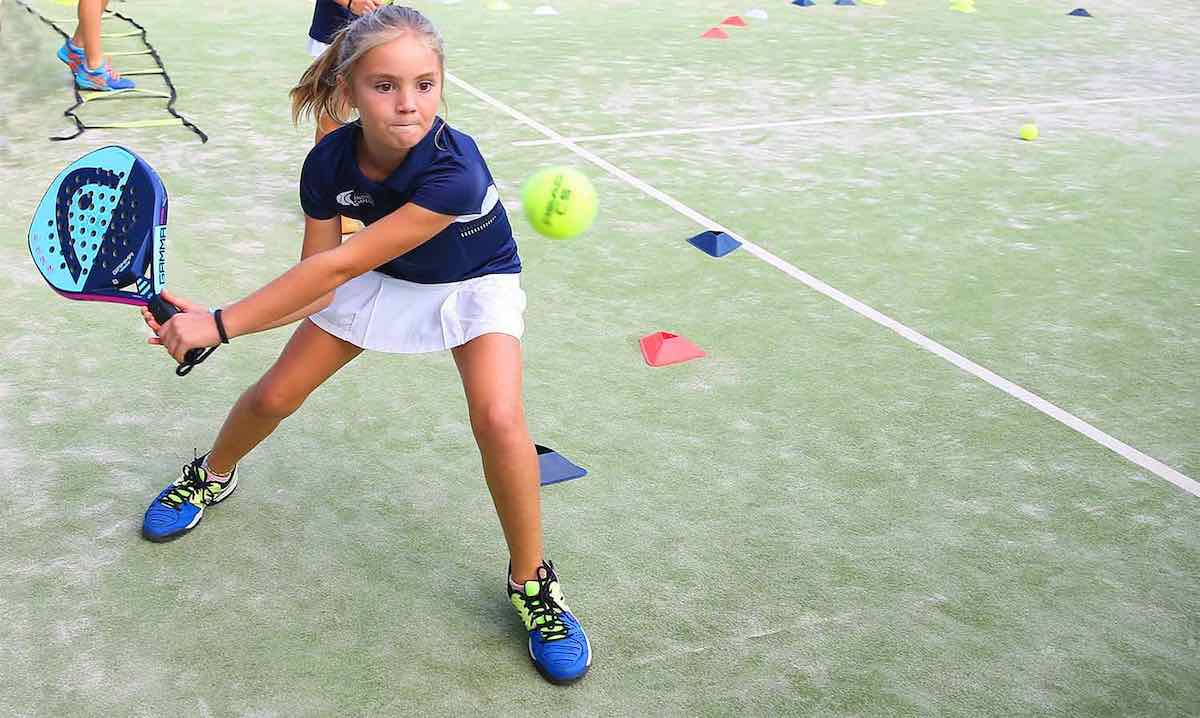
Padel is a competitive sport that helps children learn a new skill, gain confidence and make friends on and off the court.
It brings many benefits like physical coordination and balance and is a fun activity that can boost self-esteem. The question is, what is the best age to introduce children to the sport?
Let’s look go over the basics and benefits of playing Padel. We’ll look at how to find your local padel court, how to motivate children and get them into sports, and the Padel rules for beginners.
Benefits of Padel for Kids
Compared to other racket sports, padel has a unique set of qualities that make it particularly well-suited to younger players. The court is smaller than a tennis court, the glass walls keep the ball in play longer, and the doubles format means children are always working with a partner rather than playing alone on a full-size court. That lower barrier to rallying means kids get more touches on the ball from day one, which keeps frustration low and motivation high.
The social doubles format is especially valuable for children who are still developing their communication and teamwork skills. Because you must move and strategise as a pair, padel naturally encourages kids to talk, coordinate, and support each other — lessons that extend well beyond the court. Here are six reasons why padel is one of the best sports you can introduce to a child:
- Physical fitness — improves cardiovascular health, agility, and coordination through constant movement and reactive footwork
- Social skills — the doubles format builds communication and teamwork from the very first session
- Mental development — tactical thinking and quick problem-solving under pressure sharpen cognitive skills
- Low injury risk — the smaller court and slower average ball speed reduce physical strain compared to tennis
- Year-round play — indoor courts available across most US climates keep kids active whatever the season
- Progressive learning curve — easy enough for a beginner to enjoy immediately, yet deep enough to keep advanced junior players challenged for years
Research into youth sport participation consistently shows that children who play racket sports develop stronger concentration and academic focus. The hand-eye coordination demands, combined with the need to read an opponent’s position and anticipate ball trajectories, activate the same executive functions that help kids stay attentive in the classroom. Getting your child onto a padel court is an investment in more than just their sporting future.
At what age can children start Padel lessons?
Children can start playing kids Padel at a young age, even as toddlers. This is because sports like Padel allow them to develop their motor skills, give them the experience of overcoming challenges, and teach them teamwork as you have to move around the court as a pair.
Let’s go through children at each stage of their development and see how their relationship with Padel can grow as they do. We’ll see how they can improve as padel players.
From ages 4 to 7
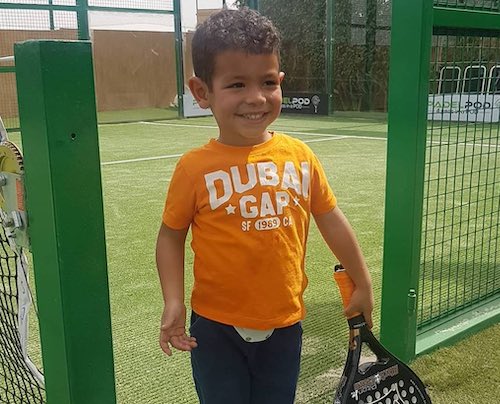
Enrolling young children in padel lessons allows them to learn from the experts. It allows them to exercise while supervised by responsible adults passionate about the game.
At such a young age, it’s important to raise your child’s self-esteem, encouraging them and giving them an incentive to play. They’ll have enough energy to play if you keep them excited.
They should have fun playing Padel and focus on teaching them the right movements without boring them. Sessions should be full of fun drills that pique a child’s interest and build their passion.
The best thing you can do is encourage your kids to enjoy their time playing along. You will need to look for a padel court near your area and the best padel rackets for beginners.
Between the ages of 8 and 9
Sports like Padel are vital for a child’s development because it enhances their motor skill, promote values like teamwork and accepting loss, and improve their coordination and balance.
This is the ideal time to start, as children aged 8-10 are more likely to stay in the sport than a younger kid because they will have happy memories of playing with their family and friends.
At this point, your local Padel club will begin combining fun activities with skills-based drills and teaching the children the rules of Padel. They will have more experience using the rackets and bouncing balls.
You must invest in a good-quality junior padel racket to start your kid off. They may rest it on the court or smack it around as kids do, so it’s best to get a durable one.
From the ages of 10 to 12
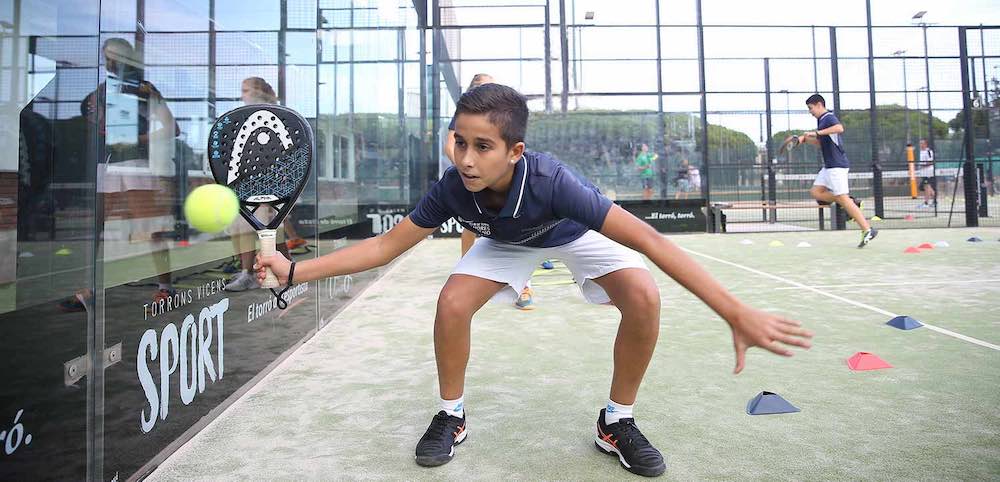
Padel is one of the most excellent physical activities for a growing kid because it makes them more flexible, agile, and coordinated. It’s also a good time to give them a social group they can relate to.
The best padel players often start playing Padel or other racket sports at this age. They can perform movements properly and are at the age where parents invest in high-quality rackets and padel shoes.
At this stage, the racket activity becomes an excellent after-school activity. Balancing school and sports will teach your kid time management, delayed gratification, and the value of punctuality.
From the ages of 13 to 15
It’s at this stage where children who have played Padel for the past few years get their chance to shine. They will begin to play a competitive sport and devote themselves to Padel.
At this age, they will first join junior padel events, especially if they’re from Spain and other Padel countries. In the US, the USPA runs youth tournaments that give young players structured competitive experience. This will create an environment that helps them to see Padel less as an exercise and more as a positive life direction.
Children competing in the sport will learn how to perform the different shots of Padel. They will eat through Padel rackets as they become more powerful and obsessed with the sport.
If you are a parent of a child who loves playing Padel, you must invest in high-quality Padel rackets. Understanding how to win points in padel will give young players a tactical edge as they progress.
From the ages of 16 and forward
Your children are growing up. If they’ve made it this far, they’ll likely continue playing Padel well into adulthood.
Congratulations, you’ve fostered an environment that allows them to enjoy Padel and do what they love!
Isabella Torres of SimplePadel
After spending years of practice developing their skills for each Padel match, your children are now reaping the benefits of your chosen sport. They have discipline, physical ability, and passion.
It isn’t too late for adults who didn’t grow up with a padel racket in their hand. Padel is a sport that works for many people regardless of age or fitness level.
You will need a padel racket and some good padel shoes to get into the sport. You may not learn as quickly as the kids, but you’ll still be able to participate and enjoy a game or two.
Padel exercises for kids
Young children first being introduced to racket sports don’t start with a racket in their hand, especially if they’re young. Instead, they start learning the basics through related drills and games.
These exercises are fun ways of ensuring skills development and increasing their speed, accuracy, and agility. They even improve a shy child’s ability to play a team sport.
Here are some popular examples of Padel-related games that help foster a love for the event in kids:
The worm drill
This game is similar to the old cellphone app “Snake,” wherein the snake maneuvers around to eat the dots on the screen. In this case, however, the kids are the snakes, and the balls are the dots.
The worm is a fun drill where the kids can only move with side steps and lateral movement. The balls are rolled towards them, and they must learn to avoid the balls by letting them pass between their legs.
Chicken Killer
This game trains the kids’ reaction times and enhances their reflexes. The kids are lined against the court wall and are given a set number of lives until they’re out.
Their job is to use their lateral and body movement to dodge their coach’s balls thrown at them. This builds up their speed, endurance, and even stress management.
Bounce and catch
This simple, seemingly straightforward exercise builds up the basics: hand-eye coordination. The goal is simple: bounce the ball to your partner for them to catch it. You can be as close or as far as possible.
This builds a player’s reflexes while giving them muscle memory. It also trains the children to see the ball bounce before interacting with it, which is a major part of what makes Padel unique.
Why you should play Padel games
When children are first introduced to the sport, they won’t be coordinated or patient enough to learn the regulations and fundamentals of the sport without getting bored.
You will need to make it interesting. These drills are a good way to teach them the proper movements while giving them something to look forward to.
If your child is starting with these games, you must encourage them and give them positive reinforcement every step.
They may forget the fundamentals and techniques, but they will not forget the fun they had playing Padel. This will make them lifelong Padel fans even if they stop playing.
Junior Padel Equipment Guide
Getting the right-sized equipment makes a huge difference in how quickly children progress. An adult racket in a young player’s hands is too heavy, too long, and throws off swing mechanics before good habits have a chance to form. Investing in properly sized junior gear means your child can focus on learning the game rather than fighting their equipment.
Choosing a Junior Padel Racket
Junior padel rackets are sized by age and arm length. As a general guide, children aged 4 to 8 typically suit a racket in the 42–46 cm range, while players aged 9 to 12 move up to 46–50 cm. By age 13 and older, most juniors can handle a standard adult size, which sits between 45.5 and 47 cm — though frame weight matters more at this stage than length.
Weight is the most important factor for younger players. Lighter rackets in the 280–330g range allow kids to swing freely without straining their elbows or wrists. A round-shaped frame is generally recommended for juniors because the larger sweet spot is more forgiving on off-centre hits, which makes up the majority of strikes when a player is still developing. As they advance into their early teens and build more strength and technique, a more diamond-shaped racket offers greater power on volleys and overhead smashes.
Padel Shoes for Kids
Proper court footwear is just as important as the racket. General athletic trainers or running shoes are not designed for the lateral movement patterns that padel demands — they lack the outsole grip and ankle support that protect young joints during quick direction changes and split steps. Padel courts use an artificial grass or sand surface that requires a specific outsole pattern to prevent slipping.
When shopping for kids’ padel shoes, look for a non-marking outsole (required at most clubs), a cushioned midsole that absorbs impact during jumping and landing, and a snug but not tight fit around the heel to prevent blisters. Padel-specific shoes are a worthwhile investment — junior versions are widely available and tend to last a full season of regular play. Learn more about what to look for in our guide to choosing the best padel shoes.
Finding Your Local Padel Court
Kids padel is no longer hard to find in the US. Clubs across the country now offer structured junior programmes, and the USPA runs youth tournaments giving young players a competitive pathway from an early age. The sport is also appearing in school and club settings at a growing rate.
Whether you are in a major city or a smaller market, there is a good chance a padel facility is within reach. Courts are opening across the country, making it easier than ever to get kids into the game.
A child can easily get into padel because of the growing availability of courts, junior coaching programmes, and club memberships. That’s true whether you’re on the East Coast or the West Coast.
This gives them the benefits of years of experience playing, rapid development, and a deep-seated love of the sport. Read our beginner’s guide to padel to get a head start before your first session.
Summary
Padel is a fun sport that kids can get into and greatly benefit from. By playing Padel, they get to improve their physical skills like balance and maneuverability.
A child that plays team sports like Padel also grows more sociable on and off the court. They can even excel at the sport and play competitively at junior level and beyond. Learning which position to play and how to work as a team makes padel an excellent sport for development at every age. The USPA’s structured youth tournament pathway means that dedicated junior players now have a clear competitive route — from club-level events all the way through to national junior championships.
Frequently asked questions about getting kids interested in Padel
Children and parents looking to get their children into the sport will have a few concerns about how to give their children an edge or keep them safe while doing this physical activity.
It’s important to note that Padel is easier than other racket sports like tennis. It’s safer for a child, and playing Padel can introduce kids to a world of benefits.

Isabella Torres is originally from Madrid, Spain, and has been playing Padel as a semi-professional for the past five years. After completing her education as a journalist, she discovered her true passion in life was writing about Padel.
She loves staying up late watching intense rallies on YouTube, and is excited to share her knowledge about the sport with SimplePadel’s readers.
6 replies on “Kids Padel: Get them to share your interest in playing Padel”
[…] kids also have the potential to be the next World Padel Tour players. Practicing Padel while at a young age is a good start. Hence, appropriate clothing shouldn’t only be for adults but kids as […]
[…] You can try to play normal padel but within the service lines as a half court game. This is also a great way of playing padel with kids. […]
[…] can also rent courts per the hour (with or without partner). Padel Life & Soccer also offer an academy for children that wish to try out the […]
[…] courts must apply and agree to the terms and conditions. They even offer a special club called Kids Connection as part of their Padel Development Program. A part from this, amnesties […]
[…] Furthermore, Taktika offers a plethora of tournaments and leagues as well as summer camp for kids wanting to play padel. […]
[…] offer weekly classes, private lessons, and great atmospheres for all types of players, including kids. If you’re looking to have some fun with friends or get some serious practice in, either of these […]