How to Play Padel: A Complete Beginner’s Guide (Rules, Scoring & Tips)

Padel is one of the fastest-growing sports in the United States right now — and if you’ve never played before, you’re in the right place. Originally invented in Mexico in 1969, padel has exploded globally and is now reaching every corner of the US, from California to Florida to New York.

This guide covers everything a complete beginner needs to know: the rules, the court, the equipment, and how scoring works. By the end, you’ll be ready to step on the court with confidence.

Padel vs. Pickleball vs. Paddle Tennis: What’s the Difference?

Padel, pickleball, and paddle tennis are three racket sports that have exploded in popularity across the US — but they play very differently. Padel has grown from a niche sport to a mainstream game with thousands of courts and a professional league in the US, while pickleball has been the fastest-growing sport in the country for several years running. On the surface they look similar, but once you step on the court the differences are obvious.

Padel Pickleball Paddle Tennis
Court size 65.6 ft × 32.8 ft (enclosed) 44 ft × 20 ft (open) 60 ft × 27 ft (open)
Walls Yes — glass & mesh walls in play No No
Ball Pressurised rubber ball Perforated plastic (wiffle-style) Depressurised rubber ball
Racket Solid foam/carbon paddle, no strings Solid composite paddle Solid perforated paddle
Scoring Tennis scoring (games, sets) First to 11 points Tennis scoring
Doubles? Always played in doubles Singles or doubles Singles or doubles
Serve type Underarm only Underarm only Underarm only
US popularity Fast growing — 1,000s of courts Fastest growing sport in the US Niche, primarily East/West Coast

Other similar sports that use racquets and tennis balls include Padel Ball, Beach Tennis, Squash, etc.

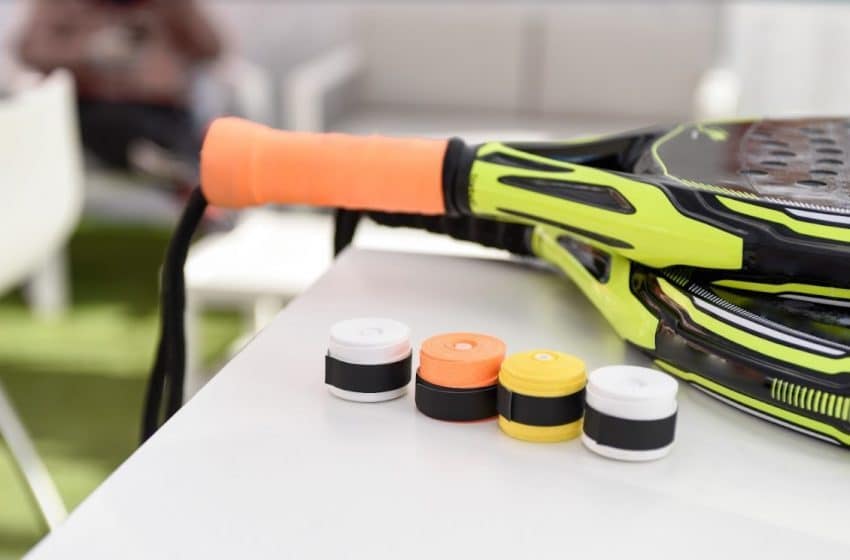
What is a padel overgrip, and when should I change grip?

Ask any seasoned padel player what the most overlooked aspect of their game is, and you’ll hear the same answer time and again: grip care. You can own a top-of-the-line racket, nail your footwork, and read the game brilliantly — but if your overgrip is shot, you’re fighting against yourself on every swing. As padel explodes across the US, more players are picking up rackets for the first time, and understanding the overgrip is one of the first things that separates those who improve quickly from those who spin their wheels.

This guide covers everything you need to know: what a padel overgrip actually is, how it differs from a replacement grip, why you need one, when to swap it out, which type suits your game, and exactly how to apply it step by step.

Padel Smash: How to Kick Smash Like a Pro

The kick smash is the most spectacular shot in padel — the only one that can definitively end a point even at the pro level. It’s also the most overhit shot at amateur level. Watch any club night anywhere and you’ll see beginners trying to murder lobs with flat smashes that bounce off the back glass straight back into their own chests. The kick smash is the answer to that. Done right, the ball clears the back glass entirely and rolls into the parking lot. Done wrong, you set yourself up for a counter that ends the point against you.

Most beginners get this shot wrong for one reason: they go for power instead of spin. They watch Galán launch a ball into row Z at Premier Padel Madrid and think the answer is a bigger swing. It isn’t. The kick smash is a topspin shot first and a power shot a distant second — the spin is what makes the ball bounce out of the cage, not the speed. If you’re new to padel itself and not just the kick smash, start with our guide to what is padel for the basics first.

This article is the un-watered-down version: how the shot actually works, when to use it, when not to, and the specific mistakes I see at every US club I’ve played at. No “comprehensive guide” filler.

Which Side Should I Play in Padel?

One of the first questions every new padel player asks is: which side of the court should I play? It sounds simple, but it shapes everything — how you hit, how you move, how you support your partner, and how quickly you improve. With padel booming across the US and new courts opening from Miami to Los Angeles, more and more players are stepping onto a padel court for the first time and asking exactly this question.

The short answer is that most right-handed beginners should start on the right side, and most left-handers on the left. But understanding why — and knowing when to switch — will make you a much smarter player. Let’s break it all down.

Valid Padel Point or Not? Dubious Padel Points Explained

Padel has rules that don’t exist in any other racket sport. Balls bouncing off glass walls and flying back into play, shots leaving through fence openings, players reaching across the net — situations that would be immediately clear in tennis are genuinely ambiguous in padel. As the sport takes off across the US, more players at clubs in New York, Chicago, Miami, and Los Angeles are stepping onto a padel court for the first time and discovering just how different the point-scoring system feels. This guide cuts through the confusion and gives you clear, confident answers to padel’s trickiest situations.

Whether you’re settling a disputed point mid-match or just trying to get your head around the rules before you play, this is the reference you need. For a full introduction to how the game works, start with the complete beginner’s guide to padel.

How to Build a Padel Court

Padel is a major sport worldwide, and it has exploded in popularity across the United States since 2022. Courts are now available in most major cities, including Miami, New York, Los Angeles, Dallas, and Chicago.

Often known as padel tennis, it’s a popular social sport that individuals of all ages and skills may enjoy.

You may be unsure about the best method to follow when planning to create a padel court or start a club. This post will show you how to accomplish it one step at a time — covering everything from permits and planning approvals to choosing the right dimensions, materials, and surface, all the way through step-by-step installation and long-term maintenance.

Padel courts will almost certainly require a building permit. However, this depends on the nation and region. Before you begin, make sure to verify with your local authorities.

Kids Padel: Get them to share your interest in playing Padel

Padel is a competitive sport that helps children learn a new skill, gain confidence and make friends on and off the court.

It brings many benefits like physical coordination and balance and is a fun activity that can boost self-esteem. The question is, what is the best age to introduce children to the sport?

Let’s look go over the basics and benefits of playing Padel. We’ll look at how to find your local padel court, how to motivate children and get them into sports, and the Padel rules for beginners.

How to warm up for Padel (Beginner’s Guide)

You’ve booked the court, you’ve got your racket, and your partner just texted that they’re five minutes away. But before you step into that glass box and start swinging, there’s one thing that separates smart padel players from the ones nursing a shoulder injury by week three: a proper warm-up. With padel growing fast across the US — from purpose-built clubs in New York and Austin to pop-up courts in suburban tennis facilities — more players are learning this lesson the hard way.

Padel is a deceptively explosive sport. The glass walls, the low-bounce ball, and the fast net exchanges mean your body goes from zero to full effort in seconds. Without a proper warm-up, you’re asking cold muscles and stiff joints to handle hard sprints, sudden lateral changes, and overhead smashes. That’s a recipe for an injury that’ll keep you off the court for weeks.

This guide covers everything: the off-court dynamic warm-up you should do before you pick up a racket, the structured on-court ball warm-up, how long to spend on each phase, and what to do at the end to cool down properly. Let’s get into it.

What Is a Tiebreak in Padel?

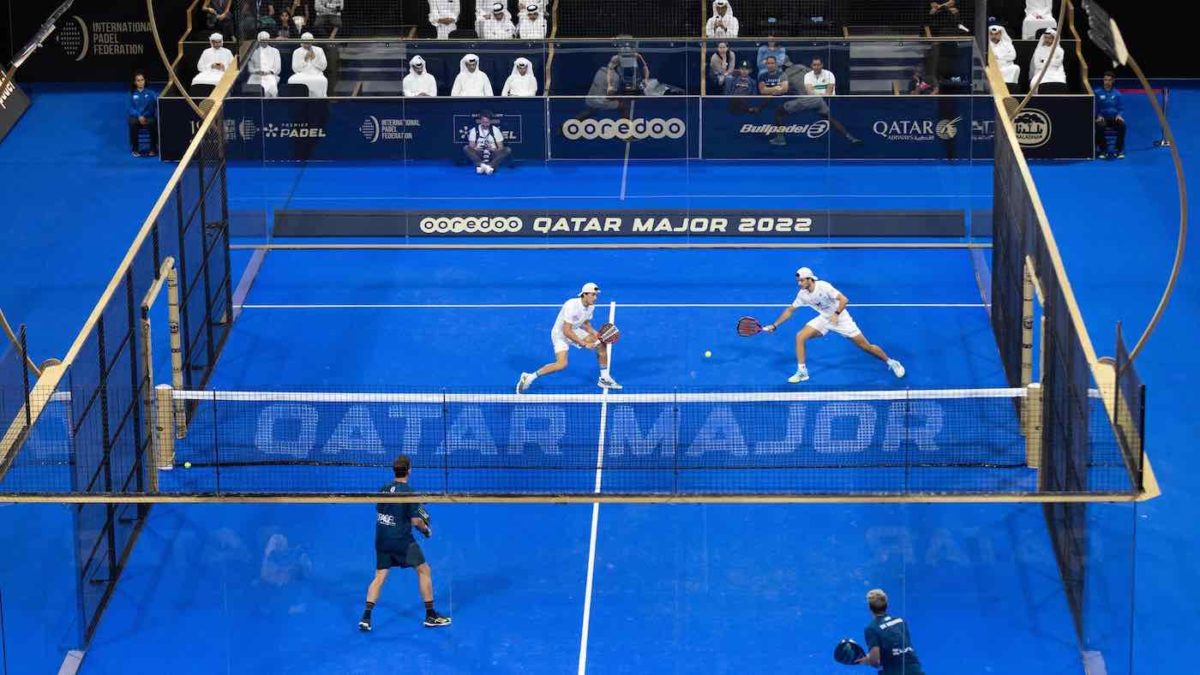
Padel is highly similar to tennis. There are few distinctions, like how a padel court (33 x 66 feet) is 1/3 of a tennis court.

Tennis is checkers, while padel is chess.

Lee Sponaugle, President of All Racquet Sports

But tennis and padel rules are essentially the same. If you need a full refresher on the basics, check out our beginner’s guide to how to play padel.

Following that, the tiebreak games are also the same. If both teams tie at 6-6 in a set (six games), the tiebreak winner wins with a 7-6 score.

Let’s learn more, shall we?