
NOX is one of the few brands that treats padel shoes as a medical-grade engineering problem rather than a colorway exercise. Its AT10 and ML10 lines are developed with a podiatrist and lab-certified for injury reduction, built around NOX’s own AGG (Advanced Gravity Geometry) drop technology, and carry Agustin Tapia’s signature on the flagship model.
All three picks below are explicitly padel shoes with padel-specific outsoles, sold on Amazon US. For the picture across every brand — adidas, ASICS and more — see our full best padel shoes guide, or compare against our adidas padel shoes and ASICS padel shoes guides if you are deciding between brands.
NOX padel shoes at a glance
| Model | Price (approx.) | Best for | Key tech |
|---|---|---|---|
| NOX AT10 LUX | ~$111–$235 | Tour-level stability, Tapia signature | AGG + Lateral Support |
| NOX AT10 PRO | ~$117–$147 | Durability, reinforced toe/heel | AGG + reinforced toe & heel |
| NOX ML10 Hexa | ~$81 | Value, everyday comfort | AGG + Ortholite comfort |
1. NOX AT10 LUX — Best Overall
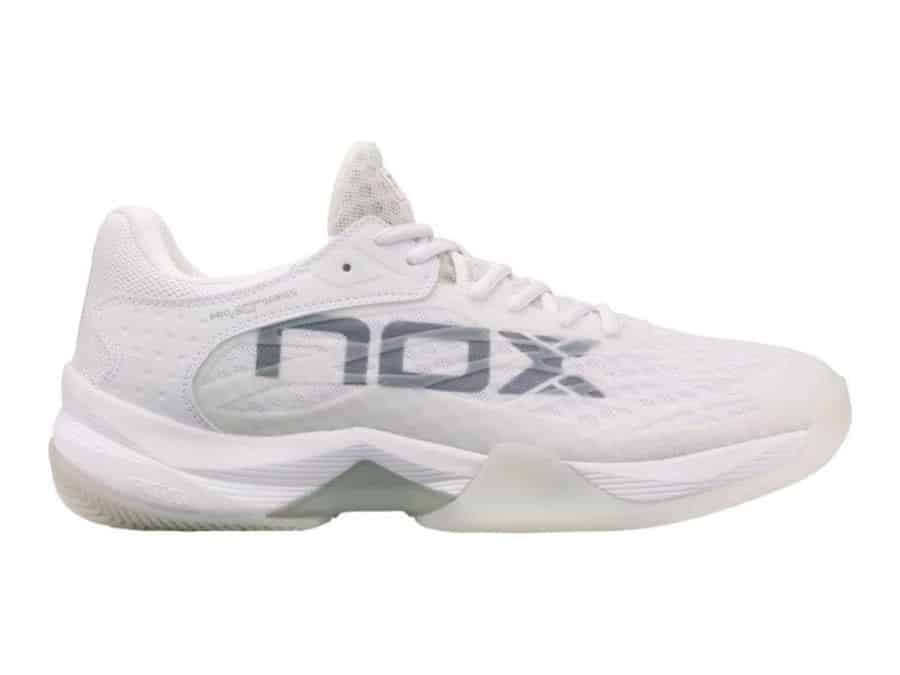
Why it wins: NOX’s flagship, worn by Agustin Tapia on tour, combines AGG drop geometry with a lateral support cage and Ortholite comfort — the most complete, clinically-endorsed option here. (~$111–235)
- AGG (Advanced Gravity Geometry) drop reduces plantar fasciitis and calf strain
- Lateral Support cage locks the foot down through hard cuts
- Ortholite sockliner for long-session comfort
- Clinically endorsed and lab-certified for injury reduction
- Padel-specific outsole tuned for artificial turf grip
The AT10 LUX is NOX’s tour-level shoe, and the AGG geometry is the standout feature: by adjusting the heel-to-toe drop, it puts your foot in a more ready position for explosive starts while reducing the strain that causes plantar fasciitis and calf overload in players who log a lot of court hours. It is priced like a flagship, but for a serious 3+ times-a-week player the health-focused engineering is a genuine differentiator over shoes that are only stability-focused. Best for: committed players who want the same shoe their favourite pro wears.
2. NOX AT10 PRO — Best for Durability
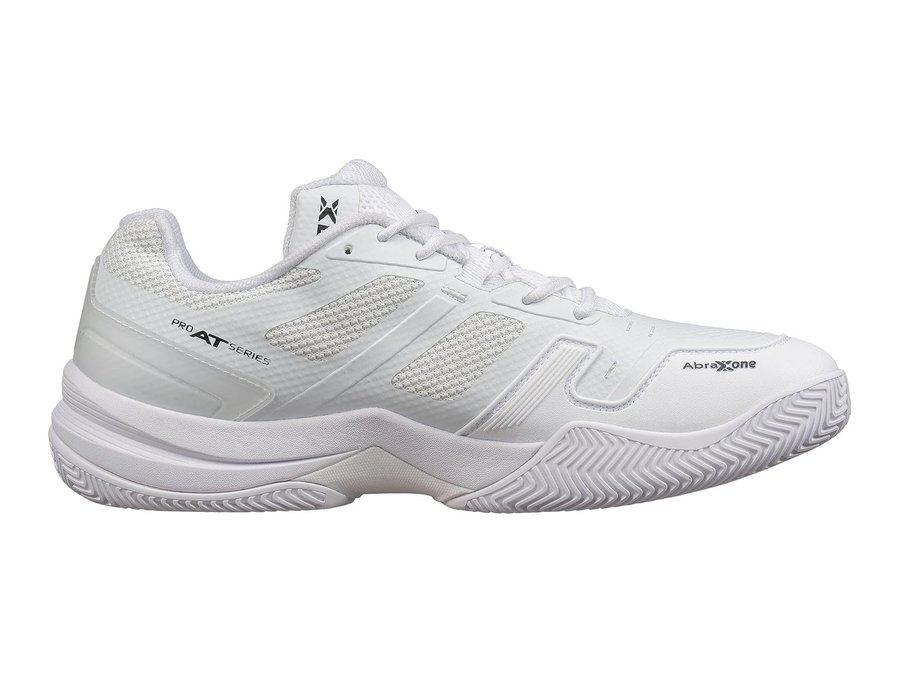
Why it wins: Same AGG platform as the LUX with reinforced toe and heel panels built to survive the constant toe-dragging and hard stops of aggressive, physical play. (~$117–147)
- AGG technology carried over from the flagship LUX
- Reinforced toe and heel panels resist wear from drag and hard stops
- Lateral Support for explosive, direction-change-heavy movement
- Lightweight build despite the extra reinforcement
- Clinically endorsed, lab-certified construction
The AT10 PRO takes the AGG platform from the LUX and adds reinforcement exactly where aggressive players wear shoes out fastest: the toe (from dragging on smashes and slides) and the heel. If you play a physical, attacking style and burn through shoes in a season, the PRO is built to outlast a standard padel shoe without giving up the same AGG movement benefits as the flagship. Best for: aggressive players who are hard on their footwear.
3. NOX ML10 Hexa — Best Value
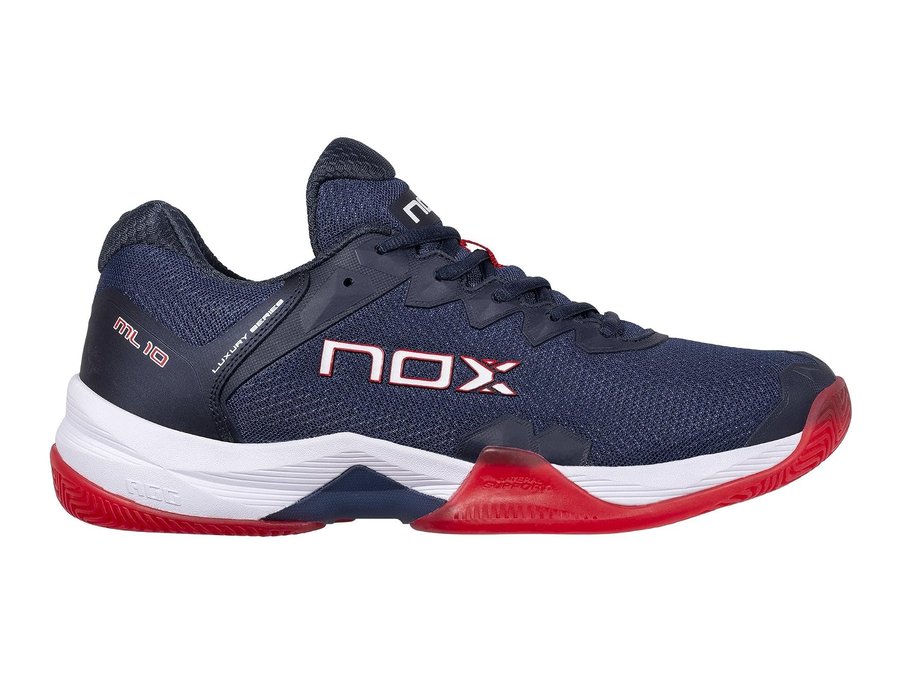
Why it wins: NOX’s more accessible line still carries the clinically-endorsed AGG platform and lab certification — most of the health benefit of the AT10 range for a noticeably lower price. (~$81)
- AGG technology for reduced joint and calf strain
- Lateral Support for stability on direction changes
- Tech Comfort cushioning for all-day wearability
- Clinically endorsed, lab-certified build
- Lighter price point than the AT10 line
The ML10 Hexa is where NOX makes its health-focused engineering accessible. You get the same core AGG idea as the AT10 range — a shoe designed by a podiatrist to reduce strain rather than just look fast — without the tour-level price tag. It will not survive quite as much abuse as the reinforced AT10 PRO, but for a club player who wants NOX’s injury-reduction focus on a budget, it is the easy recommendation. Best for: club players who want NOX’s health tech without flagship pricing.
What to look for in NOX padel shoes
- AGG technology: NOX’s signature drop geometry runs through the whole range — it is the reason NOX shoes are marketed as clinically endorsed rather than just padel-branded.
- Reinforcement: if you drag your front foot on smashes or play an aggressive, physical style, the AT10 PRO’s reinforced toe and heel will outlast the standard LUX or Hexa.
- Signature vs value: the AT10 LUX carries Agustin Tapia’s signature and tour positioning; the ML10 Hexa delivers most of the same movement benefit at a club-friendly price.
- Certification: NOX shoes are developed with a podiatrist and lab-tested for injury reduction — worth prioritising if you have a history of plantar fasciitis or calf strain.
- Fit: NOX runs true to size for most players; the Lateral Support cage sits snug through the midfoot, so break them in over a session or two before a big match.
NOX padel shoes for men and women
The NOX padel range is sold in both men’s and women’s versions. The technology carries across both: same outsole compound, same stability structure, same midsole. What changes is the last the shoe is built on, and on the better brands that is a real difference rather than a recolour.
NOX builds its padel range around the demands of the Spanish professional circuit, where the sport is played almost entirely on artificial turf. The women’s versions share that outsole and stability construction and differ in the last: narrower through the midfoot with a lower instep volume, which holds the foot better than a scaled-down men’s shoe.
If you have wide feet and are shopping the women’s range, buying the men’s version in your converted size usually fits better than going up half a size, because sizing up lengthens the shoe without widening it and you lose the midfoot hold that matters most on lateral cuts. Note too that some Amazon US listings are unisex with men’s sizing only and the title will not always say so, so check the size chart on the individual listing. For picks across every brand in both fits, see our best padel shoes guide.
Are NOX padel shoes non-marking?
Yes. Every shoe here uses a padel-specific outsole built for artificial grass, and padel outsoles are made non-marking as standard because most of the sport is played on indoor or covered courts where clubs require it.
A non-marking sole uses a softer, lighter-pigmented rubber that will not transfer colour onto the court under heat and friction. This only becomes a problem if you press a running shoe or a dark-soled trainer into service, which can leave scuff streaks that get you turned away at the door. If you are ever unsure about a pair, look for “non-marking” on the listing or a gum, light grey or translucent outsole.
The related point is toe protection. Padel involves dragging the front foot on lunges toward the glass, which will wear through an unprotected upper within months. It is one of the clearest differences between a purpose-built padel shoe and a general trainer, and we cover the full comparison in padel shoes vs tennis shoes.
How long do NOX padel shoes last?
At two to three sessions a week, expect roughly six to twelve months. That range is wide because the surface drives it more than the shoe does: outdoor courts carry silica sand infill that acts as a mild abrasive underfoot and will wear an outsole noticeably faster than a clean indoor court.
Four signs it is time to replace them, roughly in the order they appear:
- The herringbone has gone smooth under the ball of the foot and along the outside edge, the two places you pivot. This goes first and matters most.
- You are sliding where you used to grip, especially on the first step out of the ready position.
- The toe protection has worn through to the material underneath from lunge drag.
- The midsole no longer rebounds and your legs feel flat earlier in a session, even though the outsole still looks serviceable.
Separate the last two. Outsole wear is visible and people act on it; midsole compression is invisible and gets ignored, which is how a shoe that still looks fine quietly stops protecting your joints. The lighter ML10 Hexa reaches that point sooner than the AT10 LUX simply because there is less foam to compress. Rotating two pairs extends the life of both, since foam recovers between sessions. If you are building a rotation, ASICS and Babolat are the other purpose-built options we have tested.
Bottom Line
NOX is the padel-specific brand to prioritise if injury prevention and lab-backed engineering matter as much to you as raw performance. All three shoes here share the AGG drop platform, just at different price points and reinforcement levels. Get the AT10 LUX if you want the same tour-level shoe as Agustin Tapia and the budget allows; the AT10 PRO if you play an aggressive, physical style and go through shoes quickly; the ML10 Hexa is the best-value pick for club players who want NOX’s health-focused tech without flagship pricing.
For a broader comparison across every major brand, head to the full best padel shoes roundup.
Frequently Asked Questions about NOX padel shoes
Yes. NOX has a dedicated padel shoe range including the AT10 LUX, AT10 PRO and ML10 Hexa — all clinically endorsed, lab-certified, and sold on Amazon US with padel-specific outsoles and “Padel Shoes” in the product name.
AGG (Advanced Gravity Geometry) is NOX’s heel-to-toe drop system, developed with a podiatrist to put players in a more ready position for explosive starts while reducing plantar fasciitis and calf strain from repeated hard stops.
The ML10 Hexa — it carries the same AGG movement benefit as the tour-level AT10 range at a more accessible price, which suits a beginner who is not yet ready to invest in a flagship shoe.
Both share the AGG platform and Lateral Support, but the AT10 PRO adds reinforced toe and heel panels for players who are harder on their shoes, while the LUX is the standard tour-level build worn by Agustin Tapia.
With 2–3 sessions a week, expect roughly 6–12 months from the AT10 LUX or ML10 Hexa. The AT10 PRO’s reinforced toe and heel panels are built to outlast both on abrasive artificial turf if you play an aggressive, drag-heavy style.
Yes. The range is sold in men’s and women’s versions sharing the same outsole and stability construction, with the women’s version built on a narrower last with a lower instep volume.
Yes. NOX builds padel-specific outsoles for artificial turf and these are made non-marking as standard, which is what indoor and covered clubs require.

Isabella Torres is originally from Madrid, Spain, and has been playing Padel as a semi-professional for the past five years. After completing her education as a journalist, she discovered her true passion in life was writing about Padel.
She loves staying up late watching intense rallies on YouTube, and is excited to share her knowledge about the sport with SimplePadel’s readers.