
ASICS is one of the few major shoe brands that treats padel as a sport in its own right rather than a marketing afterthought. While many brands simply rebadge a tennis shoe and add “padel” to the box, ASICS builds its padel line around padel-specific movement — hard lateral cuts, fast direction changes, and the particular grip demands of artificial-grass courts. The result is a range that runs from a tour-level stability machine to a light, speed-first option.
The three picks below cover that spread. All three carry “Padel” explicitly in the product name and are available on Amazon US with padel-specific outsoles. For the picture across every brand — adidas, NOX, HEAD and more — see our full best padel shoes guide.
ASICS padel shoes at a glance
| Model | Price (approx.) | Best for | Key tech |
|---|---|---|---|
| GEL-Resolution X Padel | ~$155 | Stability, aggressive movers | DYNALACING + DYNAWALL |
| GEL-Challenger 15 Padel | ~$110 | All-court stability, value | WINGWALL + AHARPLUS outsole |
| Solution Swift FF 2 Padel | ~$110 | Speed, lighter weight | FlyteFoam + Resin Truss |
1. ASICS GEL-Resolution X Padel — Best Overall
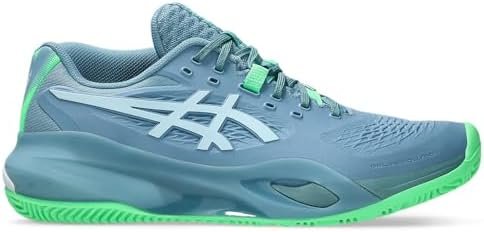
Why it wins: ASICS’s flagship padel shoe pairs the DYNALACING system with a DYNAWALL stability cage and a padel-specific herringbone sole — the most locked-in, secure-feeling option here. (~$155)
- DYNALACING spreads lacing tension for a glove-like midfoot hold
- DYNAWALL heel cage for lateral stability on hard cuts
- AHAR+ rubber outsole with padel herringbone pattern
- Rearfoot GEL cushioning for shock absorption
- Two-piece midsole for stable landings
The Resolution X is the shoe to get if you play regularly and put real stress on your ankles with frequent direction changes. DYNALACING is the standout: it distributes lacing tension across the whole midfoot instead of pulling at two points, so your foot stays locked even through hard lateral cuts, without hot spots. It’s heavier and pricier than the Swift, but for a committed 3+ times-a-week player that trade is well worth it. Best for: consistent players who prioritise stability over weight.
2. ASICS GEL-Challenger 15 Padel — Best Mid-Range
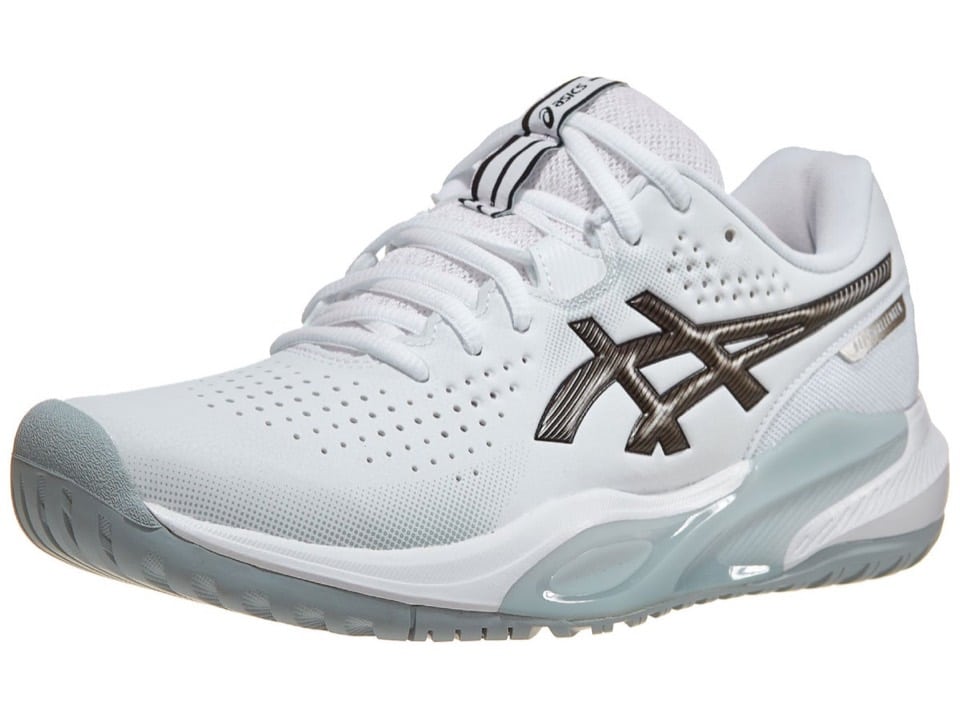
Why it wins: A purpose-built padel shoe at a club-friendly price — WINGWALL stability and a full-length AHARPLUS outsole give you most of the flagship’s grip and support for less money. (~$110)
- WINGWALL sidewall tech for side-to-side stability
- Full-length AHARPLUS outsole for maximum court contact
- X Groove forefoot flex grooves for rapid push-offs
- PGUARD toe protection for durability
- OrthoLite sockliner for moisture management
The Challenger 15 sits at a more accessible price than the Resolution X without cutting the parts that matter. WINGWALL gives you lateral stability on direction changes, and the full-length AHARPLUS outsole maximises contact with the court — useful on the loose artificial grass of outdoor clubs. The X Groove forefoot lets the shoe flex quickly when you push off toward the glass. Best for: club players who want a real padel shoe without flagship prices — the best value pick here for most people.
3. ASICS Solution Swift FF 2 Padel — Best Lightweight Option
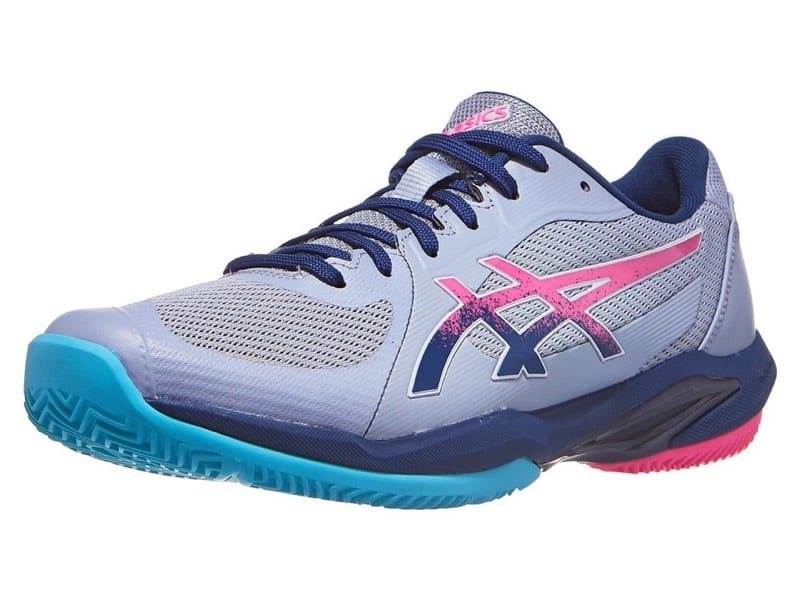
Why it wins: The lightest of the ASICS padel range by a clear margin, built for players who want speed and agility over maximum lockdown. (~$110)
- ~10.7 oz / 302g (men’s 9) — noticeably light
- FlyteFoam midsole for lightweight, springy cushioning
- Resin Truss midfoot unit resists twist on cuts
- AHAR+ outsole with modified herringbone for padel turf
- Breathable seamless mesh upper
The Solution Swift FF 2 is the lightest option ASICS makes for padel, and it feels genuinely fast: the FlyteFoam midsole returns energy without adding weight, and the seamless mesh upper keeps air moving deep into a long match. The Resin Truss midfoot unit keeps it from twisting on cuts despite the lighter build. Best for: players who play doubles at a high pace and find heavier shoes leave their legs flat in the third set.
What to look for in ASICS padel shoes
- Outsole compound: look for AHAR+ or AHARPLUS — ASICS’s most durable outdoor rubber. Standard AHAR is fine for indoor courts only.
- Stability tech: DYNALACING (Resolution X) and WINGWALL (Challenger) are ASICS’s lateral-support systems. If you’ve rolled an ankle on court, prioritise these.
- Weight vs support: the Swift is lighter but leans on the Resin Truss for stability; the Resolution X is heavier with more lockdown. Most club players land happily on the Challenger.
- Court surface: all three suit artificial grass; the padel outsole pattern still grips fine on hard indoor courts too.
- Fit: ASICS padel shoes run slightly narrow in the toe box versus some European brands — size carefully or check the return policy if you have wide feet.
ASICS padel shoes for men and women
Every model in the ASICS padel line is sold in both men’s and women’s versions. The technology is the same across both: you get the same midsole, the same stability structure and the same outsole compound. What changes is the last the shoe is built on and the colourways offered.
Women’s versions are built on a narrower last with a slightly lower instep volume, which is standard practice across athletic footwear rather than anything specific to padel. If you have a wider foot, sizing up half a size in the women’s version is usually a worse fix than buying the men’s version in your converted size, because going up lengthens the shoe without widening it and you lose the midfoot lockdown that matters most on lateral cuts.
Two practical notes when buying on Amazon US. First, some ASICS padel listings are sold as a single unisex SKU with men’s sizing, so check the size chart on the individual listing rather than assuming. Second, these run close to ASICS’s tennis sizing, so if you already own ASICS court shoes start with the same size. If you are between sizes, go up on the cushioned GEL-Resolution X Padel rather than the lighter Solution Swift FF 2 Padel, because feet swell over a long match and the roomier model absorbs that better.
For picks across every brand in both men’s and women’s fits, see our best padel shoes guide.
Are ASICS padel shoes non-marking?
Yes, the padel-specific models are. Every shoe in this guide uses a court outsole compound designed for artificial grass, and padel court outsoles are made non-marking as standard because most of the sport is played on indoor or covered courts where clubs require it.
This matters more than people expect. A non-marking sole uses a softer, lighter rubber that will not transfer pigment onto the court surface under heat and friction. Running shoes and some darker hard-court tennis outsoles can leave scuff streaks, and clubs with indoor courts will turn you away at the door for it. If you are buying anything not sold as a padel or court shoe, look for “non-marking” stated on the listing, or a gum, light grey or translucent outsole, which is the usual visual tell.
The related point is the toe. Padel involves dragging the front foot on lunges toward the glass, which destroys an unprotected upper within months. All three models here carry PGUARD toe protection over the area that takes that drag. It is one of the clearest differences between a real padel shoe and a running shoe, and one of the reasons a general trainer is a false economy. We cover the full comparison in padel shoes vs tennis shoes.
How long do ASICS padel shoes last?
At two to three sessions a week, expect roughly six to twelve months from a padel-specific shoe. That is a wide range because the surface you play on drives it more than the shoe does. Outdoor artificial grass carries silica sand infill that acts as a mild abrasive underfoot, and it will wear an outsole noticeably faster than a clean indoor court.
Four signs it is time to replace them, roughly in the order they show up:
- The herringbone has gone smooth under the ball of the foot and the outside edge, the two places you pivot. This is the first thing to go and the one that matters most.
- You are sliding where you used to grip, particularly on the first step out of the ready position.
- The toe protection has worn through to the upper material underneath from lunge drag.
- The midsole no longer rebounds and your legs feel flat earlier in a session than they used to, even though the outsole still looks serviceable.
The third and fourth points are worth separating. Outsole wear is visible and people act on it. Midsole compression is invisible and people ignore it, which is how a shoe that still looks fine stops protecting your joints. If you play on outdoor courts most weeks, the Solution Swift FF 2 Padel will reach that point sooner than the GEL-Resolution X Padel, simply because there is less foam to compress.
Rotating two pairs extends the life of both, since foam recovers between sessions. If you are building a rotation, Babolat padel shoes and New Balance padel shoes are the other purpose-built options we have tested.
Bottom Line
ASICS is one of the most reliable choices for dedicated padel footwear in the US. All three shoes here are purpose-built rather than rebadged tennis shoes, so the outsoles, stability systems and cushioning are designed around how padel is actually played. Get the GEL-Resolution X if the budget allows and stability is your priority; the GEL-Challenger 15 is the best-value pick for the majority of club players; the Solution Swift FF 2 is the call if you want the lightest, fastest-feeling shoe of the three.
For a broader comparison across every major brand, head to the full best padel shoes roundup.
Frequently Asked Questions about ASICS padel shoes
Yes. ASICS has a dedicated padel line including the GEL-Resolution X Padel, GEL-Challenger 15 Padel and Solution Swift FF 2 Padel — all on Amazon US with padel-specific outsoles and “Padel” in the product name. These are not rebadged tennis shoes.
ASICS padel shoes use outsole patterns tuned for artificial grass (the sand-injected turf on most padel courts) plus lateral stability systems built for padel’s frequent direction changes. Their tennis shoes often use patterns optimised for clay or hard courts, which behave differently on padel surfaces.
The GEL-Challenger 15 Padel — purpose-built, well-priced and stable without being heavy. Beginners benefit from the WINGWALL lateral support while they’re still learning court movement.
In a pinch, yes, but the padel-specific models grip better on artificial grass. Hard-court tennis shoes can slide unpredictably on sandy turf.
With 2–3 sessions a week, expect 6–12 months from the outsole on most padel surfaces. AHAR+ rubber wears slower than standard rubber, so the Resolution X and Challenger 15 tend to outlast lighter options.
Yes. The GEL-Resolution X Padel, GEL-Challenger 15 Padel and Solution Swift FF 2 Padel all use court outsole compounds made non-marking as standard, because padel is largely played on indoor or covered courts where clubs require non-marking soles. If you are considering a non-padel ASICS model, check for “non-marking” on the listing or look for a gum or light-coloured outsole.
Yes. The padel line is sold in both men’s and women’s versions with identical technology. The women’s version is built on a narrower last with a lower instep volume. Some Amazon US listings are unisex with men’s sizing, so check the size chart on the individual listing before ordering.
The GEL-Resolution X Padel. It uses the most substantial midsole of the three and the AHAR+ outsole is ASICS’s high-abrasion compound, so it holds up best against sand-infill wear. Expect roughly six to twelve months at two to three sessions a week, less if you play mostly on outdoor artificial grass.

Kevin Anderson is a Content Writer for SimplePadel. He joined the company during summer 2022. For SimplePadel, he spealizes in testing rackets and writes a lot of our padel racket reviews.
Kevin loves to own the net position and considers himself an attacking-minded player. He often claims that he has the reach of a monkey – thanks to his 6’5″ stature. In his spare time, he enjoys cooking and following the USPA closely.