
The Adidas Metalbone Team Light is the light, accessible member of Adidas’s Metalbone line — a round frame with a fibreglass face and soft EVA core, built for improving offensive players who want Metalbone looks and easy power without a flagship price.
The Metalbone Team Light brings the Metalbone family’s aggressive identity to a lighter, friendlier build. A round head, medium balance and fibreglass face keep it forgiving and easy to swing, while the octagonal carbon frame and Smart Holes add structure and spin — a comfortable stepping stone for improving players.
This review covers its build, specs and on-court feel, and who it’s for. See also our best Adidas padel rackets guide, or browse all our padel gear reviews.
Adidas Metalbone Team Light at a glance
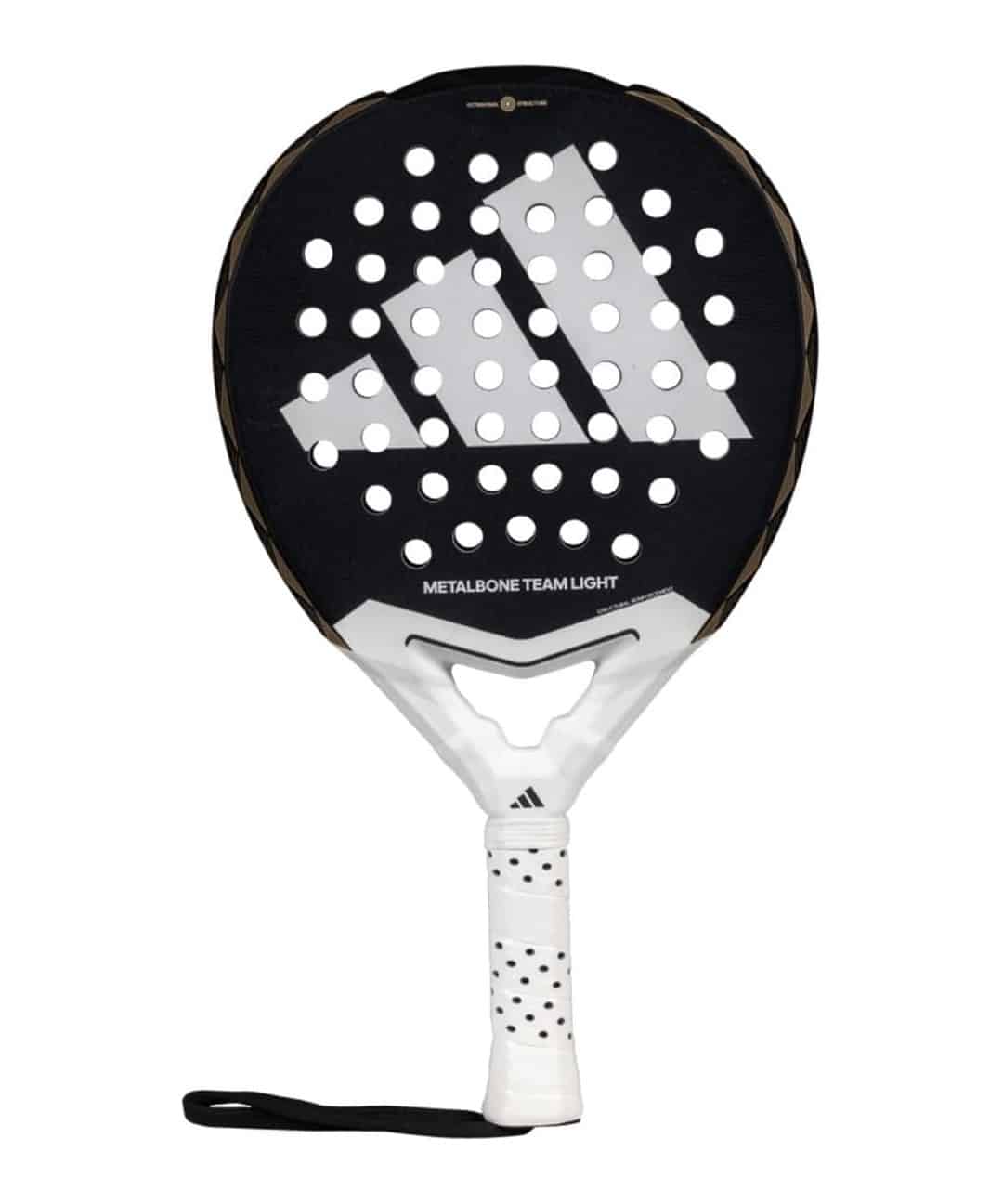
Why it wins: A light, forgiving Metalbone — round shape, fibreglass face and soft EVA core give improving attackers easy power and comfort at a value price. (~$130)
- Round shape — forgiving sweet spot
- Fibreglass face for a soft touch
- Soft Performance EVA core
- Light ~345–360g — easy to swing
Main features of the Adidas Metalbone Team Light
The Metalbone Team Light is the range’s value, lightweight option:
- Round shape with a forgiving sweet spot
- Fibreglass face for a softer, comfortable touch
- Soft Performance EVA core for explosive yet comfortable output
- Light ~345–360g with a medium balance
- Octagonal carbon frame + Smart Holes + Spin Blade grit
Specification of the Adidas Metalbone Team Light
Here are the full specs of the Adidas Metalbone Team Light:
- Shape: Round
- Weight: ~345–360 g
- Balance: Medium
- Core: Soft Performance EVA
- Faces: Fibreglass
- Player level: Intermediate
- Type of play: All-round / power
- Pro: —
Our review of the Adidas Metalbone Team Light
The Metalbone Team Light is an easy racket to enjoy. The light weight and round head make it forgiving and manoeuvrable, the fibreglass face keeps contact soft and comfortable, and the Soft Performance EVA core gives a surprisingly lively ball exit for the price. It’s a comfortable way for an improving player to add power.
You give up the stiffness and raw pace of the carbon-faced flagship Metalbones, but that’s the right trade for an intermediate. The Spin Blade grit and Smart Holes help you find spin while you develop your attacking game.
Pros
- Light and easy to swing
- Forgiving, comfortable round head
- Lively ball exit for the price
- Good spin grip
Cons
- Fibreglass face limits top-end power
- Not a flagship-level frame
- Less stiff than carbon Metalbones
Who is the Adidas Metalbone Team Light for?
The Metalbone Team Light is for improving, offensive intermediate players who want a light, forgiving racket with Metalbone styling and easy power. Advanced players should step up to the carbon Metalbone or Metalbone Ctrl.
How the Adidas Metalbone Team Light plays
On groundstrokes and volleys it’s comfortable and forgiving, with easy access to power.
On smashes the round head gives less lift than a diamond, but the light weight makes it easy to get into position.
Adidas Metalbone Team Light vs the alternatives
It’s the light, intermediate sibling of the flagship Metalbone and Metalbone Ctrl. Against the beginner Adidas Drive it’s a more attacking, performance-leaning step up.
Is the Adidas Metalbone Team Light worth it?
For an improving player who wants a light, comfortable, attacking racket without flagship money, the Metalbone Team Light is good value — you get the Metalbone family’s spin tech and easy power in a forgiving build. Advanced players will outgrow it.
Conclusion
The Adidas Metalbone Team Light is a smart intermediate racket — light, round and forgiving, with a soft fibreglass face and lively EVA core that make adding power easy and comfortable. It’s not a flagship, but as a value stepping-stone with real Metalbone DNA it’s an easy recommendation for improving attackers.
A light, value Metalbone for improvers. See where it fits in our intermediate padel rackets guide and the full best padel rackets roundup.

Lucas Sánchez is the founder of SimplePadel. Born and raised in Spain, Lucas has been living in the US and UK for the last 20 years and currently calls Miami his home. While he’s never played professionally, the dream is still alive.
Lucas loves nothing more than playing (and talking) about padel, and he considers himself lucky to have a wife and family that share his love for the game.