
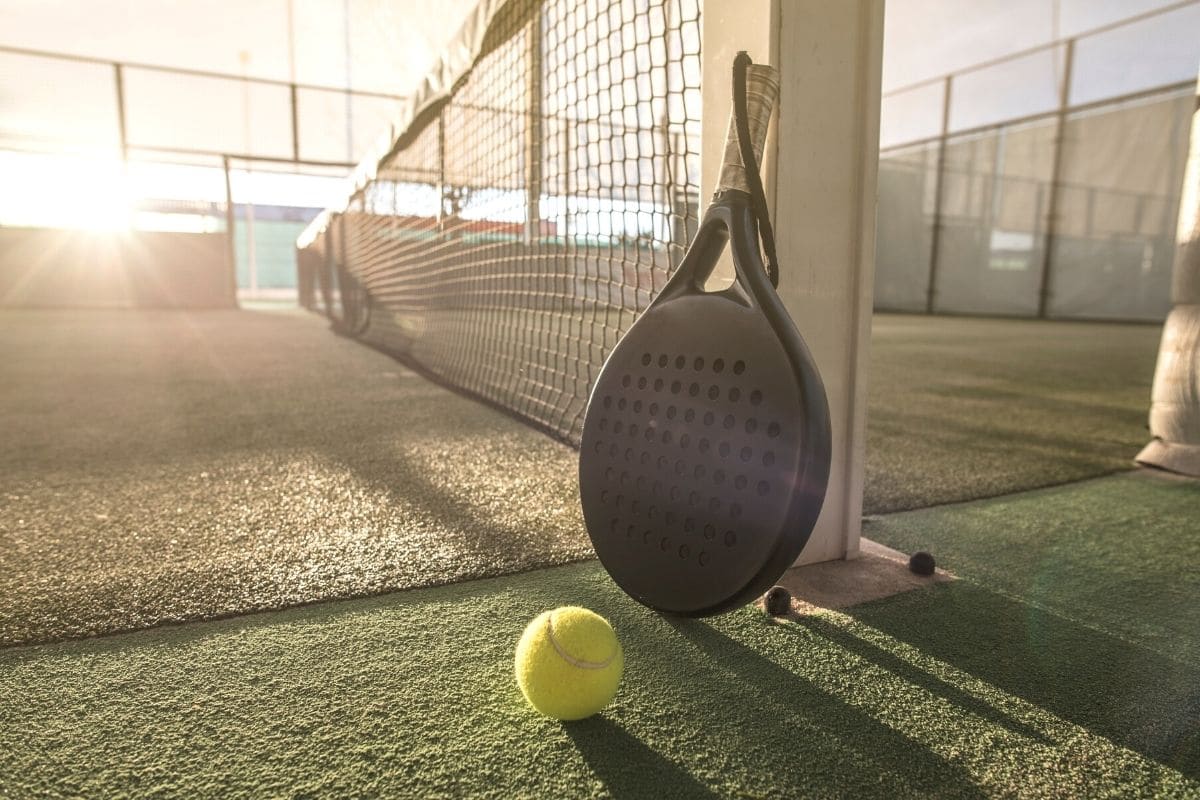
Dunlop brings serious racket-sport heritage to padel, and its range is a quietly sensible one — strong on value and easy-to-play frames, with a genuine carbon flagship in the Aero-Star at the top. It is a brand that rewards players who care more about how a racket plays than whose name is on it.
Below we break the current Dunlop line-up down by what each racket is actually best for — power, control, all-court versatility and value — so you can match a paddle to your level and style rather than guessing.
In a hurry? The Dunlop Rapid Power 4.0 is our best all-round pick for club players, while the Aero Star Pro Light is the best-value choice for a beginner. Not set on Dunlop? See our full best padel rackets roundup across every brand.
How to choose a Dunlop padel racket
Focus on three things: shape, weight and balance, and the level a racket is built for.
- Shape. Round frames (Galactica) centre the sweet spot for control and forgiveness — best for beginners and control players. The teardrop/hybrid Aero-Star and Rapid Power lean toward power and all-court play.
- Weight and balance. Most Dunlop frames sit around 350–365g. Lighter, lower-balance rackets are easier to swing and gentler on the arm; head-heavy frames hit harder but demand timing.
- Your level. Pick the racket that stretches you slightly. Unsure? Our beginner and intermediate guides will help.
The best Dunlop padel rackets
1. Best for power: Dunlop Aero-Star Lite
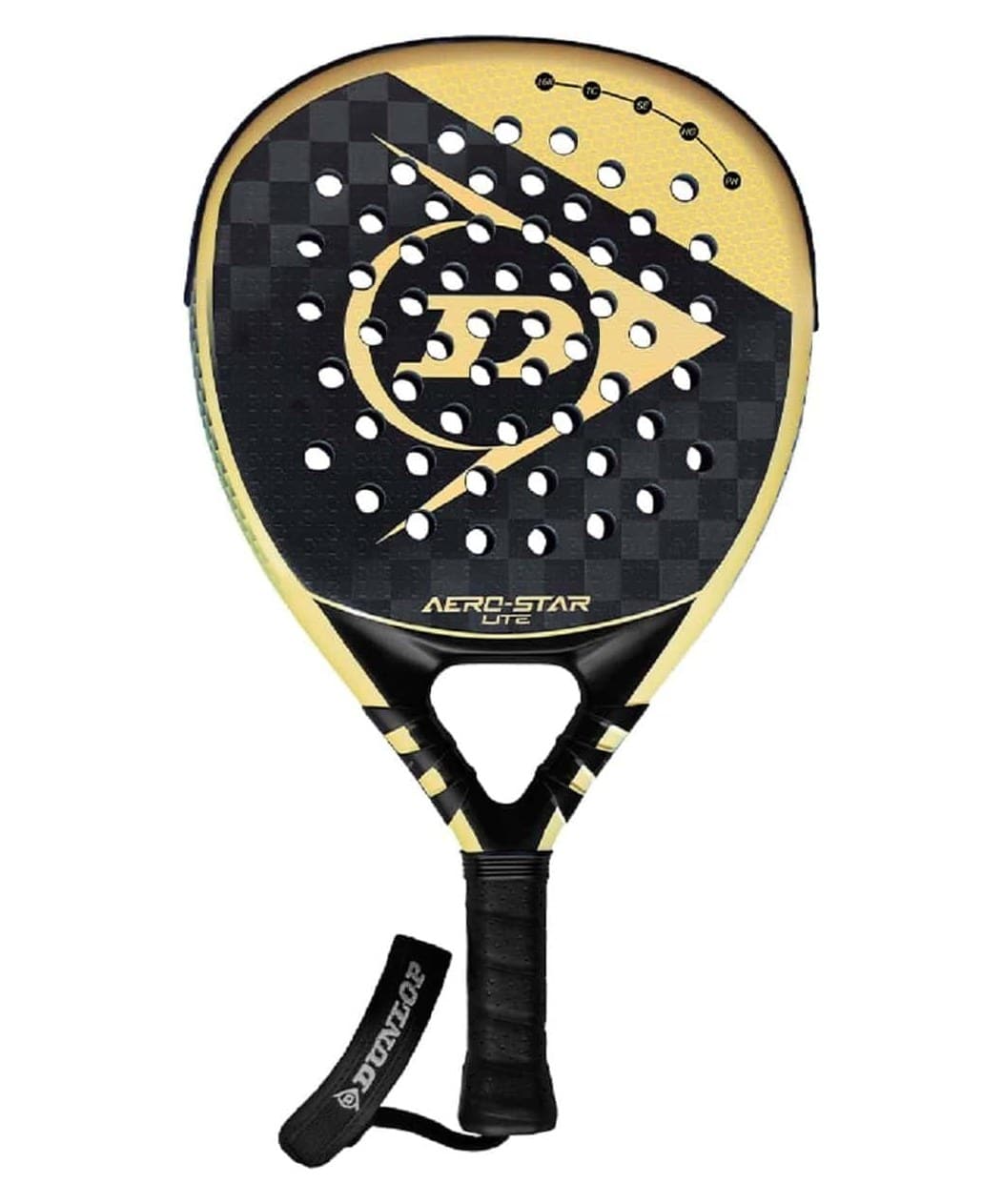
Why it wins: Dunlop’s carbon-faced flagship — free power off the smash in a frame light enough to swing fast, for attacking players. (~$160)
- Teardrop/hybrid — attacking power
- Carbon faces
- ~350g, lighter than most power frames
- Dunlop’s flagship
The Aero-Star Lite is the racket to reach for if you like to finish points. The carbon face and head-leaning balance load up easy put-aways, but Dunlop has kept the weight down so it stays quick through the air rather than feeling like a club.
It suits advanced and aggressive intermediate players with reliable technique. See where it ranks in our advanced rackets guide.
2. Best for control: Dunlop Galactica Team
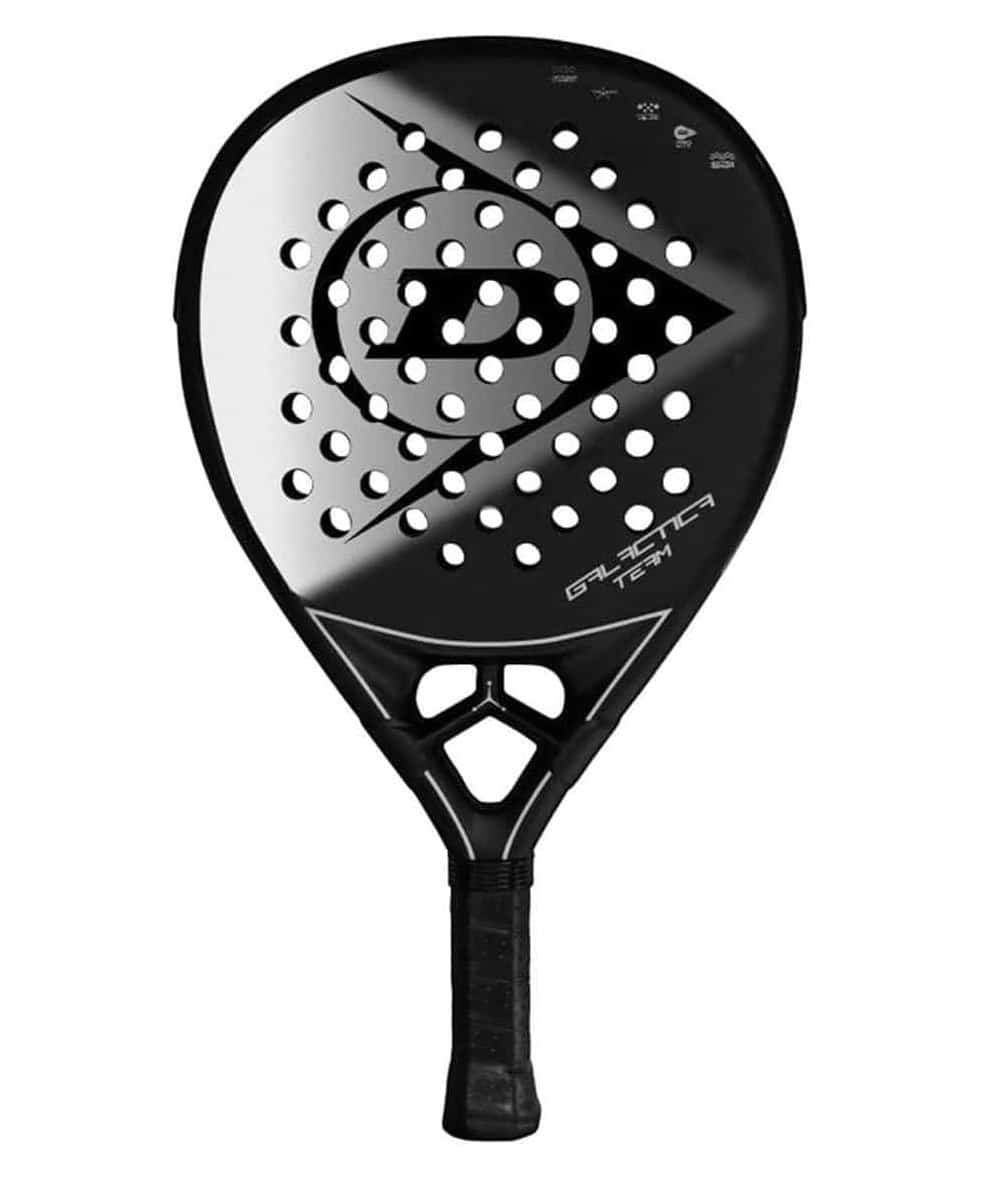
Why it wins: A round-head, soft-feel control frame with a forgiving sweet spot that keeps the ball deep and in — for the rally-grinder. (~$180)
- Round — forgiving sweet spot
- Soft, comfortable feel
- ~365g, even balance
- Control over power
The Galactica Team is Dunlop’s control racket for the improving player. The round head and soft feel make it forgiving and consistent, which suits players who win points through placement and patience rather than raw power.
It will not blow anyone off the court, but it is a dependable all-court partner. Compare it with the field in our intermediate rackets guide.
3. Best all-court: Dunlop Rapid Power 4.0
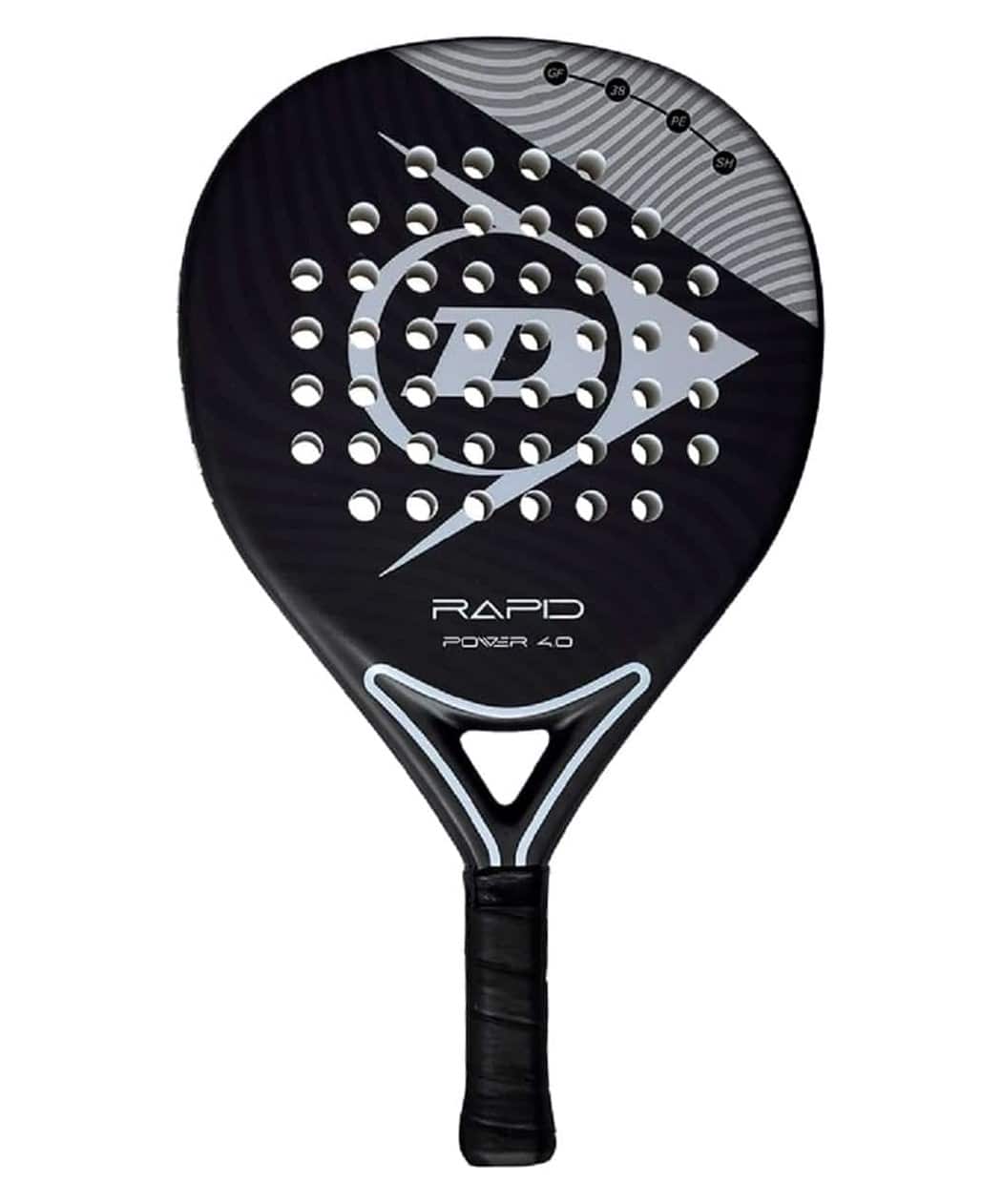
Why it wins: The do-everything club pick — a hybrid head with a wide sweet spot that adds power without punishing off-centre hits. (~$90)
- Hybrid — versatile all-court
- Wide sweet spot
- ~365g
- Great value
The Rapid Power 4.0 is the racket for players who switch between defence and attack and want one frame that does both. The hybrid head adds useful power while keeping a wide, forgiving sweet spot, which makes it an easy recommendation for club players.
It is a true jack-of-all-trades rather than a specialist, and great value with it. See how the all-rounders compare in our best padel rackets roundup.
4. Best value: Dunlop Aero Star Pro Light
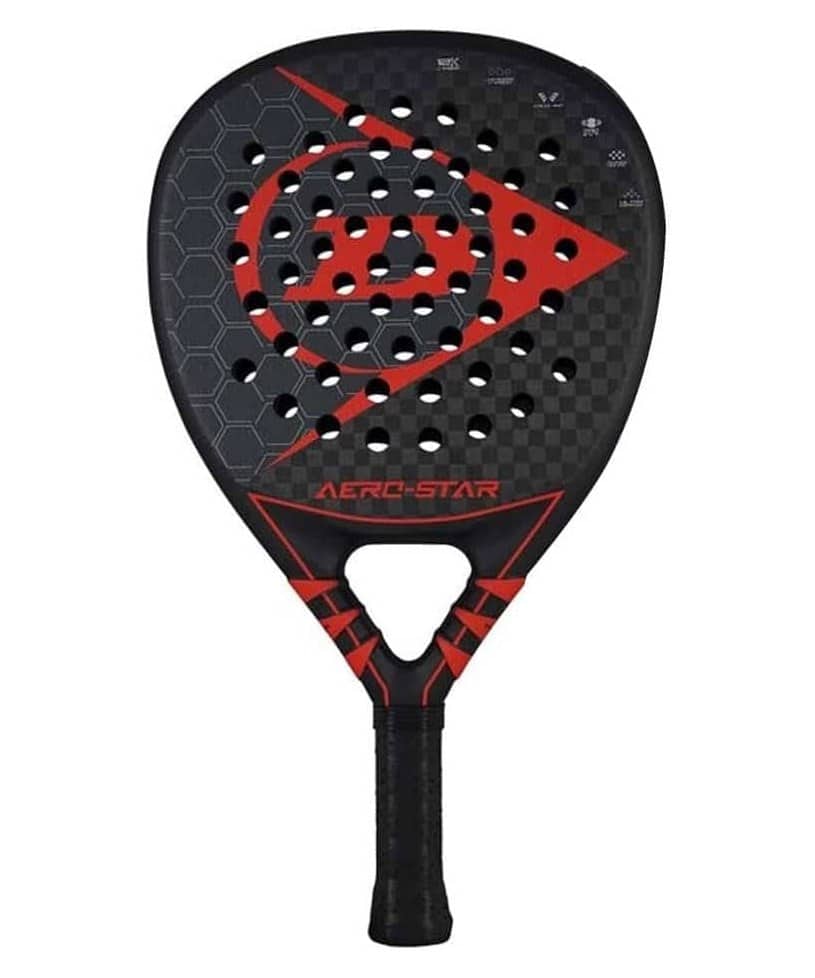
Why it wins: The affordable entry into Dunlop’s range — a light, easy-swinging frame that helps newer players generate pace without arm fatigue. (~$80)
- Light, easy to swing
- Forgiving teardrop
- ~350g
- Lowest price here
The Aero Star Pro Light is Dunlop’s budget entry and a genuinely good first racket. It is light and easy to swing, so beginners can generate pace and rally comfortably while they learn the game, without the strain a heavier frame puts on the arm.
You will want more power and control as you improve, but for the money it is a solid starting point. Pair it with the basics in our how to play padel guide.
Dunlop padel rackets compared
| Racket | Best for | Shape | Level | Price |
|---|---|---|---|---|
| Dunlop Aero-Star Lite | Best for power | Hybrid | Advanced | $160 |
| Dunlop Galactica Team | Best for control | Round | Intermediate | $180 |
| Dunlop Rapid Power 4.0 | Best all-court | Hybrid | Intermediate | $90 |
| Dunlop Aero Star Pro Light | Best value | Teardrop | Beginner | $80 |
Final thoughts
Dunlop is an under-rated padel brand with a racket for every level. Beginners are well served by the light Aero Star Pro Light; improving players get value and versatility from the Rapid Power 4.0 and control from the Galactica; and advanced attackers can step up to the carbon Aero-Star Lite. Match the racket to your level first and you won’t go wrong.
Comparing brands? Browse our full best padel rackets roundup, or jump to the right paddle for your stage: beginners, intermediate, and advanced players. Once you have picked your racket, round out your kit with the right padel shoes and a padel bag.
Want the bigger picture? Browse all our padel gear reviews — rackets, shoes, balls and more, tested by players.
Is Dunlop a good padel brand?
Dunlop is a British name with more than a century in racket sports, and one of the few brands in padel that brings genuine pedigree from tennis and squash. That engineering background shows in the aerodynamic profiling and frame stiffness across the padel range.
It is also the most accessible range in this category. Frames run from around $80 to $180, which is a far wider spread than the Spanish specialists offer, and means Dunlop covers a first racket and a serious intermediate frame under one badge.
What Dunlop does well — and where it falls short
No brand is right for everyone. Here is the honest case for and against Dunlop.
- Genuine racket-sport engineering. Decades of tennis and squash frame design carried into padel.
- The widest price spread here. Around $80 to $180, so there is a Dunlop for a first racket and for a committed intermediate.
- Excellent availability. One of the easiest padel brands to buy in the US.
- Strong value in the middle. The $90–100 frames are unusually complete for the money.
The trade-offs:
- Less padel-specific credibility. Dunlop is a racket-sports brand that does padel, not a padel specialist.
- Confusing naming. Aero-Star, Aero Star Pro and Rapid Power variants are easy to mix up.
- Nothing at the top end. No frame competing with $220 tour rackets.
How Dunlop compares to other padel brands
Dunlop’s closest comparisons are the other mainstream sporting-goods brands rather than the Spanish padel houses.
- Against Head and Wilson, all three bring tennis engineering to padel; Dunlop is usually the cheapest of the three.
- Against Siux or StarVie, Dunlop gives up tour pedigree but usually costs less per frame.
- For the cheapest way into a decent frame, compare with ACA and our budget padel rackets guide.
What you should pay for a Dunlop padel racket
Dunlop frames in this guide run from $80 to $180. Here is what each band actually buys you, so you can sanity-check any price you are quoted elsewhere.
| Price | What it buys | Who it suits |
|---|---|---|
| $80–90 | Aero Star Pro Light, Rapid Power 4.0 | Beginner to improver, forgiving shapes |
| $160 | Aero-Star Lite | Hybrid power frame for advanced players |
| $180 | Galactica Team | Round control frame for intermediates |
Buying and owning a Dunlop racket
Dunlop is one of the easiest padel brands to buy in the US, with broad Amazon and retailer availability. The main thing to watch is the naming: Aero-Star, Aero Star Pro and Rapid Power variants sit at very different price points and skill levels despite reading almost identically.
Whichever frame you land on, four things make more difference to how it feels than most buyers expect:
- Grip size. Padel handles come in one size, so you adjust with overgrips. Adding one builds the handle up slightly and changes how locked-in the racket feels. See when to change a padel overgrip.
- Protector tape. A few dollars of head tape absorbs the wall scrapes and floor clips that otherwise chew through the frame edge. Fit it before the first session, not after the first chip.
- Total weight with additions. An overgrip and protector together add roughly 20–30g, which is enough to shift a balanced frame toward head-heavy. Factor it in if you are between two weights.
- Knowing when it is done. EVA cores soften and carbon faces lose stiffness long before a racket visibly cracks. Our guide on when to replace a padel racket covers the warning signs.
For grip options across every brand, see our best padel grips guide, and if you are still weighing Dunlop against the wider market, the best padel rackets roundup compares the strongest frames from every brand.
More Dunlop racket reviews
Beyond the picks above, these are the other Dunlop rackets we have reviewed, each with its main trait:
- Dunlop Galactica Lite, Team and Pro LS: the lighter 16K carbon hybrids compared with the Galactica Pro
- Dunlop FX Pro: a 370 g power diamond with a 12K face and a hard Pro EVA core
- Dunlop FX Team: the intermediate FX diamond at 365 g
- Dunlop Nanomax: the Lite and Pro hybrid starter rackets
- Dunlop Megamax: a round entry racket in Silver and Green
- Dunlop Rapid Control 4.0: a low-cost round or hybrid beginner racket
Frequently asked questions
The Dunlop Aero Star Pro Light is the best beginner pick — light, forgiving and affordable. The Galactica Team is a good next step for a control-minded improver.
Yes. Dunlop brings decades of racket-sport engineering to padel and its range is strong on value and playability, with the carbon Aero-Star as a genuine advanced-level flagship.
The Dunlop Aero-Star Lite is the brand’s power frame — a carbon-faced, head-leaning racket built for advanced players who attack, yet light enough to stay manoeuvrable.
Dunlop’s value rackets run around $80–$100, while the carbon Aero-Star is about $160. Spend in line with how often you actually play rather than chasing the top frame.
Yes. Dunlop brings more than a century of tennis and squash frame engineering to padel, and offers the widest price range of any brand we cover here, from around $80 to $180. It lacks the tour pedigree of the Spanish specialists, but the value through the middle of the range is excellent.
The Aero Star Pro Light at around $80, or the Rapid Power 4.0 at about $90. Both use forgiving shapes with a centred sweet spot. Leave the head-heavy Aero-Star Lite until your technique is consistent.
Particularly in the $90–100 band, where the frames carry specifications that competitors typically charge $140-plus for. The trade-off is that Dunlop has no flagship frame competing at the $220 tour level.
Despite the similar names they target different players. The Aero-Star Lite is a $160 hybrid power frame aimed at advanced players; the Aero Star Pro Light is an $80 teardrop built for beginners.

Isabella Torres is originally from Madrid, Spain, and has been playing Padel as a semi-professional for the past five years. After completing her education as a journalist, she discovered her true passion in life was writing about Padel.
She loves staying up late watching intense rallies on YouTube, and is excited to share her knowledge about the sport with SimplePadel’s readers.