
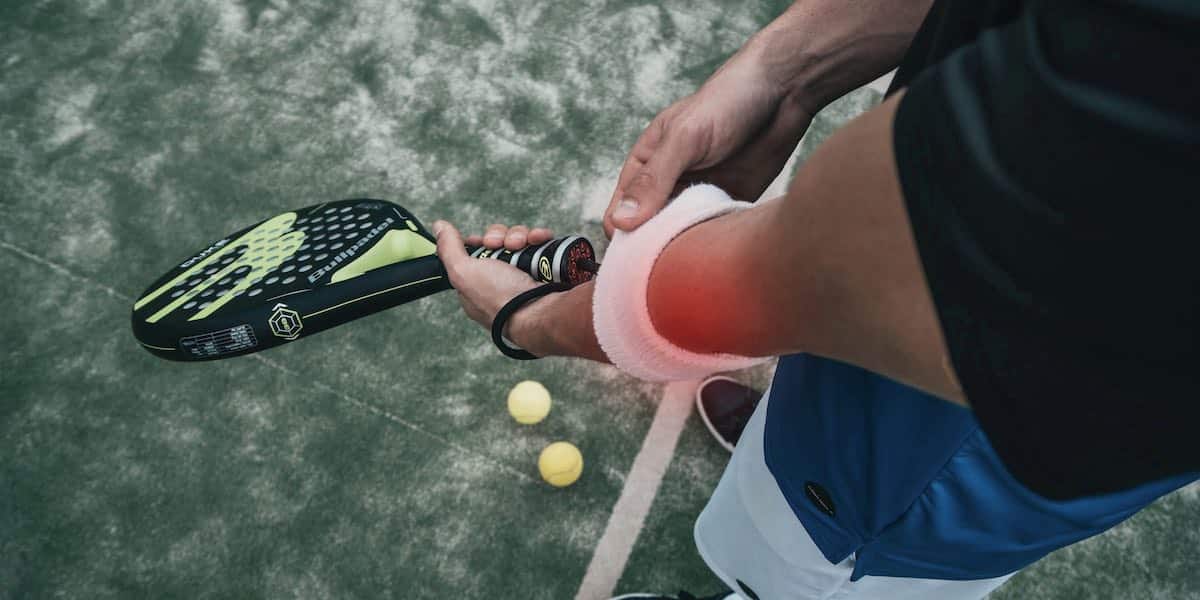
If you’re dealing with tennis elbow (lateral epicondylitis) and you still want to play padel, the racket you choose can be the difference between aggravating the injury and giving your arm time to heal while you play. Most padel rackets are engineered for power. The right tennis-elbow-friendly racket is engineered for comfort.
We’ve researched padel rackets specifically suited to players with arm strain, mild tennis elbow, or general elbow sensitivity. The four picks below all share key arm-friendly DNA: soft EVA cores, vibration-absorbing technology, lightweight builds, and forgiving sweet spots. All are available on Amazon US. For the full picture across every level and brand, see our best padel rackets guide.
⚠️ A note before we start
None of these rackets cure tennis elbow. If you’re in active flare-up, the right move is to stop playing for 2–4 weeks and consult a physiotherapist. These rackets reduce stress on the elbow during play — they don’t replace rest and rehab.
That said, once you’re back to playing, the racket you pick matters. A stiff diamond-shape carbon racket transfers significantly more vibration into your forearm than a soft, well-engineered comfort racket does. Over a 90-minute session, that difference compounds into real strain.
The 4 best padel rackets for tennis elbow
1. Babolat Air Viper 2.6 (2026) — best overall for tennis elbow
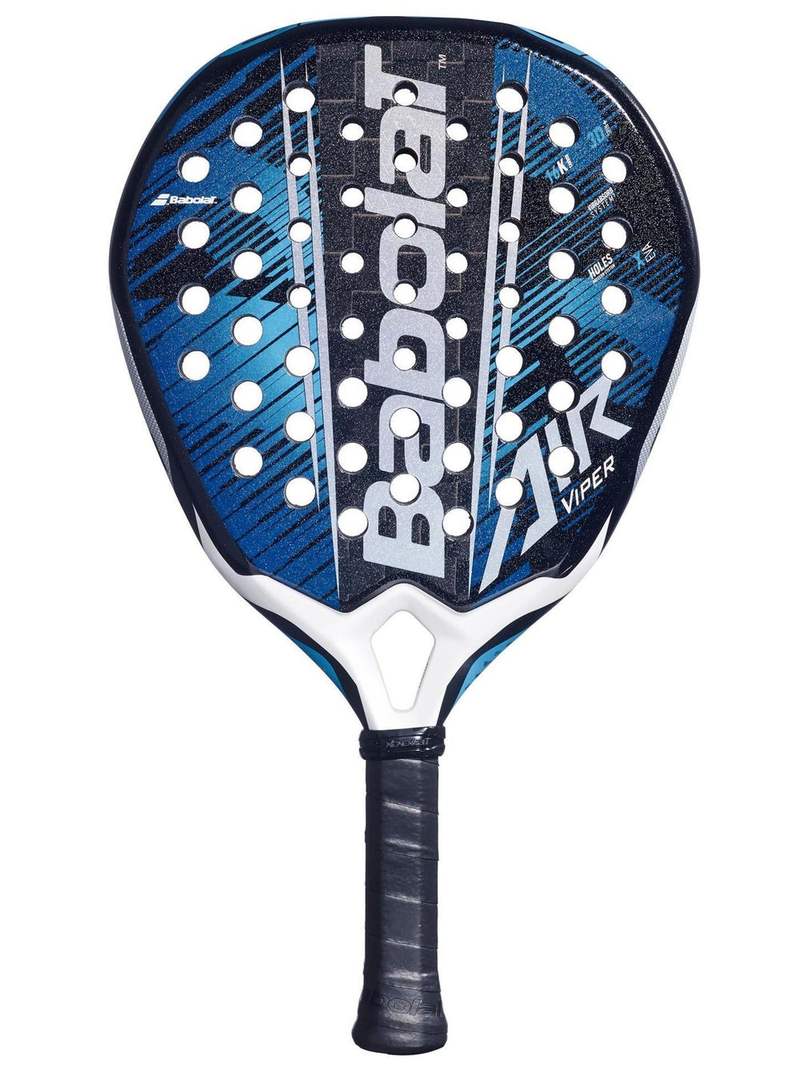
Why it wins: Light, soft, and vibration-damped — strong pop without hammering the arm, great for fast hands at the net. (~$250)
- Hybrid — fast, maneuverable
- Light ~355g
- Soft, arm-friendly
- Babolat 2026 line
The Babolat Air Viper 2.6 (2026) is engineered with Vibrasorb System2 — an elastomer integrated into the core that absorbs vibration on every contact. It’s the only mainstream padel racket with vibration absorption built into the actual core (not just frame edges), and the comfort difference is real. For players with mild tennis elbow who still want to play attacking padel, this is the right racket.
The teardrop shape is forgiving enough on off-centre hits that you don’t get punished for the slightly compromised technique that often comes with arm strain. 16K carbon gives you enough response to play your normal game — Babolat’s design philosophy here is “comfort without sacrificing performance.”
→ Read our full Babolat Air Viper review
2. Head Zephyr — best lightweight option
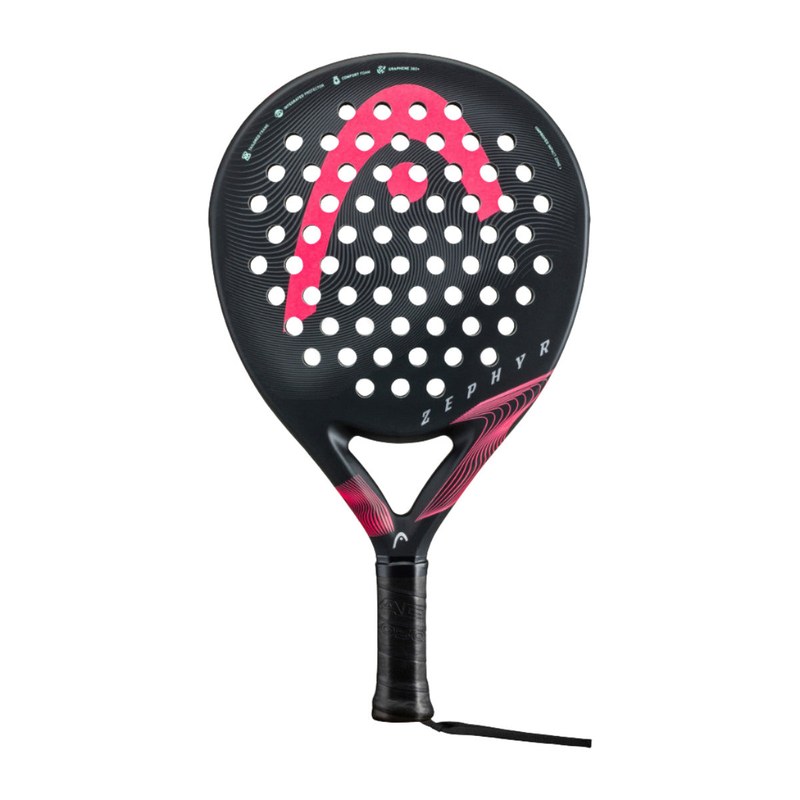
Why it wins: Featherlight and forgiving — the easiest racket on the arm and a great low-cost pick for sore elbows. (~$120)
- Round — huge sweet spot
- Lightweight ~360g
- Even balance, gentle on the arm
- Best value pick
The Head Zephyr is the lightest racket in this guide — around 360g with even balance, which means less swing momentum stressing your elbow on every shot. The round shape gives you the widest sweet spot, and the fibreglass face with soft EVA core absorbs more vibration than a carbon construction would. It’s also the most affordable option at under $200.
The downside: less attacking ceiling than the Air Viper. You’re trading attacking power for comfort and forgiveness — exactly the right trade when you’re protecting an injured elbow. Many players in active recovery use the Zephyr for their first 1–2 months back, then progress to the Air Viper as their arm strengthens.
→ Read our full Head Zephyr review
3. Babolat Counter Viper 2.5 — best for control players with elbow strain
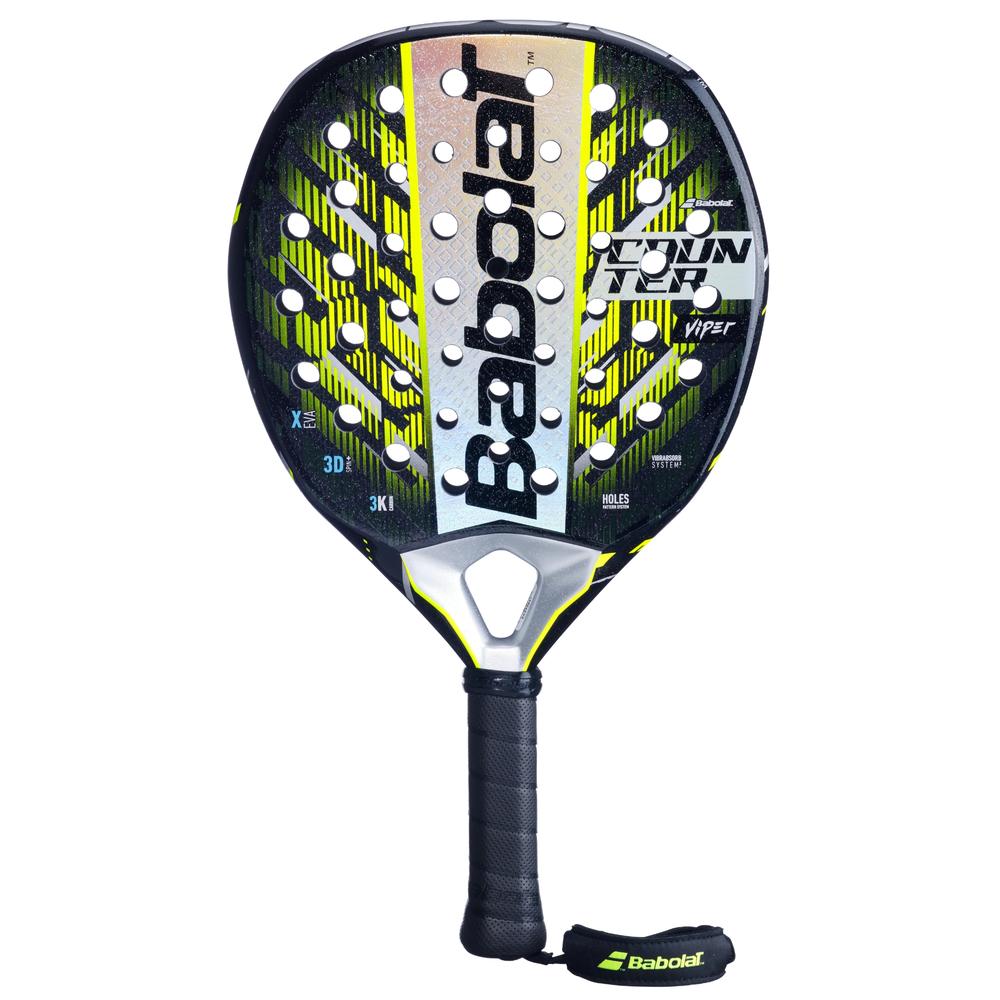
Why it wins: A control-focused viper with a soft, planted feel — predictable and forgiving for players who value placement. (~$230)
- Control-leaning hybrid
- Soft, comfortable response
- ~365g
- Babolat 2025 line
The Babolat Counter Viper 2.5 is the round-shape sibling to the Air Viper — same Vibrasorb System2 vibration absorption, but in a maximum-forgiveness round shape. For players whose game is built on placement rather than power, this is the right tennis-elbow pick. The widest sweet spot in this guide pairs with vibration absorption to create one of the most arm-friendly padel rackets on the market.
The trade-off is significantly less attacking power. The 3K Carbon face is softer and slower than the 16K used in attacking rackets — you can’t generate the same smash force, but you also won’t suffer the same shock to your arm. For amateur and intermediate players prioritising elbow recovery, that’s the right trade.
→ Read our full Babolat Counter Viper review
4. Wilson Carbon Force LT — best lightweight all-rounder
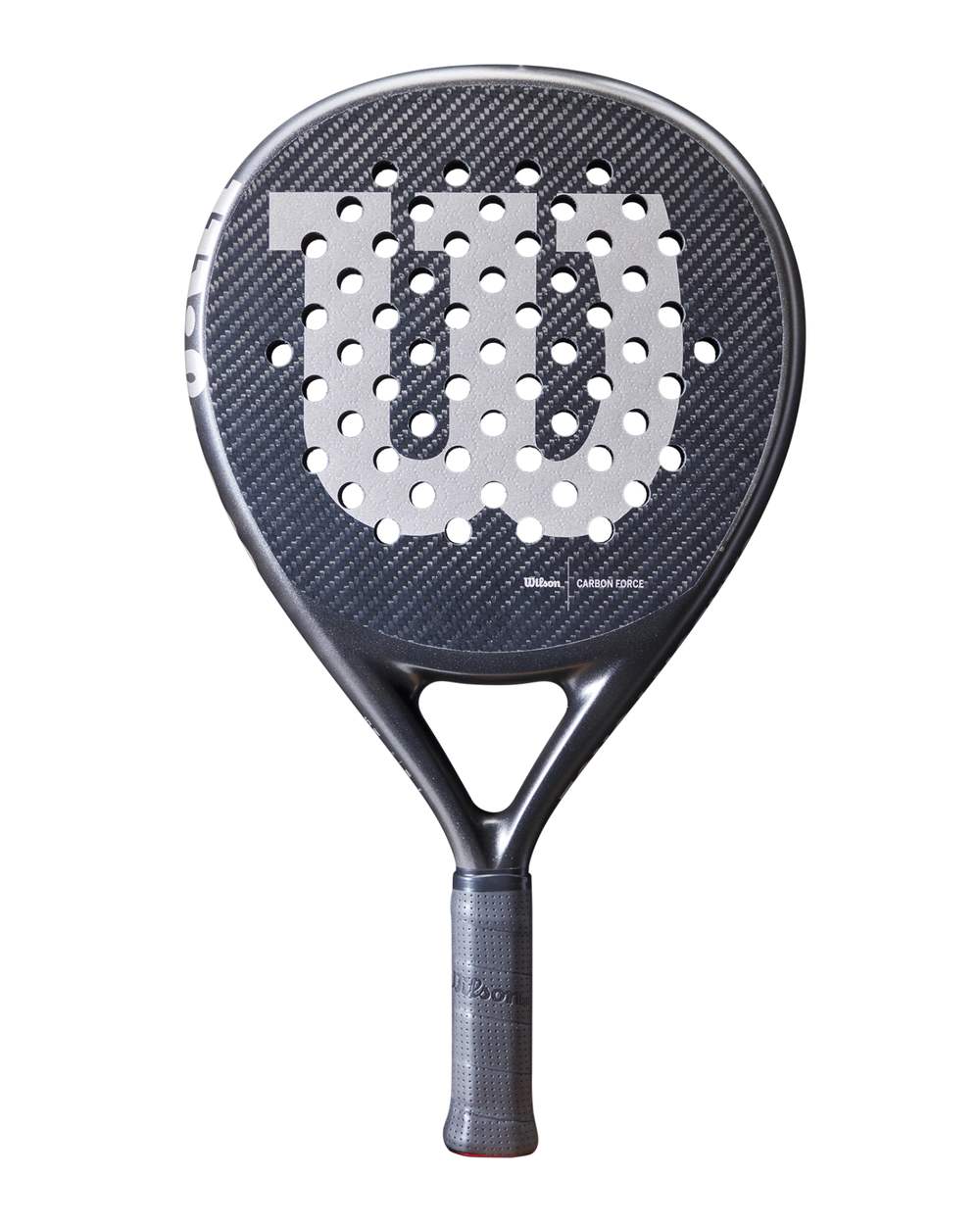
Why it wins: A lightweight, forgiving all-rounder that keeps strain off the arm while staying versatile. (~$100)
- Light, easy to swing
- Forgiving round/hybrid
- Durable Wilson build
- Budget-friendly
The Wilson Carbon Force LT is the lighter, more maneuverable version of Wilson’s Carbon Force line — explicitly designed for easier handling. For players coming back from tennis elbow, lighter swings mean less repetitive strain. The “LT” branding stands for lightweight, and it shows in actual play — the racket feels noticeably easier to swing than the standard Carbon Force Team.
Wilson’s soft EVA foam interior absorbs more shock than harder EVA cores, and the teardrop shape with cushioned construction means off-centre hits don’t transfer as much energy to your arm. It’s also the most affordable of the four options here at around $130, which makes it the right starter racket for someone testing whether they can play through mild elbow discomfort.
→ Read our full Wilson Carbon Force review
What makes a padel racket “tennis elbow friendly”?
Shape: round > teardrop > diamond
For tennis elbow, the racket shape priority is reversed from typical advanced gear. Round shapes have the biggest sweet spot, which means more shots find the centre — and centre hits transfer less vibration to your arm. Teardrop is the next-best. Diamond shapes punish mishits with maximum vibration — exactly what you want to avoid.
Core material: soft EVA
The core material absorbs (or transmits) vibration. Soft EVA cores absorb more shock — you feel less of the impact in your wrist and elbow. Hard EVA cores (used in advanced power rackets) transfer more energy to the ball but also to your arm.
Built-in vibration dampening
Babolat’s Vibrasorb System2 (Air Viper, Counter Viper) is currently the most effective integrated dampening technology in mainstream padel. NOX’s Pulse System and Bullpadel’s VibraDrive are also worth knowing about, though they sit further from the impact point and have less measurable effect.
Weight and balance
Lighter rackets (under 370g) and even-balanced rackets reduce the repetitive strain that triggers tennis elbow. Heavy, head-heavy rackets force your forearm to decelerate more weight on each swing — exactly the motion that aggravates the lateral epicondyle.
Tennis elbow padel racket comparison table
| Racket | Shape | Comfort tech | Weight | Best for |
|---|---|---|---|---|
| Babolat Air Viper 2.6 (2026) | Teardrop | Vibrasorb System2 | ~365g | Players who want attacking power + comfort |
| Head Zephyr | Round | Soft EVA core | ~360g | Active recovery, max forgiveness |
| Babolat Counter Viper 2.5 | Round | Vibrasorb System2 | ~365g | Control players with elbow strain |
| Wilson Carbon Force LT | Teardrop | Soft EVA foam | ~355g | Best value, lightweight all-rounder |
For most players with tennis elbow concerns, the Babolat Air Viper is the right pick — best vibration absorption, retains enough performance to play your normal game. For active recovery, the Head Zephyr or Wilson Carbon Force LT. For control players, the Babolat Counter Viper. All four prioritise comfort engineering in a way that the diamond-shape pro rackets simply don’t.
Other things you can do to protect your elbow
The racket is one variable. Equally important: technique, grip, and recovery practices.
- Grip size: A grip that’s too small forces your hand to over-grip, which strains the forearm. See our guide to padel grip and overgrips.
- Add a counter-balance overgrip: Two overgrips instead of one shifts weight toward the handle, reducing head-heaviness.
- Stretch and rest: Forearm stretches before and after play. Two days off between sessions if elbow is sore.
- Compression sleeve: An elbow brace during play won’t fix tennis elbow but provides feedback that helps you correct technique.
- See a physio: If pain persists more than 2 weeks, get professional assessment.
Where do you go from here?
If you’re new to padel and want to start with arm-friendly gear, the Head Zephyr or Babolat Contact (covered in our best padel rackets for beginners guide) are great starting points. For more on padel gear comfort, see our padel grip guide and how to choose padel shoes — both directly affect arm and joint stress.
Frequently Asked Questions — Best Padel Racket for Tennis Elbow
You can, but you shouldn’t during an active flare-up. Once symptoms have calmed (typically 2–4 weeks of rest), you can return to play with the right racket and modified technique. Choose a soft, lightweight, vibration-dampening racket like the Babolat Air Viper or Head Zephyr. Avoid stiff diamond-shape rackets which transfer more vibration to the arm. Build playing time back gradually.
Round shapes are best for tennis elbow because they have the widest sweet spot — more shots land in the centre, which transfers less vibration to the arm. Teardrop shapes are the next-best. Diamond shapes are the worst — concentrated sweet spot means more off-centre hits, more vibration, more strain on the elbow.
Yes. Heavier rackets force your forearm muscles to decelerate more weight at the end of each swing — exactly the motion that aggravates the lateral epicondyle. Look for rackets under 370g. The lightest options in this guide (Head Zephyr ~360g, Wilson Carbon Force LT ~355g) are designed to minimise this strain. Even-balanced rackets are better than head-heavy ones for the same reason.
Vibrasorb System2 is Babolat’s vibration-dampening technology — an elastomer integrated into the racket’s core that absorbs shock at the point of impact rather than letting it travel through the frame to your arm. It’s the most effective integrated vibration absorption in mainstream padel and the reason the Babolat Air Viper and Counter Viper are our top tennis-elbow picks. You can feel the difference compared to standard EVA-core rackets within a few shots.
Two overgrips can help. Adding a second overgrip thickens the handle (which prevents over-gripping that strains the forearm) and shifts the racket’s balance slightly toward the handle (less head-heavy = less elbow strain on swing deceleration). It’s a small adjustment but it stacks with the other changes — racket choice, technique, rest — to make a real difference.

Kevin Anderson is a Content Writer for SimplePadel. He joined the company during summer 2022. For SimplePadel, he spealizes in testing rackets and writes a lot of our padel racket reviews.
Kevin loves to own the net position and considers himself an attacking-minded player. He often claims that he has the reach of a monkey – thanks to his 6’5″ stature. In his spare time, he enjoys cooking and following the USPA closely.