
Nike is the most-searched shoe brand in padel, which creates an awkward problem: Nike does not sell a dedicated padel shoe on the US market. Search Amazon for “Nike padel shoes” and you’ll get Nike tennis shoes — some of which work reasonably well on a padel court — but nothing with “padel” in the name.
Nike does make padel-specific shoes in Europe (models like the Nike Vapor Pro Padel), but they’re sold through European specialty retailers, not Amazon.com, and are hard to source in the US without international shipping. So this guide is honest about what’s actually available: the NikeCourt tennis shoes that double as padel shoes, how well they really work, and when you’re better off elsewhere.
Do Nike make padel shoes for the US market?
Not on Amazon US. Nike’s padel footwear — chiefly the Vapor Pro Padel range — is built and distributed mainly for Europe, where padel participation is far higher. Everything sold on Amazon.com under “Nike padel” is a NikeCourt tennis shoe, not a padel-specific model.
Why it matters: dedicated padel shoes use outsole patterns tuned for artificial grass (the sandy turf on most padel courts), while tennis shoes are tuned for hard courts or clay, which grip differently. Using a NikeCourt shoe on a padel court isn’t a disaster — but a padel-specific shoe will give you more grip and lateral security.
NikeCourt shoes that work for padel
If you’re set on Nike, or want to use a pair you already own, two NikeCourt models are reasonable crossovers. Both are on Amazon US, both have lateral support, and the cheaper one actually has the better outsole for padel.
NikeCourt Lite 4 — Best Nike option for padel
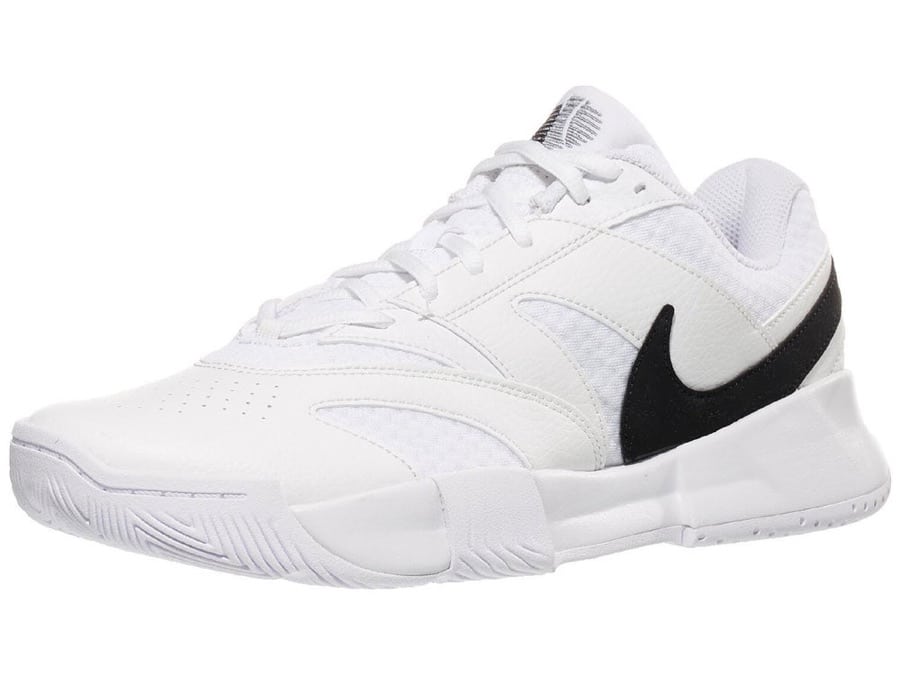
Why it wins: Nike’s entry-level court shoe is more capable than its price suggests — and crucially, its zonal herringbone outsole grips padel turf better than Nike’s pricier models. (~$80)
- Zonal herringbone outsole — grips padel turf well
- Wide ~113.5mm forefoot platform for a stable lateral base
- Stiff EVA midsole with high torsional rigidity
- Solid energy return for the price
- All-court build for indoor and outdoor padel
The Lite 4 is the Nike shoe to get for padel. The herringbone outsole gives genuine grip on artificial grass, and the wide, stiff platform offers enough lateral support for club-level play. It’s not a padel shoe — it won’t feel as locked-in on cuts as a dedicated model — but as a budget crossover for someone splitting time across court sports, it’s a sensible buy. Best for: casual players and one-shoe-for-everything crossover use.
NikeCourt Air Zoom Vapor Pro 2 — Higher performance, with a caveat
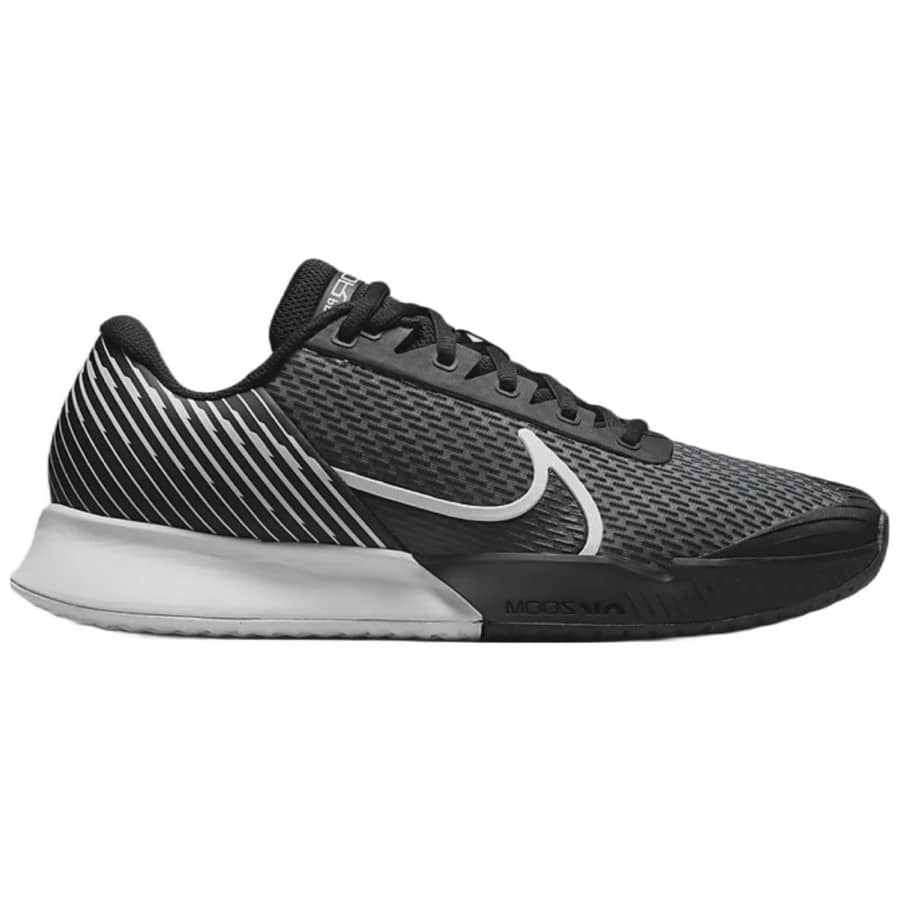
Why it wins: A genuinely good tennis shoe with a strong stability frame — but its hard-court ‘caterpillar’ tread is less ideal on padel turf than a herringbone pattern. (~$130)
- Forefoot Zoom Air unit for energy return
- Full-length lateral stability frame with flanges
- Asymmetric lacing reduces midfoot pressure points
- Padded collar for ankle comfort over long sessions
- Caveat: caterpillar tread is hard-court-first, not padel-optimised
The Vapor Pro 2 is a higher-performing court shoe, but it comes with a padel caveat: its “caterpillar” traction pattern is built for hard courts and sliding, and on padel’s artificial grass it works without excelling. The lateral stability frame is excellent, so if you already own a pair for tennis they’re perfectly usable for padel. But at ~$130 you could buy a purpose-built padel shoe from ASICS or adidas and get better grip for the same money. Best for: players who already own them — not a first choice to buy specifically for padel.
Nike court shoes vs dedicated padel shoes
| Feature | NikeCourt Lite 4 (~$80) | Vapor Pro 2 (~$130) | Dedicated padel shoe |
|---|---|---|---|
| Outsole for padel turf | Good (herringbone) | Moderate (caterpillar) | Optimised |
| Lateral stability | Good (stiff platform) | Good (stability frame) | Built for padel cuts |
| Padel-specific design | No (tennis) | No (tennis) | Yes |
| US Amazon availability | Yes | Yes | ASICS Challenger 15: yes (~$110) |
| Verdict | Budget option that works | Overkill price for padel | Better if padel is your main sport |
The honest recommendation: what to buy instead
If padel is your main sport, skip the NikeCourt crossovers and buy a dedicated padel shoe. ASICS makes padel-specific shoes on Amazon US with “Padel” in the name — the GEL-Challenger 15 Padel is ~$110 and outperforms any crossover tennis shoe on a padel court. See our best ASICS padel shoes guide for the full range, or the all-brand best padel shoes roundup for the wider market.
- Casual player (once a week or less): the NikeCourt Lite 4 is a fine crossover — hold off on dedicated shoes until you play more.
- Regular player (2+ times a week): buy dedicated padel shoes. The grip and lateral support gain on artificial grass is real.
- Already own NikeCourt shoes: use them for padel until you’re ready for a second pair — just know they’re not optimised for the surface.
- Set on Nike specifically: the Lite 4 is your best US Amazon option; importing the Vapor Pro Padel from Europe is the only way to get a true Nike padel shoe.
Will Nike shoes mark a padel court?
This matters more with a crossover than with a padel shoe, because you are not buying something designed for the surface. Most indoor and covered padel clubs require non-marking soles, and they do enforce it at the door.
NikeCourt tennis models are built for court use and are made non-marking as standard, so the two crossovers covered above are safe on an indoor court. The risk with Nike specifically is that the brand’s running and lifestyle lines dominate the shelves, and those are not court shoes. A Pegasus or an Air Max is not a padel shoe in any sense, and the sole is not guaranteed non-marking.
The visual tell is the outsole colour and rubber type. Gum, light grey and translucent soles are almost always non-marking. Dark, dense rubber on a running or training outsole is the one to check, and the listing will usually say “non-marking” explicitly if it is. If you cannot confirm it, ask your club before you turn up with them.
How to check a Nike shoe will work for padel
If you already own Nike shoes and want to know whether they will do, run through these four in order. The first is close to non-negotiable; the rest are trade-offs you can live with for casual play.
- Outsole pattern. You want herringbone, omni or a clay-court pattern. These channel the sand infill and give grip with a controlled slide. A flat or circular hard-court tread is the usual failure point on turf.
- Toe protection. Padel drags the front foot on lunges. Without a reinforced toe area you will wear through the upper far faster than you expect.
- Lateral support. A reinforced upper, cage or midfoot strap. Padel loads the sides of the shoe in a way forward-motion footwear never accounts for.
- Non-marking sole. Required by most indoor clubs, as above.
A shoe that passes the first and fourth is playable. One that passes all four is a genuine crossover. A hard-court tennis shoe that fails the first is the case where you are better off buying a dedicated pair, and our padel shoes vs tennis shoes guide explains exactly why the outsole is the deciding factor.
When a crossover shoe is genuinely fine
It is worth being clear that crossovers are not a trap. If you play once a week or less, are still deciding whether padel sticks, or already own a suitable court shoe, playing in what you have is a perfectly sensible decision. The grip difference is real but it is a matter of degree, not a safety cliff, provided the outsole pattern is right.
Where it stops being fine is when padel becomes your main sport. Two or three sessions a week on artificial turf will expose a tread pattern that was never designed for it, and you will feel it first on hard direction changes and pushes off the back glass. At that point a dedicated pair from ASICS, adidas or NOX costs about the same as the crossover and does the job properly.
If you are ready to move across, ASICS and adidas are the purpose-built options we have tested on Amazon US, or compare the whole field in our best padel shoes guide.
Bottom Line
Nike doesn’t sell dedicated padel shoes on Amazon US. The NikeCourt Lite 4 and Vapor Pro 2 are crossovers that work on a padel court but aren’t built for padel movement or artificial grass — and the cheaper Lite 4 is actually the better padel performer thanks to its herringbone outsole. For most players who take padel seriously, a purpose-built shoe from ASICS, adidas or HEAD will outperform any NikeCourt option at a similar price. Our best padel shoes guide has the full picture.
Frequently Asked Questions
Nike makes padel-specific shoes (such as the Vapor Pro Padel) for the European market, but they aren’t sold on Amazon.com or through US retailers. On Amazon US you’ll find NikeCourt tennis shoes, which work for padel but aren’t padel-specific.
Yes, with caveats. NikeCourt shoes with herringbone outsoles (like the Lite 4) grip padel courts well. Models with hard-court-specific caterpillar patterns are less ideal on artificial grass. For occasional play they’re fine; for regular play a dedicated padel shoe is better.
The NikeCourt Lite 4 (~$80) is the best widely available Nike option for padel. Its herringbone outsole grips artificial grass better than pricier NikeCourt models with caterpillar tread.
Nike’s padel line is sold mainly through European retailers. In the US your options are NikeCourt tennis crossovers on Amazon, or dedicated padel shoes from US-available brands like ASICS, adidas and HEAD.
ASICS makes dedicated padel shoes on Amazon US — the GEL-Challenger 15 Padel (~$110) and GEL-Resolution X Padel (~$155) are both purpose-built for padel courts. adidas and HEAD also have US-available padel ranges.
NikeCourt tennis models are made non-marking as standard and are fine indoors. Nike running and lifestyle shoes are the ones to check, as those soles carry no such guarantee and most indoor clubs enforce a non-marking rule.
You should not. Running shoes are built for forward motion, lack lateral support, and their tread does not channel the sand infill on artificial turf. It is the combination most likely to roll an ankle. A NikeCourt model is the minimum if you want to stay with Nike.

Lucas Sánchez is the founder of SimplePadel. Born and raised in Spain, Lucas has been living in the US and UK for the last 20 years and currently calls Miami his home. While he’s never played professionally, the dream is still alive.
Lucas loves nothing more than playing (and talking) about padel, and he considers himself lucky to have a wife and family that share his love for the game.