

The Babolat Air Origin is one of the lightest, most forgiving rackets Babolat makes — a ~345g teardrop with a soft EVA core, built for beginners and improvers who want an easy, arm-friendly racket to learn on.
The Air Origin sits at the entry point of Babolat’s range, below the performance Veron and Vertuo frames. The ‘Air’ name signals its biggest selling point — low weight — while the hybrid carbon-and-fibreglass build and oversized sweet spot keep it gentle and forgiving for players still developing their technique.
This review covers its build, specs and on-court feel, and who it’s for. See also our best Babolat padel rackets guide, or browse all our padel gear reviews.
Babolat Air Origin at a glance
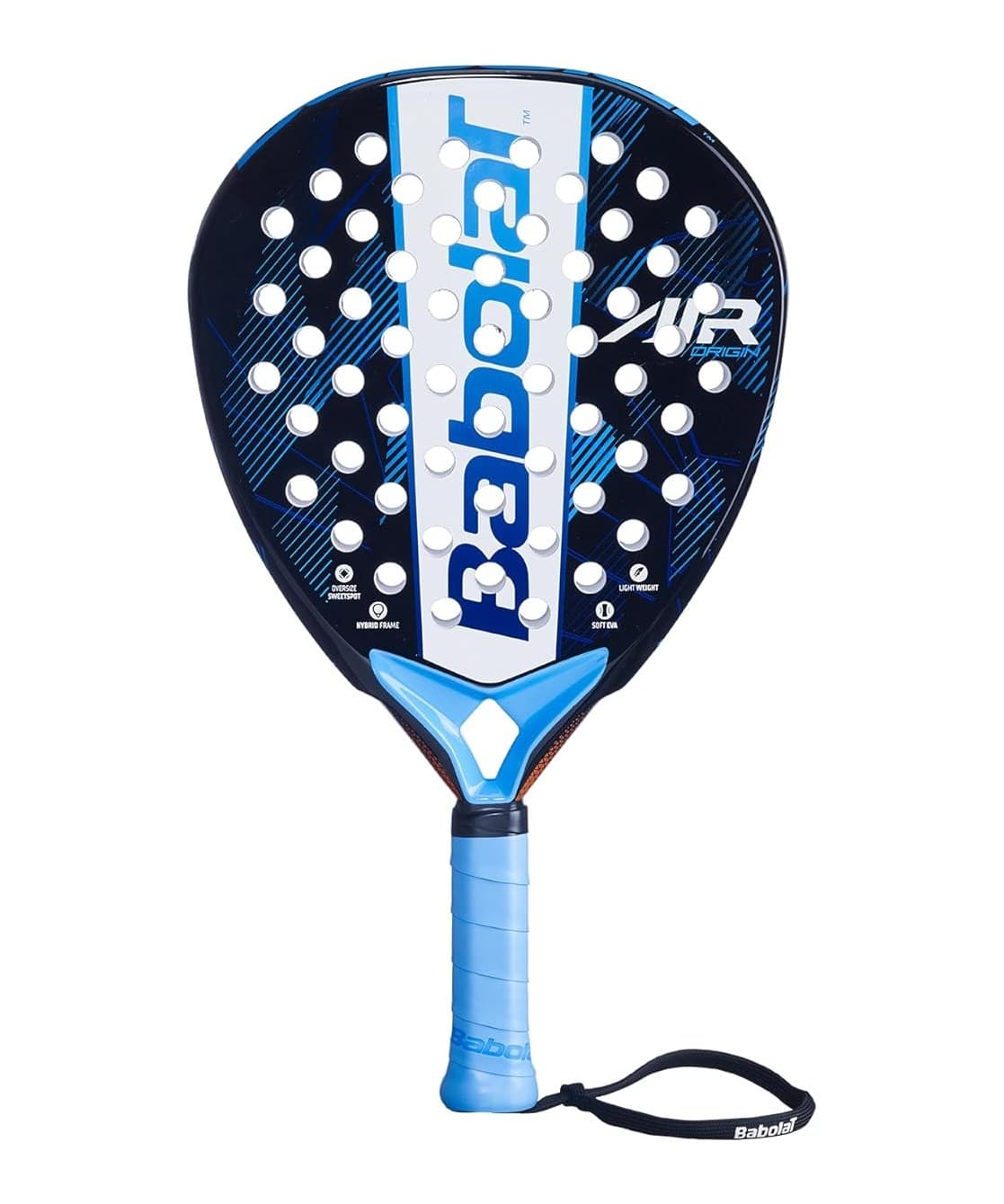
Why it wins: One of the lightest palas around — a ~345g teardrop with a soft EVA core and oversized sweet spot that makes learning easy and protects the arm. (~$130)
- Teardrop shape — forgiving, central sweet spot
- Light ~345g, even balance
- Soft EVA core + hybrid carbon/fibreglass frame
- Built for beginners and improvers
Main features of the Babolat Air Origin
The Air Origin is tuned for easy, comfortable progression:
- Teardrop shape with an oversized, forgiving sweet spot
- Light ~345g playing weight with an even balance
- Soft EVA core for comfort and vibration absorption
- Hybrid frame (carbon + fibreglass) for a flexible, durable feel
- 3D Spin surface for grip on the ball
Specification of the Babolat Air Origin
Here are the full specs of the Babolat Air Origin:
- Shape: Teardrop
- Weight: ~345 g (±10)
- Balance: Even / medium
- Core: Soft EVA
- Faces: Fibreglass (hybrid carbon frame)
- Player level: Beginner–Intermediate
- Type of play: Control / all-round
- Pro: —
Our review of the Babolat Air Origin
The Air Origin does exactly what an entry racket should. The low ~345g weight makes it easy to swing all match, the teardrop shape keeps a generous sweet spot a little higher than a pure round frame, and the soft EVA core soaks up vibration so it stays comfortable on the arm over long sessions.
You won’t get flagship-level power or feedback — the fibreglass face is forgiving rather than explosive — but that’s the point. For a beginner building technique, the forgiveness and low weight matter far more than raw pace.
Pros
- Very light and easy to swing
- Oversized, forgiving sweet spot
- Soft, arm-friendly feel
- Affordable entry price
Cons
- Limited power and feedback
- You’ll outgrow it as you improve
- Not for advanced attackers
Who is the Babolat Air Origin for?
The Air Origin is for beginners and improving players who want a light, forgiving, comfortable racket to learn on — especially anyone prone to arm fatigue. Stronger players will want more power; see our intermediate picks.
How the Babolat Air Origin plays
On groundstrokes and volleys it’s stable and forgiving — easy to place the ball even on off-centre contact.
On smashes the teardrop gives a little more lift than a round frame, but power is modest by design.
Babolat Air Origin vs the alternatives
Within Babolat’s entry tier it’s lighter and more forgiving than the round Counter Origin and a natural step up from the Contact. When you’re ready for more, the Air Veron is the next rung up in the Air line.
Is the Babolat Air Origin worth it?
At its entry price the Air Origin is strong value for a beginner — you’re paying for Babolat build quality and genuine forgiveness rather than pro-level materials. As a first racket to learn good technique on, it’s an easy recommendation.
Conclusion
The Babolat Air Origin is one of the best light, forgiving first rackets in the range — easy to swing, comfortable on the arm and forgiving on mishits. It’s not built for power and you’ll move on as your game develops, but for learning the fundamentals it does everything a beginner needs.
A great-value entry racket for new players. See how it compares in our best beginner padel rackets guide and the full best padel rackets roundup.

Lucas Sánchez is the founder of SimplePadel. Born and raised in Spain, Lucas has been living in the US and UK for the last 20 years and currently calls Miami his home. While he’s never played professionally, the dream is still alive.
Lucas loves nothing more than playing (and talking) about padel, and he considers himself lucky to have a wife and family that share his love for the game.