
The Babolat Contact is one of Babolat’s most popular beginner rackets — a round, oversized frame with a huge sweet spot, built to make learning the game as easy as possible.
The Contact sits at the entry point of Babolat’s range, designed for players picking up a racket for the first time. Its oversized round head and flexible carbon-fibreglass build prioritise forgiveness and comfort over power — you push the ball rather than hit it, which is exactly what new players need while they find their technique.
This review covers its build, specs and on-court feel, and who it’s for. See also our best Babolat padel rackets guide.
Babolat Contact at a glance
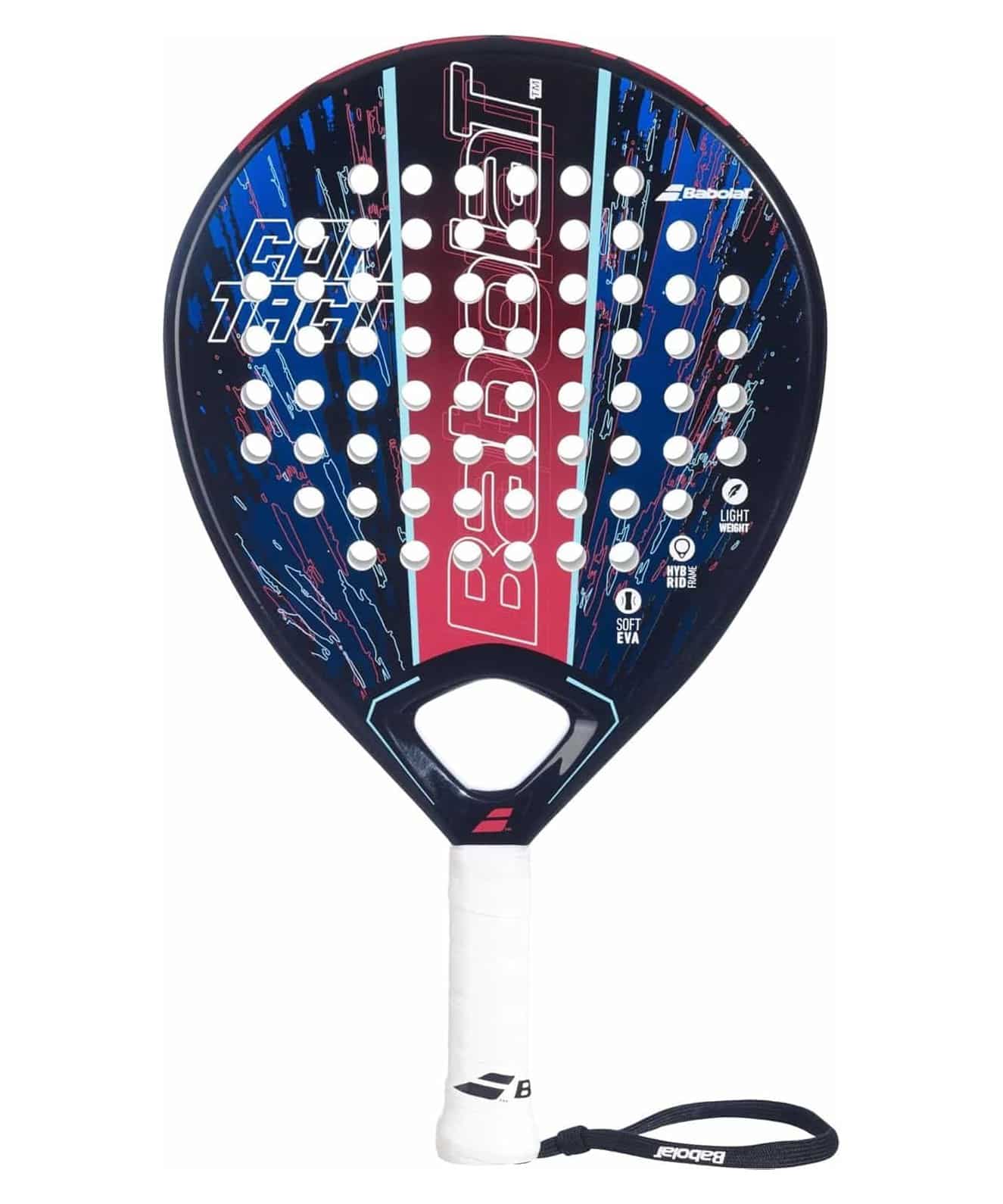
Why it wins: A huge, forgiving sweet spot and an easy, flexible feel — one of the most beginner-friendly rackets Babolat makes, at an accessible price. (~$90)
- Oversized round head — massive sweet spot
- Flexible carbon + fibreglass build
- ~345–355 g — light and easy to swing
- One of the easiest rackets to learn with
Main features of the Babolat Contact
The Contact is built around forgiveness for new players:
- Oversized round shape for the biggest possible sweet spot
- Carbon + fibreglass blend for a soft, flexible, comfortable feel
- Light ~345–355 g weight that’s easy to swing
- Encourages a controlled, pushing motion rather than wild hitting
- Accessible price for a genuine first racket
Specification of the Babolat Contact
Here are the full specs of the Babolat Contact:
- Shape: Round (oversized)
- Weight: ~345–355 g
- Balance: Low
- Core: Soft EVA
- Faces: Carbon + Fibreglass
- Player level: Beginner
- Type of play: Control / comfort
- Pro: —
Our review of the Babolat Contact
The Contact is about as easy as a racket gets. The oversized round head gives a genuinely huge sweet spot, and the flexible carbon-fibreglass build keeps the feel soft and comfortable, so mishits don’t sting and the ball is easy to keep in play. It encourages a smooth, pushing stroke rather than a big swing.
There’s little power on tap and you’ll outgrow it as your technique improves, but that’s the right trade for a first racket. For learning consistency and placement, it’s one of the most forgiving options out there.
Pros
- Enormous, forgiving sweet spot
- Soft, comfortable, arm-friendly feel
- Light and easy to handle
- Great first-racket value
Cons
- Very limited power
- Outgrown as you improve
- Basic feedback
Who is the Babolat Contact for?
The Contact is built for complete beginners who want the easiest possible racket to learn with — but it also suits casual, social players who turn up for the occasional game and don’t need power. Its light build and soft, low-vibration core make it a comfortable choice for lighter players, women and older beginners who want minimal strain on the arm.
It’s not for intermediate or advanced players chasing power or spin — once your technique develops you’ll want something firmer. If you want even less weight, Babolat also makes a lighter Contact Team version of this racket.
How the Babolat Contact plays
The headline is the oversized round head and extra-large sweet spot — off-centre hits still find the court, which is exactly what a beginner needs while technique is still coming together.
On rallies and control shots it’s easy and forgiving, helping you keep the ball in play, and the soft EVA core and fibreglass face damp vibration well for a comfortable, arm-friendly strike — a real plus if you’re prone to tennis elbow.
It’s light and manoeuvrable for blocks and volleys at the net, though it feels a touch slow and underpowered on a full swing.
On smashes it offers very little power, and the smooth fibreglass face generates limited spin — this is a learning tool, not a weapon.
Babolat Contact vs the alternatives
Within Babolat’s own line the Contact is the softest, cheapest entry point — a step below the firmer, more powerful Babolat Counter Origin.
Against rival beginner rackets it’s one of the more forgiving, lower-powered options. The round Head Zephyr is its closest cross-shop, with a similar control-first feel, while the NOX X-Hero and Adidas Match Light are other entry picks — most sit in the same ~350–365g, ~$90–120 bracket. The Contact wins on comfort and forgiveness; the others edge it on power or spin. For a round, control-first first racket from a trusted brand, it’s among the easiest to play.
Is the Babolat Contact worth it?
At around $90 the Contact is well worth it as a first racket — forgiving, comfortable and easy to learn on, from a brand beginners trust (Babolat is one of the most established names in racket sports). You also get a protective bumper and wrist strap in the box.
Two honest caveats: the fibreglass face is less hard-wearing than carbon, so it’s fine for recreational play but not built for years of heavy use; and most players outgrow it within 6–12 months as their technique sharpens and they start wanting more power. As a low-risk way into the game, though, it’s hard to fault.
Conclusion
As a first racket the Contact is hard to fault: the oversized head and soft, flexible feel make the game easy and build confidence fast. Power is minimal and you’ll move on as you improve, but for a genuine beginner learning consistency, it’s one of the most forgiving and affordable ways to start — from a brand newcomers trust.
The Babolat Contact is one of the easiest beginner rackets to learn with. See our beginner-friendly picks in the best padel rackets guide.

Lucas Sánchez is the founder of SimplePadel. Born and raised in Spain, Lucas has been living in the US and UK for the last 20 years and currently calls Miami his home. While he’s never played professionally, the dream is still alive.
Lucas loves nothing more than playing (and talking) about padel, and he considers himself lucky to have a wife and family that share his love for the game.