An ace in padel is rare. Much rarer than tennis. The serve is underhand, the receiving team starts in a balanced position, and the court is enclosed — there’s nowhere to hide a serve from a competent returner. At the pro level, true aces are rare enough that commentators name them. Watching Paquito Navarro hit a clean ace at Premier Padel Madrid 2024 (down the T, off the side glass) was a highlight of the entire week.
But aces ARE possible at amateur level — and your serve doesn’t need to be a weapon to win you free points. A well-placed serve that ends the rally on the third or fourth ball is functionally an ace’s cousin. This guide covers both: the rare, clean ace that ends the point on the serve itself, and the more achievable goal of using your serve as a setup that wins the point quickly.
If you’re new to padel itself and unfamiliar with how the underhand serve works at all, start with our guide to what is padel for the foundations.
Your game starts with a great padel serve
Most amateur padel coaches teach the same advice: serve down the T, use spin, hit it low. That’s right but incomplete. The single biggest serve insight at amateur level is just SERVE DEPTH. A deep serve that lands at the back of the service box is harder to attack than a fast serve at the front, regardless of spin or angle.
Pros like Galán hit serves at maybe 70-80% effort. They prioritise placement and bounce variation over speed. Most amateurs hit serves at 95%+ effort and lose all their placement — and the second serve becomes a roll-it-in apology that gets crushed.
Run through the fundamental positions, swinging mechanics, padel rules of the serve, and the placement patterns that actually win free points at amateur level.
Position: Where to stand
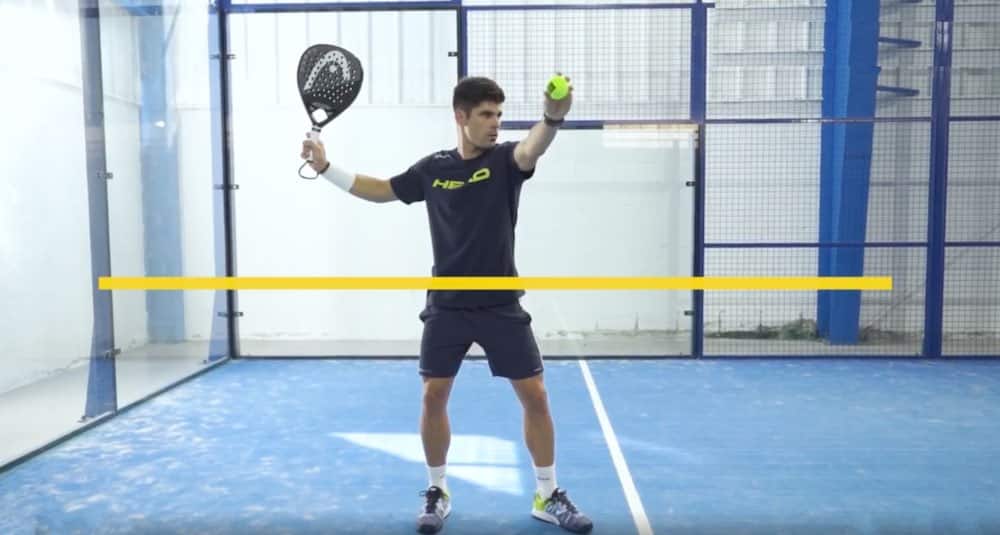
Knowing where and how to stand when serving has less to do with releasing the best services and more with obeying the sport’s rules.
Padel serving rules in action:
- You must stand behind the service line, between the center line and the side wall (at the end-center of your area)
- You can be standing in place or moving towards your next location while serving (as long as you hit the ball while in the right zone)
- One foot should remain on the court even while moving, and you cannot go past the service line
- Bouncing the ball once on the court begins the serve
- You can use the backhand or forehand swing as long as you hit the ball below waist height
You must remember to stand behind the service line when serving. You can do it while standing or moving if you strike below waist height.
Recommended reading:
Getting the right serving motion
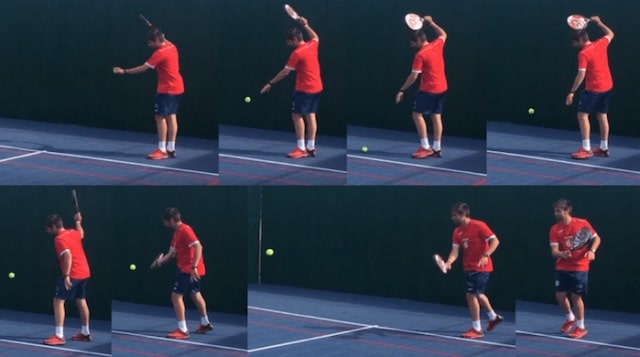
The swing that produces the best effect is the one that starts behind you. This gives you the ability to follow through and choose between flat, sliced, or kicked serves on the same motion — which is what disguise looks like.
You have enough room to push the ball where you want it to go. You can generate more spin or vary the bounce — the goal isn’t max speed, it’s bounce variation that confuses the returner.
This contrasts with most amateurs’ default move: starting with the ball and racket in front of the body. They lack room to swing and make up for it with quick, inaccurate shots that land short and beg to be attacked.
Why placement beats power (and why gold point makes it matter even more)
A tip to improve your effectiveness is to extend your swing and follow through. It also helps if you try to hit the ball in the sweet spot of your padel racket — but the bigger gain is going from 95% effort to 80% with intent on placement.
The gold point rule — now standard at most US amateur leagues and on the Premier Padel tour — makes serve placement matter even more. Sudden death at deuce means every game has a coin-flip moment where the receiving team picks the side, and your weakest serve gets attacked at the highest-pressure moment.
Whatever you do, don’t short-stroke. A longer swing gives you more options — and more disguise.
Using your serve as a setup, not a knockout
The benefit of controlling your shot isn’t really winning aces — it’s directing the return into a predictable spot so your partner at the net can finish the rally on ball three. Aim for the seam between the receivers, force a defensive lob, and let your partner volley it away.
Watch Miguel Lamperti’s famous “down-the-middle, curve-away-from-player” serve — the bounce off the side glass kicks back into the body and forces a weak return into the middle of the court. That’s the template:
Using the backhand serve (the Paquito special)
Padel rules accept forehand and backhand serves. The backhand is rare — Paquito Navarro is the most famous practitioner — and it creates angles right-handers can’t replicate from the deuce side, especially the wide kicker that opens the court.
It throws receivers off because they’ve been programmed by 99% of the players they’ve faced to read forehand-serve-cues. Even at amateur level, pulling a backhand serve out twice a set buys you free points just on novelty.
Four serve patterns that actually win free points
Each pattern has the same goal: make the returner uncomfortable, shrink their swing window, and force a weak return your partner can attack. Don’t try all four in one match — pick two and own them.
1) The short decoy
The most infuriating pattern at amateur level — your opponent thinks the ball won’t reach the service box, takes a half-step back, and then has to lunge forward into a falling ball. Similar to the underarm serve in tennis Nick Kyrgios made famous.
Use it once or twice a match, never more — it stops being a decoy if they expect it.
2) Down the T
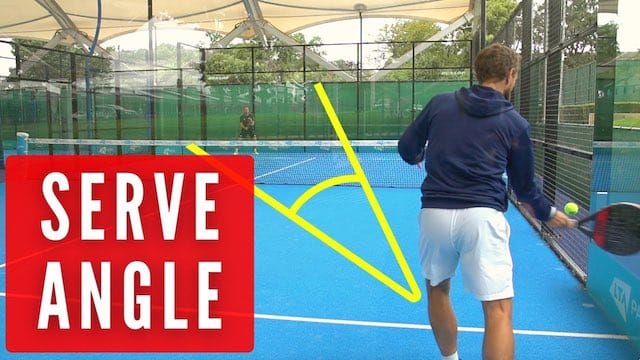
Easy to execute, devilish in intent. Hitting near the centre line forces the receivers to silently debate whose ball it is. Add slice spin away from the receiver and the ball bounces into the body or away into the gap. This is Galán’s bread-and-butter serve at the highest level — placement, not power.
3) The low double-glass kicker
Hard to hit cleanly, but devastating when it lands. A low slice serve that bounces, kicks off the side glass, then the back glass — the receiver has no idea where the ball will end up. Best executed on clay or sticky surfaces where the bounce stays low.
4) The side-glass body serve
Just high enough to clear the net, low enough to force the receiver into the side glass to dig it out. This is Lebrón’s signature: kick it off the side wall straight into the receiver’s hip, and they can only block it back weakly into your partner’s volley zone.
| Serve type | Difficulty | Best for | Counter risk |
|---|---|---|---|
| The short decoy | Hard to time | Surprising returners standing deep | High if read |
| Down the T | Easy to execute | Doubles when receiver is wide | Medium |
| Low double-glass | Very hard | Side glass setups, clay courts | Low if executed |
| Side-glass body | Hard to time | Forcing return into your partner | Low |
Note also: the highest-pressure serve moment in any match is the tiebreak, where one mini-break can decide the set. Practise your two best patterns under tiebreak-pressure conditions, not in static warm-ups.
Bottom Line
A clean ace in padel is rare. The receiving team is balanced, the court is enclosed, and the underhand serve has a low ceiling on raw power. Don’t aim for the ace — aim for the serve that wins the point on the third or fourth ball.
The four serve patterns above (short decoy, down the T, low double-glass, side-glass body) all work — at amateur level, just having two of them in your repertoire makes you significantly harder to break. The biggest mistake amateurs make is hitting every serve at 95% effort. Take 10% off, and watch your placement double.
And remember: with the gold point rule now standard in most US amateur leagues, every serve game has at least one sudden-death point. Your serve placement under pressure is the single biggest factor in whether you hold serve. Practise the boring stuff — depth, consistency, second-serve safety — and the aces come as a bonus.
Frequently asked questions about serving an ace in padel
The questions below cover the practical edge cases — pro-level rarity, gold point strategy, and the rules that limit how aggressive your serve can be.
The one hit in Padel you have complete control over is the serve. You can maximize this opportunity by serving an ace, which is possible. You get your point without your opponents being able to do anything. It’s hard, but with the right training, you can do it.
Focusing on the four ways above (short decoy, close to the central line, double glass low service, side glass low service) will allow you to turn your service into a weapon and potentially gain an ace.
A Padel cannot bounce twice on your side of the court. Per the games rules, the ball can only bounce once on your side of the net (when you drop it) and can only be hit once to be considered in play.
While the vast majority of services in Padel are made with the forehand swing because of its higher degree of control, elite players like Paquito Navarro can get the point using a quality backhand serve.
An excellent Padel player can achieve the right speed, spin, and direction when serving the ball. They do this by starting the swing behind them, giving them enough time to swing the ball where they want it to go.
You can serve backhand in Padel, though it is highly uncommon. Practicing this move throws your opponents off their game, making services much more effective on the court.
Genuine aces in pro padel are rare — typically only 1-3% of points across an entire match are won outright on the serve. Compare that to tennis, where elite servers like John Isner regularly ace 30%+ of service points. The combination of underhand serving and a balanced receiving stance makes the clean ace a special moment in padel, even at the highest level.
Yes — and most amateurs underestimate this. With the gold point rule (sudden death at deuce, no advantage), every game has at least one make-or-break point. The receiving team also gets to choose which side to receive on. This means your weakest serve gets attacked at the highest-pressure moments. Practise your second-serve consistency more than your first-serve power — gold point is no place to risk a double fault.

Patricia Nguyen is a former pickleball player who joined SimplePadel as a Content Writer in late 2022. She lives in Texas with her two dogs and is an avid fan of the sport. Her favorite player is Ale Galán, whom she believes to be the best defensive padel player that ever played the game.
5 replies on “Ace in Padel: How to Hit One (Pro Strategies & Setups)”
[…] excellent serve can get the ball rolling, and an ace from your service can give you an instant point that can set you up for […]
[…] good serve would help your team take advantage of the net position or even score a point by producing an ace. It’s also the shot that dictates the ball’s direction, spin, and […]
[…] What is an Ace in Padel, and how do I achieve it? […]
[…] You should also consider buying it if you enjoy hitting fast balls and making short serves. […]
[…] By being an ideal blend of being light, comfortable, and providing powerful shots, this paints the Wilson Blade Pro V2 as spontaneous reactions with powerful serves. […]