Golden Point in Padel: The Sudden-Death Rule Explained

Traditional padel scoring, like tennis, can drag a deuce game out for minutes – repeatedly going from 40-40 to advantage and back. In 2020, the World Padel Tour introduced a rule that put an end to that: the gold point. One point at 40-40 decides the game. No advantage, no repeat deuces, just sudden death.

The gold point (punto de oro, also called the golden point) is a sudden-death scoring rule in padel. When the score reaches 40-40 (deuce), there is no advantage play. The next point wins the game. The receiving team chooses which side of the court to receive on, and whoever wins that single point takes the game. The rule was introduced by the World Padel Tour in 2020, adopted by the International Padel Federation shortly after, and is now used across most professional tours including Premier Padel.

This guide covers exactly how the gold point rule works, who benefits from it, why professionals were divided when it was introduced, and when it’s used in amateur play. It also covers the newer “bronze point” and “silver point” variations some tours have experimented with.

Padel Serve Rules: Complete Guide to Serving in Padel

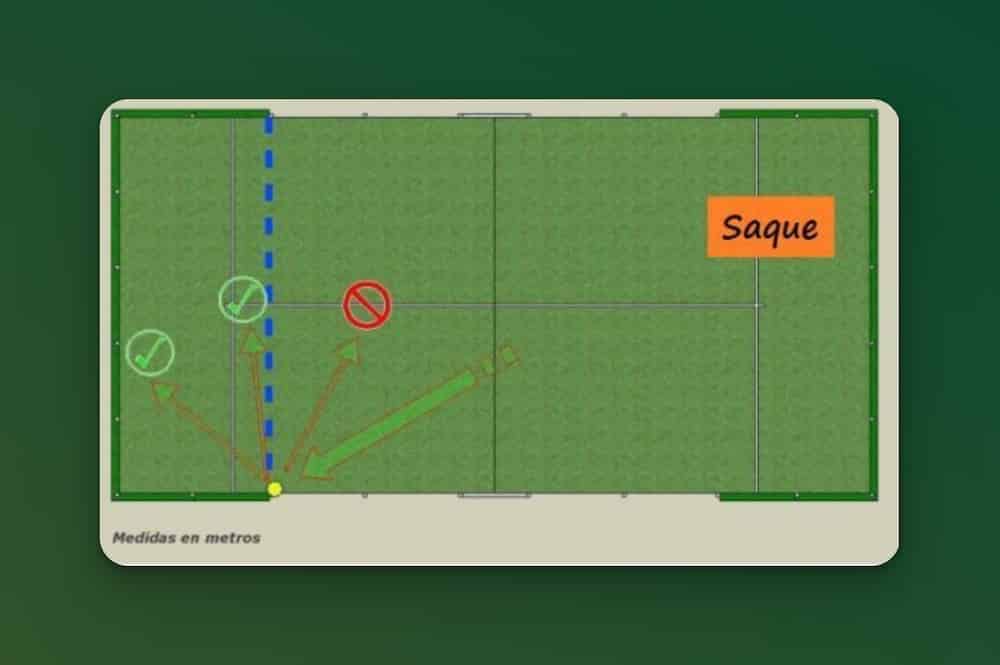
The serve is the one shot in padel you always start a point with, and the one beginners get wrong most often. Unlike tennis, a padel serve has to be underarm, below the waist, bouncing off the floor first, and landing diagonally in the opponent’s service box. If any of those conditions slip, the serve is a fault.

A legal padel serve is hit underarm, struck below the waist (at or below 1.06 m from the ground under current FIP rules), after letting the ball bounce once on the server’s side of the court, and landed diagonally in the opponent’s service box on the first bounce. The server stands behind the service line, with at least one foot on the ground, and must not step on or over the line before contact. Each server gets two attempts per point. A ball that touches the net and lands in the service box is a let and is replayed.

This guide covers every padel serve rule you need to know: how to stand, what counts as a fault, when a let is called, how the tie-break rotation works, and the 2024 FIP rule changes that clarified the serve height. It also explains the two most common serve variations (underarm and backhand) and the foot-fault situations that catch every new player out.

Padel Americano: How to Play, Scoring Rules & Best Apps

A padel Americano is the fastest way to get a group of players on court, mix partners every round, and crown an individual winner at the end. It’s the format US clubs reach for when 8, 12, or 16 players want a social tournament that runs in a couple of hours rather than a full day.

A padel Americano is a rotating-partner tournament format where every point counts toward your individual total. Instead of fixed doubles teams, you switch partners each round until you’ve played alongside everyone in the group. The player with the most total points at the end wins, regardless of who they were paired with.

This guide walks through how an Americano tournament actually works, the scoring system, the most common variations (Mexicano, Mixed Americano, Team Americano), how to organize one at your club, and the best apps for running it. Our guide on how to play padel covers the basics if you’re brand new to the sport.

How to Play Padel: A Complete Beginner’s Guide (Rules, Scoring & Tips)

Padel is one of the fastest-growing sports in the United States right now — and if you’ve never played before, you’re in the right place. Originally invented in Mexico in 1969, padel has exploded globally and is now reaching every corner of the US, from California to Florida to New York.

This guide covers everything a complete beginner needs to know: the rules, the court, the equipment, and how scoring works. By the end, you’ll be ready to step on the court with confidence.

Which Side Should I Play in Padel?

One of the first questions every new padel player asks is: which side of the court should I play? It sounds simple, but it shapes everything — how you hit, how you move, how you support your partner, and how quickly you improve. With padel booming across the US and new courts opening from Miami to Los Angeles, more and more players are stepping onto a padel court for the first time and asking exactly this question.

The short answer is that most right-handed beginners should start on the right side, and most left-handers on the left. But understanding why — and knowing when to switch — will make you a much smarter player. Let’s break it all down.

Valid Padel Point or Not? Dubious Padel Points Explained

Padel has rules that don’t exist in any other racket sport. Balls bouncing off glass walls and flying back into play, shots leaving through fence openings, players reaching across the net — situations that would be immediately clear in tennis are genuinely ambiguous in padel. As the sport takes off across the US, more players at clubs in New York, Chicago, Miami, and Los Angeles are stepping onto a padel court for the first time and discovering just how different the point-scoring system feels. This guide cuts through the confusion and gives you clear, confident answers to padel’s trickiest situations.

Whether you’re settling a disputed point mid-match or just trying to get your head around the rules before you play, this is the reference you need. For a full introduction to how the game works, start with the complete beginner’s guide to padel.